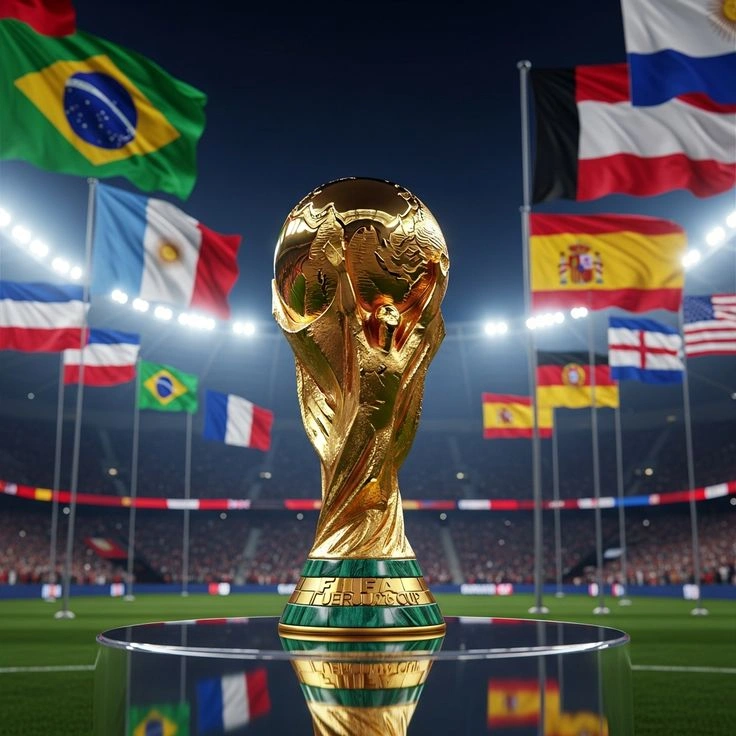
FIFA has officially announced that Iran will be in the 2026 World Cup. This has made people in Tehran happy and raised suspicions in other places. The governing body’s discreet but firm announcement last week of the decision shows how committed they are to keeping football out of politics. With 48 teams from 16 host cities in the US, Canada, and Mexico, this competition is going to be the biggest ever. This recognition of the Iranian national team feels like a rare moment of peace in a world full of violence. What does it matter now? Iran’s presence raises the question of whether sports can really stay out of politics as tensions rise in the Middle East, from proxy wars to sanctions. Iran’s football journey has not been easy so far. The team had to fight against strong teams like South Korea and Uzbekistan to get their spot in the AFC qualifiers. Remember those tense games in Doha and Tehran? Goals in stoppage time, loud audiences, and a team that has been gaining momentum since their great performances in the last few Asian Cups? FIFA’s seal of approval ends months of doubt, especially following rumors of possible bans because of Iran’s internal politics and regional conflicts. For fans, it’s simple: the Iran football team should be on the world stage.
Iran’s Tough Road to Qualification
Iran didn’t just happen to get into the 2026 World Cup. Their performance in the AFC third round was a great example of how to be strong. With coach Amir Ghalenoei in charge, the team won their group with important wins, such a thrilling 2-1 win over the UAE and a 4-0 thumping of Qatar. Sardar Azmoun, who is now playing in Europe, and young gun Mehdi Taremi led the way, combining toughness with good strategy.
What stands out? Iran’s defense was strong, letting in only five goals in ten qualifiers. This is a number that even the best teams in Europe can’t beat. They beat the UAE by one goal to take third place in Group A, behind South Korea and Jordan. Have you ever seen a game when the underdog’s goalie makes amazing saves? That’s Hossein Pourhamidi, the wall between the posts for Iran.
Key qualification highlights:
1-0 triumph vs Uzbekistan (Tehran, Oct 2025): Azmoun’s header made it happen.
2-2 draw with South Korea (Seoul, Nov 2025): A point that kept hopes alive.
Playoff spot obtained, but not needed after the final standings.
This isn’t Iran’s first time at the rodeo. They’ve made it to every World Cup since 1978, and in 2014 they made it to the knockout stage. The 2026 tournament, which included extra Asian berths (eight direct and playoffs), allowed them some breathing room. But rumors of exclusion continued to spread, fueled by Iran’s support for groups like Hezbollah and the ongoing nuclear talks. FIFA stepped in and said, “Politics stays out.”
FIFA’s Tough Call on Sports Neutrality
“Football unifies the world,” FIFA President Gianni Infantino has said for a long time. Even though some people disagree with this decision, it strengthens that saying. Iran’s involvement comes at a time of increased geopolitical tensions, like the World Cup: shadow conflicts between Israel and Iran, US sanctions that will be renewed in early 2026, and protests back home over women’s rights. Do you remember the fuss around the 2022 Qatar World Cup? Iran’s players turned their backs on the song to show support, which got them fined by FIFA but not banned.
Why not leave this time? FIFA’s rules are clear: member associations can only be suspended for “government intervention” in football, not in politics in general. Iran passed that test, as their federation worked on its own. Comparing this to Russia’s ban on Ukraine in 2022 is very different because there was a direct invasion. It’s less clear here.
Infantino was very clear about it at a press conference in Zurich: “The World Cup is for players, not passports.” He has used this line before, about problems with workers in Qatar and investments in Saudi Arabia. For Iran, it means their flag flies high and its players can train without worrying about being cut at the last minute. But is it still impartial when fans yell political slogans? That’s the problem: sports are like real life, with all its problems.
India is also keeping a careful eye on things. The AIFF has commended FIFA’s position because India is becoming a better football country and Sunil Chhetri’s successors want to play in the AFC. An AIFF executive said, “It levels the field for Asia.” The Blue Tigers won’t be in 2026, but they want to be in 2030. If Iran does well, it might lead to more money being spent on Indian football infrastructure, like upgrading the ISL and building young academies in Pune and Mumbai.
Team Iran: Stars, Plans, and What to Look Forward to in 2026
Let’s talk about skills. The Iranian football team has a mix of experienced and flashy players. Sardar Azmoun, Roma’s Iranian superstar, has scored 10 goals in Serie A this season alone. If you put him with Taremi at Inter Milan, you have a front line that can give anyone a hard time. Ahmad Noorollahi, the midfield master, controls the game, and Shoja Khalilzadeh, the full-back, keeps the back in check.
What are Ghalenoei’s plans? A 4-4-2 diamond that presses high and counterattacks quickly. They’ve scored 20 goals in qualifying, and set pieces are a big part of that—30% of their goals come from corners. Aside from injuries (Alireza Jahanbakhsh has a sore hamstring), they’re at their best.
In 2026, Iran will probably be in a group containing teams from Europe or South America. Their approach works well on North American fields, which are wide, fast, and great for transitions. at the past, they have done well at World Cups, with draws against Wales and England in 2022 and a win against Morocco in 2014. Could they pull off a big upset? Imagine Azmoun running faster than defenders in the heat of Atlanta or Miami. What if they have to play Argentina without Messi? Is it a fantasy or a delusion?
Logistics matter off the field. Bans on travel? FIFA is in charge of visas. Fan limits? There are more than a million Iranians living in the US, and they could fill stadiums in LA or Seattle. Even if there are protests during games, it’s a chance to build bridges between cultures. For Middle Eastern competitors like Saudi Arabia (also qualified) and the UAE, this is a lesson to qualify fairly and play fairly. Ronaldo was drawn to the Saudi PIF-backed league, but Iran’s concentration is still on the grassroots level, where Persepolis and Esteghlal are developing players.
Iranian women’s football adds depth. In 2023, the restriction on playing without a hijab was partially repealed, but stars like Melika Mohammadi want to go to the Olympics. FIFA’s neutrality goes this far, pushing for inclusion. It goes against bans on other countries throughout the world, like Afghanistan under the Taliban or Syria’s civil war squad.
This gives the AFC more power in India, where cricket is king but football is growing (ISL viewership up 25% in 2025). Pune’s growing academies, like the ones in Balewadi, look for Iranian approaches. Travel connections get stronger also. Direct flights between Tehran and Mumbai could take off with fan excursions.
People who don’t like it aren’t quiet. Human rights groups are upset over Iran’s record of crackdowns after the Mahsa Amini protests in 2022. They term it “sportswashing.” FIFA fights back by protecting players and banning armies from venues. Is that enough? One wonders if there will be empty seats or boycotts.
Voices from the Pitch: What Players and Fans Say
After the news, the streets of Tehran were buzzing. Azmoun tweeted on Instagram, “We’ve earned this,” and got 2 million likes. Flares lit up the sky as fans chanted all night at Azadi Stadium. Iranian expats in Toronto and LA are planning watch parties in the West.
Ghalenoei kept it real: “Focus on training, not talking.” Ali Karimi, a youth coach and 1998 World Cup veteran, told local media, “This generation is hungrier.” North America is our stage.
A lot of people are skeptical. A UK-based Iranian activist tweeted, “Football doesn’t fix anything—let the inmates go first.”” Fair point, but players like Taremi want to be separate: “We’re athletes, not politicians.”
FIFA gives Iran the go-ahead to compete in the 2026 World Cup, which is a win for sports in a time of global unrest.