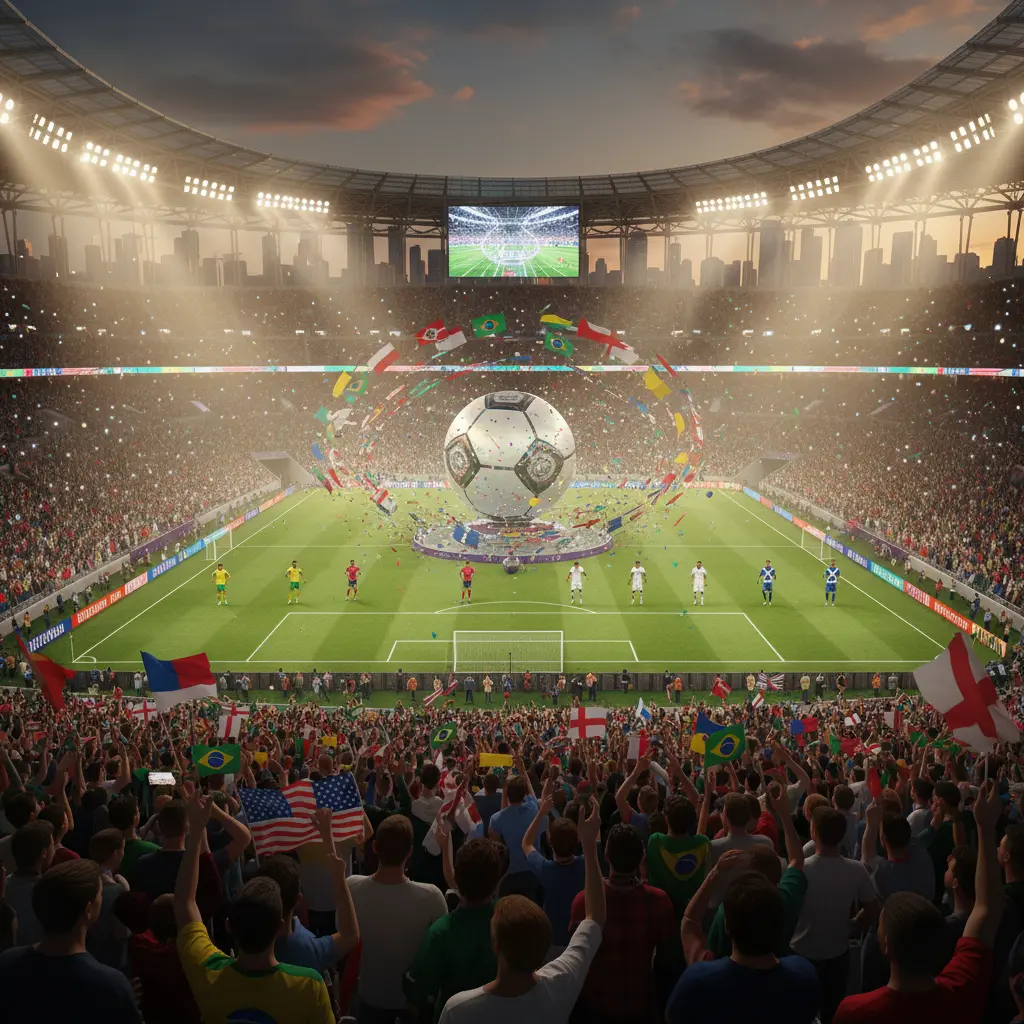
Every four years, the world stops arguing about everything else and starts arguing about football. And in the summer of 2026, that argument is louder, more passionate, and more globally distributed than perhaps any World Cup before it.
The FIFA World Cup 2026, being played out in a historic tri-nation format across the United States, Canada and Mexico, has captured world attention in a way even the most optimistic organizers did not dare to fully imagine. Stadium crowds are electric. Television audiences are breaking records. And the football itself has delivered exactly what neutrals crave and purists argue over: drama, upsets, heartbreak, and moments of individual brilliance that remind you why this sport has no real rival for the world’s collective imagination.
A Tournament Built for the Moment
The expanded 48-team format, introduced for the first time at a men’s World Cup, was met with skepticism from traditionalists who worried it would dilute the quality of football and produce too many one-sided group stage matches. Those concerns haven’t entirely disappeared. But what the expanded format has done — undeniably — is bring more nations, more stories, and more fan bases into the conversation.
Nations that have never before appeared on a World Cup stage arrived with supporters who had waited their entire lives for this moment. And when the underdogs don’t just show up but genuinely compete — when a group stage match turns in the 89th minute and an entire nation erupts — the expanded format stops looking like a commercial decision and starts feeling like the right one.
The host nation advantage hasn’t hurt either. Across American cities from New York to Los Angeles, Dallas to Seattle, football fever has taken hold in a country still in the process of building its relationship with the beautiful game. The noise inside those stadiums has surprised even veteran football observers.
Brazil: The Weight of Expectation
No team at any World Cup carries expectation quite like Brazil. The Seleção arrived in 2026 with a squad built around pace, creativity, and the kind of individual quality that makes opposition coaches lose sleep. And for much of the tournament, they have looked every bit the contenders their billing suggested.
But expectation is its own kind of pressure. Brazil’s performances have not been without moments of anxiety — defensive lapses that more clinical opponents could have punished, and a tactical rigidity in certain matches that has frustrated their own supporters. The fan discourse around the national team remains as intense as ever, with Brazilian football culture’s deep emotional investment producing joy and anguish in roughly equal measure.
What is not in doubt is their attacking threat. When Brazil are flowing, they remain one of the most watchable sides in world football. Whether that translates into lifting the trophy is a question the knockout rounds will answer.
The United States: A Nation Finds Its Tournament
Perhaps the most compelling sub-narrative of the 2026 World Cup has been the United States’ own journey — both as a host and as a competing nation. American fans, many of whom came to football relatively recently, have embraced the tournament with an enthusiasm that has genuinely moved long-time observers of the global game.
The USMNT entered on home soil with the understanding that anything short of a deep run would be viewed as a missed opportunity. That pressure has shaped everything about how they’ve approached matches — tactically disciplined, physically intense, and unafraid to make the game ugly when the moment demands it. Whether that approach carries them deep into the knockout stages, the journey has already shifted something in how Americans relate to this sport.
England and Scotland: The Old Rivalry, the New Stage
The British football narrative at this World Cup has been characteristically complicated. England arrived, as England always arrives, weighted down by history, tortured by near-misses, and accompanied by a media apparatus that generates enough column inches to wallpaper Wembley twice over.
Their performances have been the subject of fierce debate — moments of genuine quality undermined by baffling inconsistency, tactical decisions questioned in real time by millions of supporters watching at home and in fan zones across the country. England at a tournament is a sporting event and a national psychological exercise simultaneously.
Scotland’s presence at the 2026 World Cup carries its own particular resonance. Having ended a painful absence from the international tournament stage in recent years, the Scots have brought with them a supporter culture that is among the most distinctive in world football — passionate, self-deprecating, and utterly committed. Their results have produced the full spectrum of Scottish footballing emotion, which is to say they have been magnificent and maddening in turns.
The Upsets That Have Defined the Tournament
No World Cup earns its place in memory without upsets, and 2026 has already delivered several that will be discussed for years. Established footballing nations have been shocked by opponents who arrived with nothing to lose and left with everything to celebrate. Goalkeepers have produced performances of impossible heroism. Tactical masterclasses from smaller nations have exposed the limitations of more celebrated squads.
These are the moments that make the World Cup irreplaceable in the sporting calendar. Not the results you expected, but the ones you didn’t see coming.
Why this World Cup feels special There’s a certain something about the 2026 tournament that seems to matter in a way that transcends sport, as a cultural moment. Football has long been the world’s game in theory. This World Cup, sprawling across three nations and drawing audiences from virtually every corner of the globe, is making that claim feel more literal than ever.
The screens are on everywhere. The conversations are happening in every language. And the football, when it has been good, has been very good indeed.
That, in the end, is all any World Cup really needs to be.
FIFA World Cup 2026 Captures Global Attention: The Tournament That Has Everyone Talking.