
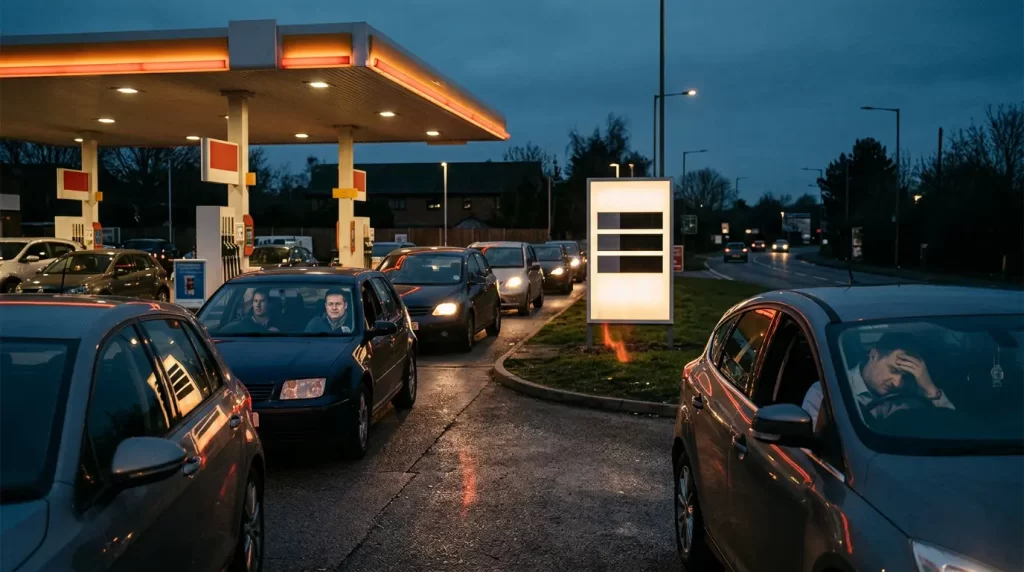
If you pulled up to a petrol station on 10 October, nothing changed. The petrol price today and the diesel price today were the same as the day before in major cities across India. That sameness is reassuring for household budgets, but it hides some tension building behind the scenes.
What You Paid at the Pump
In the capital, the fuel price in Delhi stayed at ₹102.12 a litre for petrol and ₹95.20 for diesel. In Mumbai, petrol remained at ₹111.21 a litre, which is the kind of number that makes commuters wince every time they fill up.
Stable prices mean no surprise hit to the monthly budget, no sudden jump in the cost of the daily commute, and no immediate nudge to the price of vegetables arriving by truck. Diesel in particular matters well beyond the person driving a car, because it powers freight, farm equipment and public transport. When diesel moves, almost everything else follows.
The Quiet Squeeze on Oil Companies
The calm at the pump doesn’t mean everything is comfortable further up the chain. ICRA has flagged negative oil marketing margins for India’s state-run oil marketing companies. Put simply, when retail prices stay frozen while the cost of buying and refining crude climbs, these companies can end up selling fuel for less than it costs them to supply it.
That is a deliberate trade-off. Holding prices steady protects consumers, and politically, nobody wants to be the one announcing a hike. But somebody absorbs the difference, and right now it is the oil marketing companies. They can carry that burden for a while, especially when profits from better periods give them a cushion. They cannot do it forever.
Eventually one of three things tends to happen. Crude prices ease and margins recover on their own. Retail prices are quietly raised. Or the government steps in with some form of support or tax adjustment. Which path is taken depends largely on what global oil does next.
Why Crude Oil Is the Number to Watch
India imports the vast majority of the crude oil it uses, which makes the country unusually exposed to swings in the global market. A sustained rise in crude doesn’t just squeeze oil companies. It also swells India’s crude import bill, the money the country has to spend abroad to keep its engines running.
A bigger import bill widens the trade deficit and puts strain on the external accounts. It also feeds into inflation sooner or later, because fuel costs seep into transport, manufacturing and food. A short spike is manageable. A prolonged climb is a different story, and that is what analysts are keeping an eye on.
The Rupee Factor
There is another variable that rarely gets enough attention at the pump: the rupee. Crude oil is priced in dollars, so when the rupee weakens, every barrel gets more expensive in local terms, even if the global price hasn’t moved at all.
This is why the currency matters so much to the fuel story. A softer rupee raises the cost of imported crude, which pushes up the import bill and deepens the pain on oil company margins. Weakness in the currency and strength in oil prices at the same time is the combination policymakers dread. Each makes the other worse.
For ordinary people, this can feel abstract. But it connects to real life. A weaker rupee can mean costlier petrol eventually, pricier imported goods and a tougher time for anyone planning a trip abroad or paying overseas tuition.
What It Means for Everyday Households
For now, the practical advice is simple: nothing is changing at the pump today. But it would be unwise to assume that stability will last indefinitely. When the petrol price today looks identical to yesterday’s, it can create a false sense that the underlying costs are equally calm. They aren’t.
A few things are worth keeping in mind:
- Retail prices are cushioned, not immune. The gap between what fuel costs and what you pay is being absorbed by someone else for now.
- Global crude moves matter. A sustained rise would test how long the current pricing can hold.
- The currency is part of the story. A weaker rupee quietly adds to the cost of every barrel India buys.
A Balancing Act Without an Easy Answer
Policymakers are walking a narrow path. Letting prices rise protects the finances of oil companies and eases pressure on the import bill, but it hurts consumers and can push up inflation. Holding prices steady protects households, but it shifts the strain onto balance sheets and, indirectly, public finances.
There is no painless option. The more useful question is how long the cushion can last and what triggers a change. A fall in crude or a steadier rupee would give everyone room to breathe. A further rise in either would make a difficult decision harder to postpone.
The Bottom Line
On 10 October, the headline was reassuringly boring: no change in petrol and diesel rates, from Delhi to Mumbai. But boring prices can sit on top of busy pressures. ICRA’s warning on oil marketing margins, the vulnerability of India’s crude import bill and the direction of the rupee are all quietly shaping what comes next.
For now, drivers can fill their tanks without a nasty surprise. For anyone watching the bigger picture, the real story is what has to give if global oil keeps climbing.

