
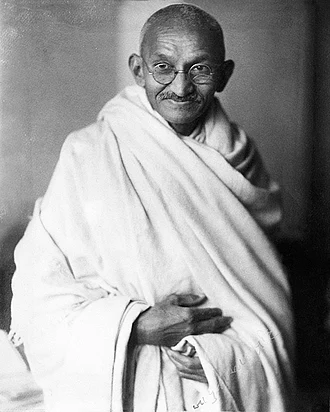
On October 2, 2025, India will observe Gandhi Jayanti, marking the 156th birth anniversary of Mahatma Gandhi, widely revered as the “Father of the Nation.” This day celebrates Gandhi’s enduring message of Ahimsa (non-violence) and Satyagraha (truth), principles that not only fueled India’s freedom movement but continue to inspire global campaigns for peace, justice, and equality.
Born on October 2, 1869, in Porbandar, Gujarat, Mohandas Karamchand Gandhi became one of history’s most influential leaders. Educated in law, Gandhi’s philosophy of peaceful resistance emerged during his years in South Africa, where he campaigned against racial discrimination. Upon returning to India, he spearheaded movements such as the Non-Cooperation Movement, the Salt March, and the Quit India Movement. These campaigns were guided by his belief in non-violence and moral courage as tools for social change.
Gandhi championed Swaraj (self-rule) and Swadeshi (self-reliance), urging Indians to boycott British goods and promote indigenous industries. His vision extended beyond politics, advocating simplicity, humility, communal harmony, and the upliftment of the marginalized. Gandhi’s teachings remain a moral compass for millions worldwide.
Gandhi Jayanti is recognized as a national holiday in India and, since 2007, as the International Day of Non-Violence by the United Nations. Observances include prayer services, commemorations, and cultural programs across the nation. In New Delhi, dignitaries gather at Raj Ghat, Gandhi’s memorial, to pay tribute. Educational institutions host events where students sing Gandhi’s favorite bhajan and discuss his philosophy, reinforcing his message for new generations.
The celebration offers an opportunity for reflection. Gandhi’s ideals are especially relevant today in a world challenged by conflict, inequality, and environmental crises. His emphasis on peaceful resolution, truthfulness, and ethical leadership continues to resonate globally.
Internationally, Gandhi’s influence is evident in the movements of leaders such as Martin Luther King Jr., Nelson Mandela, and César Chávez, who adopted his non-violent methods in struggles for civil rights and justice. His legacy transcends national boundaries, serving as a blueprint for advocacy and reform worldwide.
In contemporary India, Gandhian principles inspire initiatives like the Swachh Bharat Abhiyan (Clean India Mission) and campaigns promoting unity and equity. These movements reflect Gandhi’s vision of a society rooted in justice, cleanliness, and self-reliance.
As India observes Gandhi Jayanti 2025, it is more than a day of remembrance—it is a reaffirmation of Gandhi’s values. His life stands as a testament to the transformative power of non-violence and truth, offering lessons for individuals and nations alike. In honoring Bapu, society embraces the pursuit of peace, equality, and harmony.
On this day, let all Indians and global citizens reflect on Gandhi’s teachings and strive to embody his ideals, working toward a world where truth and non-violence guide collective action for a better future.

