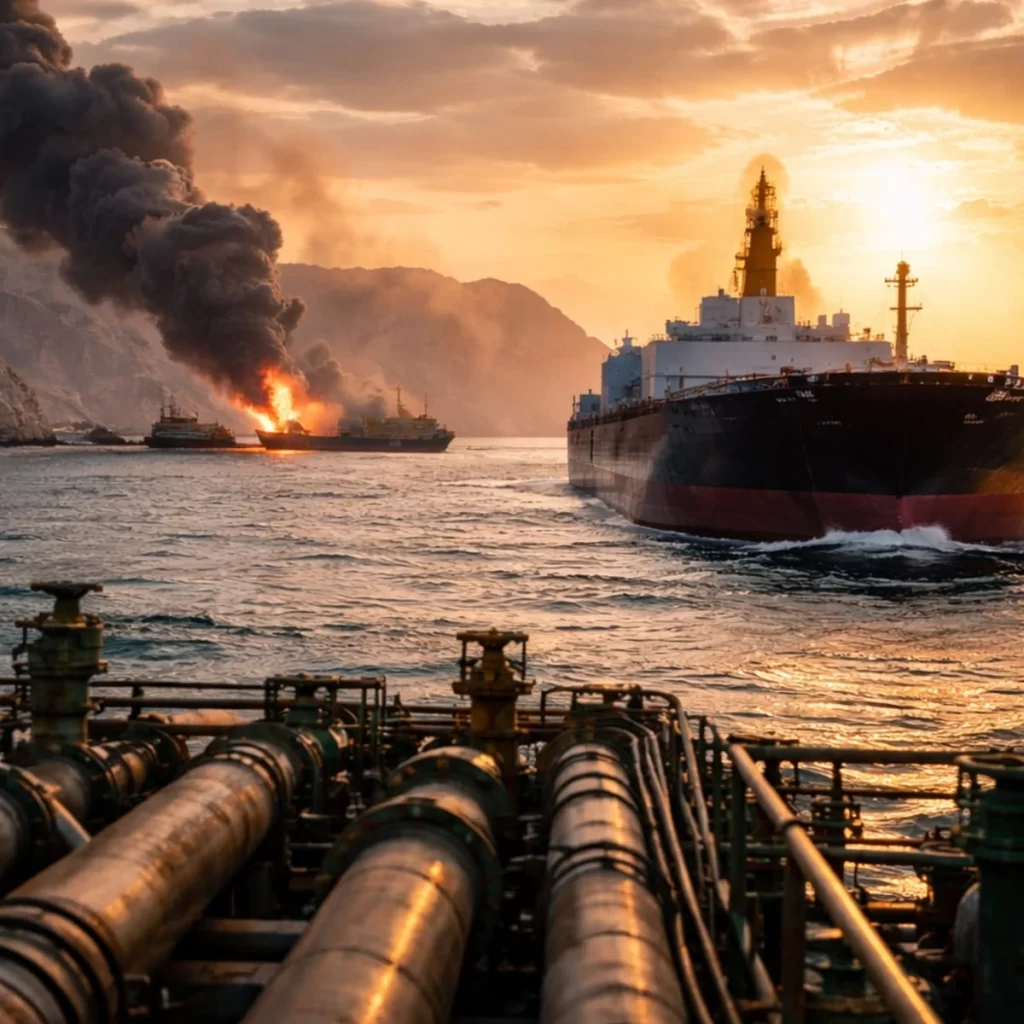
The Strait of Hormuz, that narrow strip of water between Iran and Oman, has been a headache for the world since late February, when tensions boiled over into blockade and disruptions. Today, around 40 leaders from countries big and small are dialing into a virtual summit co-chaired by UK Prime Minister Keir Starmer and French President Emmanuel Macron, all talking about getting ships moving again through this vital oil artery. With oil prices spiking past $100 a barrel and economies from India to Europe feeling the pinch, these talks couldn’t come soon enough—especially as a fragile ceasefire hangs in the balance.
Why the Strait Matters So Much
Picture this: a waterway just 21 miles wide at its narrowest point, yet it funnels about 20-25% of the world’s seaborne oil trade—roughly 14 to 20 million barrels a day, plus liquefied natural gas and fertilizers. That’s enough to power much of the planet’s vehicles, factories, and homes. When Iran effectively shut things down amid its clash with the US and Israel, the ripple hit fast. Global supply shortfalls jumped to over 11 million barrels a day in early disruptions, pushing Brent crude from the low $80s to peaks of $126.
It’s not just numbers. Shipping companies rerouted, insurance costs soared, and tankers sat idle. The UN trade body UNCTAD warns this kind of chokepoint vulnerability spreads shocks to food prices and supply chains, hitting developing nations hardest when they’re already stretched thin on debt. For normal folks that means higher pump prices and grocery bills. Have you seen fuel costs creeping up at your local station lately? The Spark: How Tensions Led to Blockade It started with US and Israeli strikes on Iran back in late February 2026 prompting Tehran to block the strait using drones, missiles, fast boats, and maybe even mines. President Donald Trump, fresh off his reelection, ramped up with a US-led blockade against non-Iranian vessels but Iran hit back hard halting nearly all traffic. By March, oil prices had doubled in spots, with Dubai crude touching $166 a barrel at one wild peak.
Trump’s been vocal, slamming allies like Australia for not joining the US effort and saying America won’t get dragged into European-led fixes. Meanwhile, a shaky ceasefire emerged last week after backchannel talks, but Iranian aggression lingers, with UK officials calling it a direct threat to British incomes via higher energy bills. Analysts say without quick reopening, April losses could double March’s, risking rationing in vulnerable spots.
Global Leaders Step Up at Paris Summit
The big news today is the Strait of Hormuz Maritime Freedom of Navigation Initiative, a new push hosted virtually from Paris. Starmer and Macron are leading, with about 40 nations on the line—think Australia’s Anthony Albanese, despite Trump’s gripes, and reps from Gulf states. No US showing, as Trump pushes his own line.
The agenda? Security teamwork, mine clearance, seafarer safety via the International Maritime Organization, and reassuring insurers to get commercial ships back. Starmer’s line: “The unconditional and immediate reopening is a global responsibility.” Plans for a defensive multinational naval mission are in motion, with a military planning huddle next week at UK’s Northwood base. It’s all about steadying energy flows without escalating the ceasefire bust.
Questions linger, though—will Gulf leaders like those from Saudi Arabia or UAE commit ships? And how do you clear mines without sparking round two?
Oil Prices on a Rollercoaster
Oil markets are a mess. Brent hit $126 in March frenzy, now hovering over $100 as traders bake in risk premiums. JP Morgan eyes $130 if things drag. That’s up from sub-$80 starts to 2026, wiping out any post-2025 glut.
Key hits:
Supply shortfall: 11.1 million b/d average since closure.
Freight and bunker fuel jumps, plus sky-high insurance.
Fertilizer delays risking food inflation globally.
Traders aren’t panicking yet, but prolonged closure could mean $140 Brent, stoking worldwide inflation.
India’s Tough Spot in the Crisis
For India, the third-biggest oil buyer importing 88% of its needs, this is personal. Nearly half its crude—2.5-2.7 million b/d—normally sails through Hormuz from Iraq, Saudi, UAE, and Kuwait. Add 60% of LNG and 80-85% of LPG, and you see the panic.
New Delhi’s scrambling: sourcing from 40 countries now, up from 27, with 60% via alternate routes like Russia, US, West Africa. Russian imports ramped up big time. LPG’s the real worry—no big reserves there, so cooking gas prices could spike, hitting households hard. Inflation fears mount as shipping costs rise, but diversification’s helping blunt the worst. Still, experts say earliest pains are higher fuel and freight, testing India’s energy security.
Economic Ripples Worldwide
Beyond India, Asia’s hurting—Japan, South Korea face energy crunches. Europe eyes Trump’s “fury” while prepping its own naval help, defensive only. UNCTAD flags debt-strapped developing economies taking the brunt via cost-of-living squeezes.
Growth curbs loom: higher energy means slower factories, pricier goods. Vulnerable spots might ration. Globally, it’s a reminder of fossil fuel risks amid energy transitions.
What’s Next for Reopening?
Short-term wins are the target of the Paris talks – diplomatic nudges on ceasefire, joint patrols post-clearance, links between industry and insurers. An idea of a GCC-led task force has emerged, with layered defences and UN backing. But the challenges pile up: Iran’s position, mine threats, Trump’s solo play.
If successful ships could be flowing by May, softening prices. Fail, and stagflation beckons. Leaders understand the stakes – one misstep and this chokepoint is closed forever.
As these conversations happen, the world watches. Can collective will get past old rivalries? For countries like India, who depend on steady flows, the answer can’t come soon enough. Oil is the lifeblood; keep it flowing, or pay the price.
Global Leaders Push to Reopen Strait of Hormuz as Oil Crisis Bites Harder