
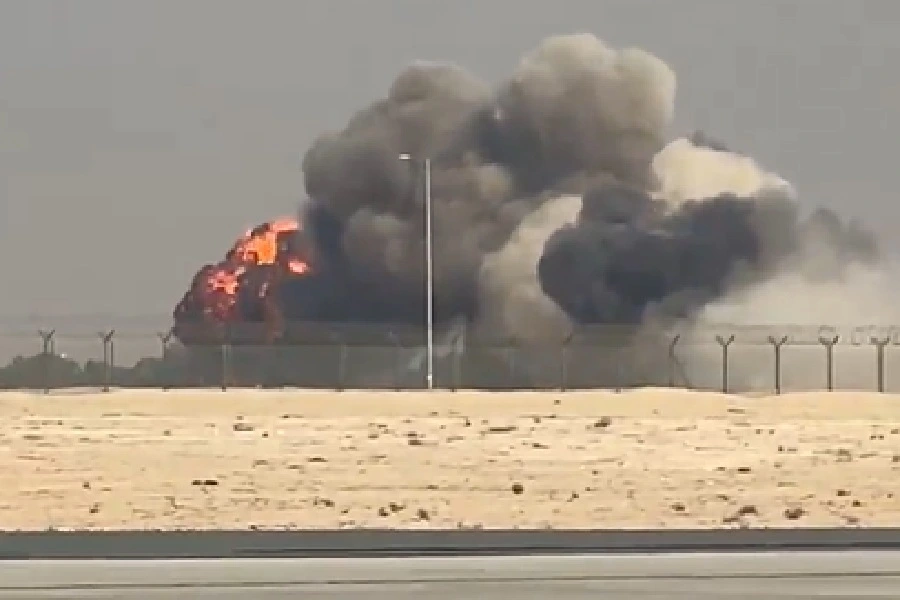
A Light Combat Aircraft (LCA) Tejas of the Indian Air Force (IAF) crashed during a high-profile aerobatic display at the Dubai Airshow on Friday, resulting in the tragic death of the pilot. The IAF confirmed the fatality and announced that a court of inquiry has been constituted to determine the cause of the accident.
The jet, participating as part of India’s official flying contingent, went down at approximately 2:10 PM local time while performing an advanced maneuver. Witnesses reported that the aircraft appeared to lose stability mid-sequence, rapidly descending before striking the ground and erupting into a plume of flames and thick black smoke. Emergency personnel responded immediately, but the impact was already catastrophic.
In a statement released shortly after the crash, the IAF expressed profound grief over the loss of its pilot and assured that a thorough investigation would begin without delay. The force extended condolences to the bereaved family and emphasized its commitment to uncovering the exact circumstances that led to the incident.
Sequence of Events
Preliminary observations indicate that the aircraft was executing a high-G maneuver as part of the scheduled display routine. Spectators reported a sudden loss of altitude followed by a steep nose-down trajectory. Attempts to determine whether the pilot initiated an ejection remain inconclusive at this stage, with no official confirmation available.
Firefighting teams at the venue acted swiftly to contain the blaze, while security personnel cordoned off the area to facilitate rescue operations and prevent public access to the crash site.
About the Tejas Fighter Jet
The HAL Tejas is India’s indigenously developed 4.5-generation, single-engine, multirole light combat aircraft. Designed by the Aeronautical Development Agency (ADA) and manufactured by Hindustan Aeronautics Limited (HAL), the aircraft is known for its agility, advanced avionics, and compact design optimized for both air-defence and strike missions.
The Tejas is equipped with a zero-zero ejection seat capable of functioning at low altitudes, a feature intended to boost pilot survival in emergency scenarios. Friday’s crash marks one of the rare fatal incidents involving the platform, which has otherwise maintained a strong safety record since its induction.
Prior Controversy
In the days preceding the airshow, the aircraft had been the subject of viral online speculation after a video surfaced alleging an “oil leak” from a Tejas Mk1. Indian defence authorities dismissed the claims, clarifying that the fluid seen in the footage was condensed water released during standard pre-flight procedures. The Ministry of Defence called the circulating claims misleading and attributed them to attempts to undermine confidence in India’s indigenous defence capabilities.
Implications for India’s Defence Sector
The crash carries significant ramifications for India’s military aviation landscape:
- Strategic Impact: The Tejas is central to India’s defence modernization and “Make in India” initiatives. The incident may heighten scrutiny of operational protocols during international demonstrations.
- Export Prospects: India has been actively promoting the Tejas to global buyers. A high-visibility accident at an international airshow may influence perceptions among potential partner nations.
- Safety Reviews: Findings of the court of inquiry will be critical in determining whether technical modifications or procedural changes are required.
The fatal crash of the Tejas fighter jet at the Dubai Airshow has cast a shadow over India’s showcase of indigenous aerospace capabilities. As the investigation begins, questions about mechanical performance, pilot response, and flight-display safety standards are expected to dominate discussions. The incident stands as a sobering reminder of the risks inherent in military aviation and the need for continuous advancement in safety and design.

