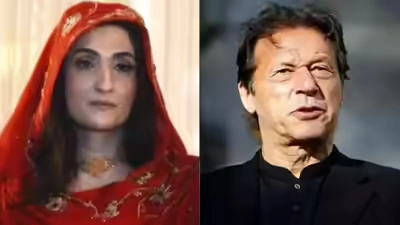
In a landmark development that has sent ripples through Pakistan’s political landscape, a special accountability court on Friday sentenced former Prime Minister Imran Khan and his wife Bushra Bibi to 17 years of rigorous imprisonment each in the high-profile Toshakhana-II corruption case. The verdict marks one of the most consequential judicial actions against a former head of government in recent years and is expected to have far-reaching political and legal implications.
A Verdict with Major Political Impact
The special court ruled that Imran Khan and Bushra Bibi were guilty of misuse of state gifts, violating transparency and accountability norms governing the Toshakhana, a repository where gifts received by public office holders are deposited. The prosecution argued that the couple unlawfully retained and disposed of valuable gifts obtained during Khan’s tenure as prime minister, causing significant financial loss to the state.
Along with the prison sentence, the court reportedly imposed substantial financial penalties and disqualification clauses, reinforcing the seriousness of the charges. The ruling effectively deepens Khan’s legal troubles, as he already faces multiple cases linked to corruption, governance, and national security.
Legal Team Moves Toward Appeal
Shortly after the verdict, Khan’s legal counsel announced plans to challenge the conviction in the High Court, calling the judgment “politically motivated” and “legally flawed.” The defense maintains that the case lacks merit and alleges procedural irregularities during the trial.
Key points highlighted by the defense include:
- Alleged denial of a fair trial
- Insufficient evidence linking the accused to criminal intent
- Selective application of accountability laws
Legal experts note that the appeal process could take months and may temporarily shift the focus from political fallout to judicial scrutiny.
Understanding the Toshakhana-II Case
The Toshakhana-II case centers on allegations that differ from earlier proceedings involving state gifts. Prosecutors argued that amendments and concealment of asset details constituted deliberate corruption rather than administrative oversight.
Key elements of the case include:
- Failure to properly declare high-value state gifts
- Alleged undervaluation of assets
- Unauthorized sale or retention of Toshakhana items
| Aspect | Details |
|---|---|
| Case Name | Toshakhana-II |
| Court | Special Accountability Court |
| Sentence | 17 years imprisonment each |
| Accused | Imran Khan, Bushra Bibi |
| Next Step | Appeal in High Court |
Political Reactions and Public Response
The verdict has triggered sharp reactions across Pakistan’s political spectrum. Supporters of Pakistan Tehreek-e-Insaf (PTI) condemned the ruling, describing it as an attempt to sideline a major opposition figure. Meanwhile, rival parties welcomed the judgment, framing it as proof that accountability applies equally to all, regardless of status.
Security has reportedly been tightened in several cities amid concerns of protests, while political analysts warn that the decision could further polarize an already divided electorate.
What Lies Ahead
As the case moves to the appellate stage, the Imran Khan sentencing, Bushra Bibi conviction, and Toshakhana corruption case are expected to dominate national discourse. The outcome of the High Court appeal will be closely watched, not only for its legal ramifications but also for its impact on Pakistan’s democratic trajectory and rule of law.
For now, the verdict stands as a defining moment in Pakistan’s accountability process—one that underscores the enduring intersection of law, politics, and public trust.