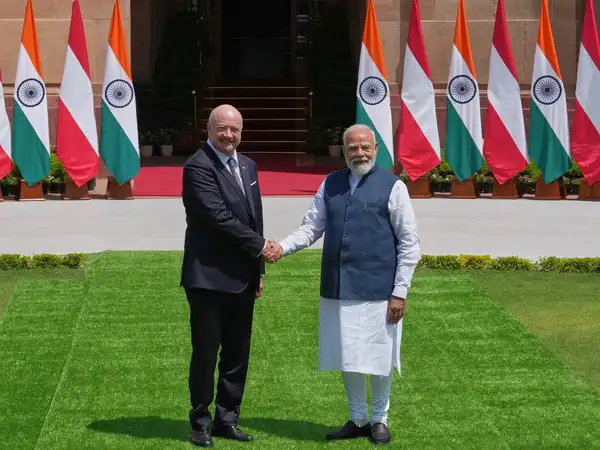
In a diplomatic move that signals a quiet recalibration of India’s European partnerships, India and Austria have signed a clutch of more than a dozen agreements covering defence, counterterrorism, and advanced technology. The pacts were inked during Austrian Federal Chancellor Christian Stocker’s high‑profile visit to New Delhi, marking the first visit by an Austrian head of government to India in over four decades. What stands out about this round of agreements is not just their number, but the clear shift from a largely transactional economic relationship to a deeper, multi‑layered strategic partnership—one that could quietly reshape how India engages with the wider European Union and positions itself in the Indo‑Pacific security architecture.
India has long treated Europe as a source of capital, technology, and niche defence systems, but relations have often been diffuse and uneven. Austria, in particular, has been seen as a stable, neutral European partner with little overt geopolitical weight, more noted for its neutrality and UN‑centric diplomacy than for military or tech clout. Yet that image is changing. The 12+ agreements signed in New Delhi—including a Letter of Intent on military cooperation, a joint working group on counterterrorism, and a raft of technology‑focused memoranda—suggest that Vienna is now being quietly positioned as a niche but important node in India’s broader European outreach.
From Low‑Profile to Strategic Partner
For decades, India–Austria ties rested on a modest foundation of trade, tourism, and cultural exchanges. Bilateral trade, while steady, hovered around the €5 billion mark before the mid‑2020s, with Austrian exports led by capital goods, engineering products, and specialty chemicals, and imports from India dominated by textiles, pharmaceuticals, and information‑technology services. There was cooperation in science and education, and a steady flow of students and professionals, but nothing that would classify Austria as a “strategic” partner in the way France, Germany, or even Sweden are sometimes framed.
That began to change after Prime Minister Narendra Modi’s landmark visit to Vienna in 2024, the first by an Indian Prime Minister in 41 years. That trip, coming amid the Ukraine war and Europe’s broader re‑evaluation of its defence and energy posture, opened the door for a more substantive dialogue. Austrian officials, constrained by their long‑held neutrality and non‑NATO status, nonetheless saw in India a fast‑growing economy, a technology‑savvy workforce, and a country with which it could share concerns about hybrid threats, disinformation, and cyber‑insecurity. The result was a step‑up in political engagement and a series of working‑level dialogues that culminated in the 12+ agreements signed in April 2026.
Defence Cooperation: A New Avenue
At the heart of the new partnership is defence. The Letter of Intent on military cooperation is the most visible pillar, signalling a move beyond the occasional defence exhibition or small‑scale training exchange. What this LoI is expected to deliver is a framework for joint research and development, particularly in areas where Austria has niche technological strengths—high‑altitude sensors, rugged surveillance systems, and compact unmanned systems suited to mountainous and border‑zone environments. India, with its own expanding defence R&D and a growing appetite for “Make in India” defence platforms, brings scale, battlefield‑relevant requirements, and a large industrial base.
One of the most concrete prospects is around unmanned aerial vehicles and surveillance platforms that can operate in challenging Himalayan terrain. Austrian firms, many of them small‑to‑mid‑sized specialists with roots in Alpine engineering, are already known for drones and sensors tailored to high‑altitude and low‑temperature conditions. India wants to digitise its border-management architecture and compress decision-making timelines in the face of emerging threats and these capabilities could be slotted into existing Indian surveillance and reconnaissance ecosystems . Beyond hardware, the agreement also hints at joint training, technology‑transfer frameworks, and possibly co‑production models that align with India’s push to reduce import dependence on larger defence powers.
Importantly, Austria’s neutrality means that this cooperation will likely be oriented more toward surveillance, intelligence, surveillance, and reconnaissance (ISR), and defensive systems than toward heavy offensive platforms. That, in turn, reduces political friction at home in Vienna while still giving New Delhi access to advanced European technologies without the heavy geopolitical baggage that sometimes accompanies arms deals with other European capitals. Whether this can translate into a meaningful, sustained defence industrial partnership remains to be seen, but it does offer India a more diversified European technology basket.
Counterterrorism and Security: Closing the Gaps
The second major cluster of agreements revolves around security and counterterrorism. The new Joint Working Group on Counterterrorism is designed to institutionalize intelligence sharing between India’s agencies and their Austrian and wider European counterparts, with a particular focus on cross‑border terrorist networks, cyber‑enabled terror, and financing channels. India has long argued that terrorism cannot be viewed in isolation from regional politics, and the agreements explicitly underline that both sides reject “all forms of terrorism, including terrorism sponsored from abroad,” echoing India’s long‑standing diplomatic stance.
The practical outcomes of this framework could include more coordinated tracking of individuals and groups that move between Europe and South Asia, as well as tighter collaboration on financial‑intelligence work to freeze assets linked to terrorist networks. Austrian authorities, for their part, gain access to India’s extensive operational experience in dealing with home‑grown and cross‑border militancy, as well as insights into threat patterns in Southeast Asia and the Indian Ocean region. Given the growing convergence between physical security and cyber‑threats—think ransomware attacks on critical infrastructure, disinformation campaigns, and the use of encrypted platforms by extremist networks—this work is likely to blur the lines between “terror” and “hybrid” security.
A parallel cybersecurity‑focused dialogue is also taking shape under the broader technology umbrella. This is where the partnership becomes more than just a bilateral arrangement: it plugs India into European networks that are already working on standards for secure digital infrastructure, incident‑response protocols, and safeguards for critical systems such as power grids, financial networks, and government services. For a country undergoing rapid digitalization, from Aadhaar‑linked services to digital banking and smart‑city infrastructure, that kind of cross‑border cooperation is not just desirable—it is essential.
Technology, AI, and the Quantum Frontier
The third and arguably most ambitious pillar of the agreements is technology. The new pacts aim to thread together several strands of future‑oriented cooperation: artificial intelligence, cybersecurity, quantum technologies, and semiconductors. Taken together, they suggest a shared ambition to avoid being overly dependent on a small handful of global tech giants and to build a more resilient, regionally‑linked technology ecosystem.
On AI and cybersecurity, the idea is to create a kind of “joint cyber shield” between India and Austria, with Indian startups and research labs collaborating with Austrian cybersecurity specialists on tools to detect and respond to advanced cyber‑attacks. This could involve AI‑driven threat‑detection systems, automated incident‑response playbooks, and shared datasets (within privacy and regulatory bounds) that allow both countries to refine their defences against everything from phishing campaigns to state‑backed cyber‑espionage. Crucially, the partnership also puts a strong emphasis on ethical AI and data‑protection norms, reflecting Austrian and broader European sensitivities about privacy and digital rights.
The ambition is at another level with quantum technologies. The agreements include cooperation on quantum-key distribution and quantum-inspired algorithms that might, someday, make encryption mechanisms more resilient to future advances in computing power. For India, this is part of a broader push to avoid being left behind in the quantum race, while for Austria it offers a way to position its research institutions at the forefront of a nascent but potentially transformative field.
Semiconductor and chip‑design cooperation is more concrete on the industrial side. India’s drive to build a semiconductor ecosystem—through its Production Linked Incentive (PLI) schemes and investments in design and fabrication—finds a European partner in Austrian firms that specialize in niche but high‑value components, sensors, and embedded systems. The expectation is that Austrian companies will set up local units or ramp up existing operations in India, while Indian design houses and research labs contribute to joint projects that span the full spectrum from chip architecture to final‑system integration.
India and Austria Cement a New Strategic Axis: 12+ Pacts on Defence, Counterterrorism, and Technology