
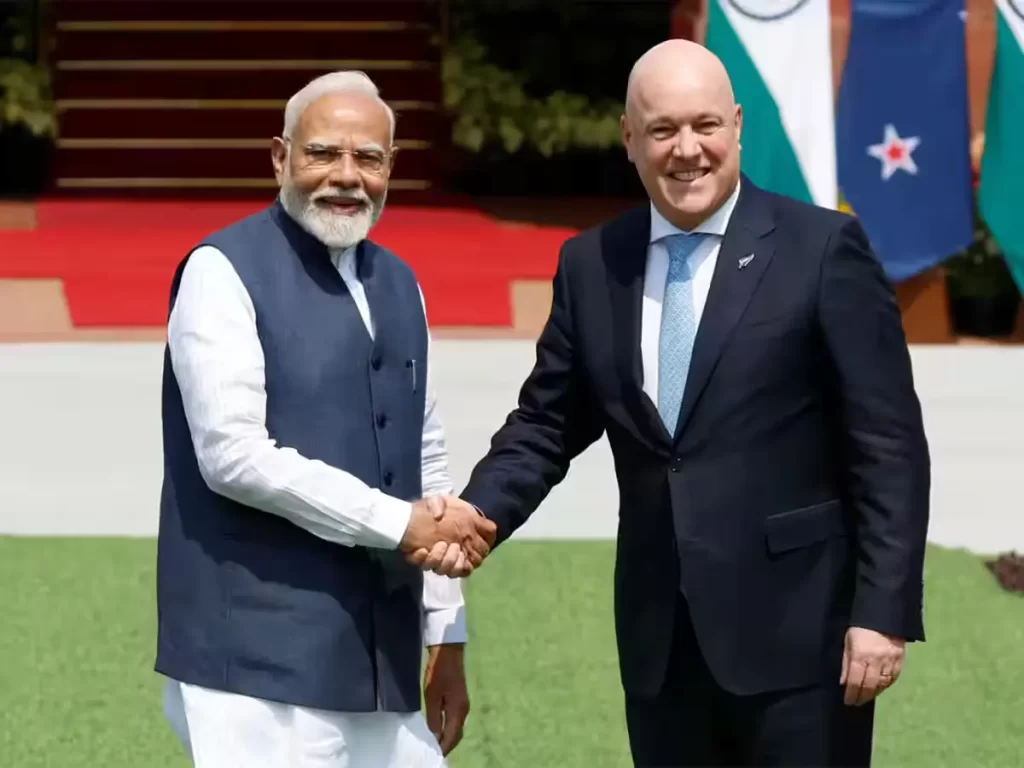
India and New Zealand have begun the fourth round of negotiations on a proposed Free Trade Agreement (FTA), taking place in Auckland from 3 to 7 November 2025. The discussions mark another step in efforts by the two nations to forge a balanced, comprehensive, and mutually beneficial trade framework.
At the opening of the session, India’s Ministry of Commerce and Industry confirmed that negotiators will focus this week on three key chapters: trade in goods, trade in services, and rules of origin. These topics have long been identified as critical for ensuring that the future pact supports competitive access for exporters, protects sensitive sectors, and provides clarity on how goods qualify for preferential treatment.
During earlier rounds of talks, held virtually and in person in both New Delhi and New Zealand, both sides made measurable progress. The current session in Auckland is expected to deepen the technical work, with officials stating that they are working constructively to build on the progress achieved previously.
India’s bilateral merchandise trade with New Zealand reached approximately USD 1.3 billion in FY 2024-25, a figure that has drawn renewed attention amid the FTA talks. Key Indian export lines to New Zealand include textiles, pharmaceuticals, refined petroleum products, and agricultural goods, while New Zealand’s exports to India consist of iron and steel, wool, aluminium products, and certain agricultural items.
The emphasis on rules of origin is especially important, as it determines the threshold of local content required for goods to qualify for tariff-free or reduced-tariff access under the pact. This will be decisive for industries on both sides, including textiles in India and dairy or agricultural goods in New Zealand. Industry watchers believe that bridging differences on origin criteria will unlock meaningful market access.
In the services domain, the partnership seeks to enhance cooperation in areas such as tourism, education, and professional services—sectors in which both India and New Zealand have growing interest. The talks also provide an opportunity to align regulatory standards, ease trade facilitation, and strengthen investment flows.
However, observers caution that while there is optimism, structural gaps remain. Sensitive sectors such as agriculture and dairy in New Zealand, and textiles and manufacturing in India, are likely to be the most challenging to reconcile. The timeline for conclusion is ambitious, with both governments signalling their desire to finalise an agreement in the near term.
The fourth round of the India-New Zealand Free Trade Agreement negotiations represents a pivotal moment in the bilateral trade relationship. With focused attention on trade in goods, trade in services, and rules of origin, both countries aim to chart a roadmap for enhanced economic cooperation. If successful, the pact could not only accelerate trade flows but also deepen sectoral linkages, strengthen supply-chain resilience, and foster shared prosperity. The outcome in Auckland may well shape the next chapter of India-New Zealand economic engagement.

