
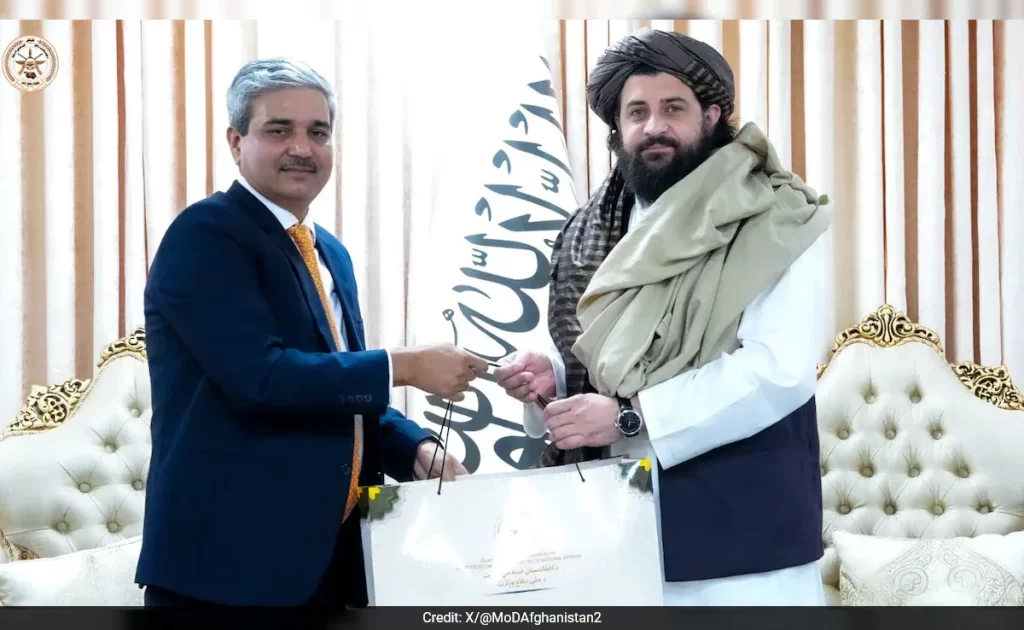
In a significant diplomatic development, India has announced plans to upgrade its technical mission in Kabul to a full-fledged embassy, signaling a strategic shift in its engagement with Afghanistan under Taliban rule. This move, underscored by India’s Foreign Minister Subrahmanyam Jaishankar, aims to bolster bilateral relations and enhance cooperation in areas such as trade, health, and education. However, the timing and context of this decision suggest a broader regional implication, particularly concerning Pakistan-occupied Kashmir (PoK).
Body:
The decision to elevate India’s mission in Kabul reflects a pragmatic approach to regional diplomacy. Despite historical tensions, including the 1999 hijacking of an Indian plane to Taliban-controlled Afghanistan, India has maintained contact with the Taliban since their return to power in 2021. This engagement is driven by India’s strategic interests in countering Pakistani and Chinese influence in Afghanistan, especially amid strained Afghanistan-Pakistan ties.
Foreign Minister Jaishankar emphasized India’s role as a “contiguous neighbour” and a “well-wisher” of the Afghan people, highlighting shared concerns over cross-border terrorism. This statement subtly underscores India’s position on the territorial dispute over PoK, implicitly challenging Pakistan’s claims.
The Taliban’s desire for international recognition, including from India, adds complexity to the regional dynamics. While India has not officially recognized the Taliban-led government, the upgrade of diplomatic ties suggests a nuanced engagement strategy. This approach aims to influence Afghanistan’s development positively while safeguarding India’s strategic interests.
Pakistan’s response to these developments has been cautious. The country has expressed concerns over India’s growing influence in Afghanistan, viewing it as a potential threat to its strategic depth. Simultaneously, Pakistan continues to face challenges from the Tehrik-i-Taliban Pakistan (TTP), with recent military operations targeting militants in the northwest.
Conclusion:
India’s decision to elevate its diplomatic presence in Kabul marks a significant shift in its foreign policy, reflecting a strategic recalibration in response to evolving regional dynamics. While the move enhances India’s engagement with Afghanistan, it also sends a subtle message to Pakistan regarding the PoK issue. As the situation unfolds, the implications of this diplomatic shift will continue to influence the geopolitical landscape of South Asia.

