
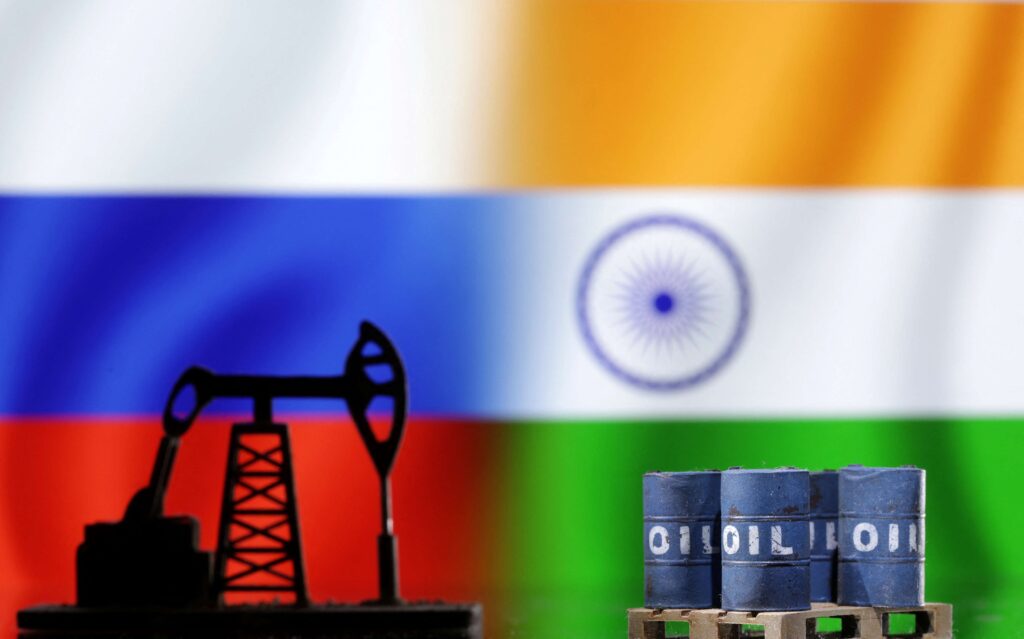
Tensions between India and the United States are mounting following reports that Washington may impose a staggering 500% tariff on certain Indian exports. The move is seen as a response to India’s continued purchase of discounted crude oil from Russia, raising alarms over potential violations of Western sanctions amid the ongoing Russia-Ukraine conflict.
The proposed tariffs, which could dramatically affect India’s export economy, are under consideration as part of a broader U.S. review into trade practices linked to nations indirectly supporting the Russian economy. According to senior officials within the Biden administration, India’s increased reliance on Russian oil imports, often refined and re-exported globally, has drawn criticism from U.S. lawmakers who argue that it undermines Western efforts to economically isolate Moscow.
India has defended its oil purchases, emphasizing that it is acting in national interest by securing affordable energy sources for its population and economy. Officials from the Indian Ministry of External Affairs have reiterated that India’s trade decisions are non-political and based on economic needs, while maintaining that no sanctions currently prohibit buying Russian crude.
Despite India not being a signatory to Western sanctions, the U.S. is reportedly exploring options under its “secondary sanctions” policy. This allows the U.S. to penalize entities or nations that indirectly support sanctioned activities. Trade analysts warn that a 500% tariff would not only affect Indian petrochemical and refined fuel exports, but could also have broader consequences across textile, pharmaceutical, and IT sectors.
India is currently one of the largest importers of Russian crude oil, with volumes surging significantly after the West banned direct purchases from Moscow. Much of this oil is processed in Indian refineries and exported to markets including the EU and the U.S. This “backdoor” refining system has increasingly come under scrutiny.
In response, the U.S. Treasury Department is reportedly coordinating with allies to assess India’s compliance with sanctions norms. However, there is concern that such punitive actions could damage the strategic partnership between India and the U.S., especially at a time when both nations are seeking deeper military and economic cooperation in the Indo-Pacific.
Experts suggest that if the U.S. proceeds with the tariff plan, India may consider retaliatory trade measures or push for relief through the World Trade Organization (WTO). Trade tension of this scale could potentially derail several ongoing bilateral trade negotiations and strategic dialogues.

