
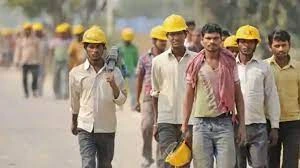
In a transformative step for India’s labour landscape, the central government has officially enforced all four new Labour Codes from 21 November 2025. The reform — consolidating 29 existing labour laws into a unified framework — represents the country’s most extensive update to worker rights, wage structures and employer compliance norms in decades. The move is expected to reshape employment practices across sectors, influence industrial relations, and expand social security coverage for millions.
A Unified Labour Framework Takes Shape
The four codes now in force — the Code on Wages, the Industrial Relations Code, the Code on Social Security, and the Occupational Safety, Health and Working Conditions (OSHWC) Code — aim to streamline India’s previously fragmented labour law system. Key SEO-relevant terms such as labour code implementation, wage reforms, social security expansion, industrial relations, occupational safety, and worker rights dominate public discussions around the reform.
The overhaul is designed to improve transparency in wage payments, simplify compliance for industries, ensure better safety standards at workplaces, and bring previously unregulated workers — particularly those in the informal and gig economy — under the social-security net.
Key Changes Introduced Under the New Codes
1. Wage Reforms and Minimum Wage Clarity
The Code on Wages introduces a uniform definition of “wages” and enables a national floor wage, ending inconsistency across states. It strengthens provisions for timely wage payments and extends coverage to contract and gig workers, ensuring broader protection.
2. Enhanced Social Security, Including Gratuity Benefits
Under the Code on Social Security, fixed-term employees can now receive gratuity after just one year of service instead of five. Platform workers and gig workers receive legal recognition and access to government-backed social-security schemes — a landmark shift in India’s evolving labour market.
3. Revised Industrial Relations Framework
The Industrial Relations Code increases the threshold for mandatory government approval for layoffs and closures from 100 employees to 300. Supporters say this will improve business flexibility and attract investment, while trade unions argue it may weaken job security.
4. Stronger Occupational Safety and Working Condition Norms
The OSHWC Code unifies regulations governing factories, mines, construction sites, and other establishments. Mandatory health checks, safer working environments, and standardised welfare provisions aim to reduce workplace accidents and improve long-term worker well-being.
Summary of Major Shifts
| Area | Earlier Requirements | New Provisions Under Codes |
|---|---|---|
| Layoff approval threshold | 100 workers | 300 workers |
| Gratuity eligibility | After 5 years for fixed-term workers | After 1 year for fixed-term workers |
| Minimum wage framework | Varied state definitions | National floor wage and uniform wage definition |
| Gig/platform workers | No formal recognition | Legal recognition with social-security inclusion |
| Compliance systems | Multiple overlapping laws | Streamlined into four consolidated codes |
Implications Across Sectors
Manufacturing, construction, logistics, and service industries are expected to feel the immediate impact. Larger firms may find compliance easier due to clarity and consolidation, while small and medium enterprises may face adjustment challenges during the transition phase.
For workers, improved social security, clearer wage norms, and enhanced safety standards mark significant progress. However, the success of the reforms will heavily depend on how state governments implement the codes, how effectively digital compliance systems are adopted, and how grievances are resolved in the new framework.
The enforcement of the four Labour Codes marks a watershed moment in India’s push for economic modernisation and worker welfare. By balancing industrial flexibility with strengthened social protection, the government aims to create a more efficient and inclusive labour environment. As India transitions into this new regulatory era, the coming months will be crucial in determining how the reforms translate into real-world outcomes for employers, workers, and the nation’s evolving labour market.

