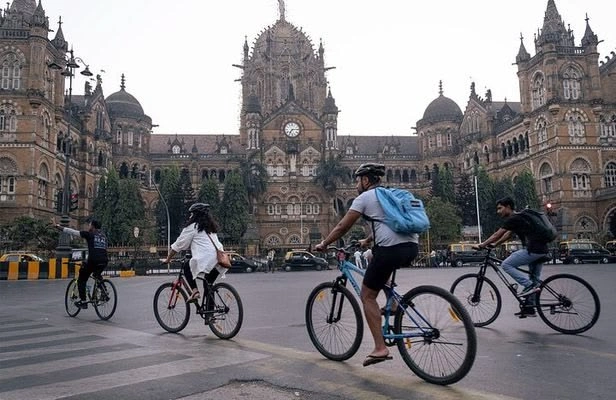
Mumbai, India, will hold the first Urban Mobility Conference for the Netherlands, Europe, and India. This is a huge step toward transforming how people get around in cities in one of the world’s fastest-growing economies. This big event, which will happen later this year, will bring together international leaders, lawmakers, and entrepreneurs to talk about how to make transportation more ecologically friendly as traffic and climate concerns get worse. The conference will be about sustainable urban mobility, which is important because Mumbai’s streets are so packed. It will stimulate partnerships that potentially transform how millions of people navigate around cities on different continents.
The Need for Sustainable Urban Mobility in India Is Growing
The cities of India are evolving in ways that have never happened before. The UN forecasts that by 2030, the number of people living in cities in the country will go up from 475 million to more than 600 million. This growth puts even more strain on the infrastructure that is currently in place. For instance, traffic congestion in big cities like Mumbai, Delhi, and Bengaluru cost the economy billions of dollars per year in missed work hours and wasted gas.
Mumbai, which is India’s financial capital and the city where the conference will be held, is a good example of these issues. There are 21 million people living in the city’s metropolitan region. It has crowded local trains that carry 8 million people every day, roads that are always stopped, and air pollution levels that often go above the World Health Organization’s safety guidelines. The Netherlands-Europe-India Urban Mobility Conference comes at a very important time for India, which is speeding up its quest for environmentally friendly transportation options through national programs including the National Urban Transport Policy and the Faster Adoption and Manufacturing of Electric Vehicles (FAME) scheme.
The event indicates that India and the Netherlands are working together in a strategic approach since they have capabilities that complement each other. The Netherlands has established models for bike-friendly infrastructure and a city layout that doesn’t get wet (about 27% of people commute by bike). The European Union’s Horizon Europe program and other groups in Europe aid with cutting-edge research in green logistics and smart transportation. India has a lot of people, new ideas, and a developing market for electric vehicles (EVs). In 2025, sales of EVs went up by 50%.
Important Points and Key Goals on the Agenda
A coalition of Indian ministries, the Netherlands Enterprise Agency (RVO), and European mobility alliances are putting together the meeting. Its purpose is to fill in policy gaps and get people to work together on projects. Some of the key subjects are making cities more eco-friendly, turning public transportation into electric vehicles, and using data to control traffic.
Delegates will look into:
Electric Mobility Acceleration: This article talks about ways to get more people to utilize electric cars, with India’s goal being 30% of all automobiles by 2030. There will be a lot of talk about how the Netherlands is working on battery-swapping stations and how Europe is making progress with solid-state batteries.
Multi-modal integration offers a path to more efficient urban mobility. Think bike-sharing, metro expansions, and app-based ride-hailing working in concert. Consider Amsterdam’s integrated transit app; it nudged people to drive their cars 15% less.
Infrastructure needs to be resilient, too. Climate-adaptive designs and flood-resistant roads, like Rotterdam’s water plazas, are examples of how to tackle Mumbai’s monsoon challenges.
Smart city technologies are also key. AI-driven traffic control and IoT sensors are already making a difference. Data from India’s Smart Areas Mission shows a 20% reduction in commute times in places like Pune.
High-profile panels will feature transportation ministers from India, the Netherlands, and EU countries, alongside CEOs from Tata Motors, Philips Lighting, and Siemens Mobility.
A dedicated section for startup pitches will show off new ideas including solar-powered e-rickshaws and AI that can tell when buses need to be fixed.
Statistics indicate how high the stakes are:
The Ministry of Road Transport and Highways says that 40% of India’s transportation-related CO2 emissions come from urban transportation.
In the Netherlands, there are 35,000 kilometers of bike lanes. Mumbai could cut its emissions by 10% to 15% if it used this method.
By 2050, the Green Deal for Europe wants to have no net mobility. This is the same objective as India’s net-zero vow by 2070.
These things make the conference a starting point for long-term transportation solutions that bring together Europe’s technological prowess and India’s ability to get things done.
The Netherlands and Europe as Leaders in Collaborative Work
The Indo-Dutch Smart Cities discourse in 2018 was the start of the Netherlands-India partnership, but this conference takes it to a whole new level. Companies from the Netherlands, such Arcadis and Royal HaskoningDHV, have worked on Mumbai Metro Line 3, which is a 33.5 km underground route that will open in part in 2026. It should cut down on traffic on the surface by around 450,000 cars a day.
This synergy grows greater when Europe gets involved. Germany’s Deutsche Bahn knows how to electrify trains, and France’s Alstom brings metro signaling technology that is currently being used in Kochi. These partnerships fulfill India’s special needs, include giving low-income commuters cheap last-mile connections and modernizing infrastructure from the colonial era to match current needs.
Experts believe that meaningful change will come. Dr. Maria Gonzalez, a mobility expert at the European Transport Research Center, says, “India’s cities are so packed that they need extremely unique solutions.”” The conference will offer not only technology but also flexible frameworks that have succeeded in Europe’s busy cities, such as Paris and Copenhagen.Indian urban planner Shirish Patel says, “Mumbai’s geography—coastal, hilly, and hyper-dense—requires Dutch-style water management combined with local inventiveness.”
Investment promises are anticipated to go beyond €500 million, with the purpose of developing bike routes and networks of EV charging stations. This influx coincides with India’s Production Linked Incentive (PLI) policy, which has brought in $2.5 billion worth of EV production since 2021.
The difficulty of getting about in Mumbai and the conference’s focus
It’s not a coincidence that Mumbai is hosting. A lot of people say that the city’s transportation is bad. It’s worse than Manhattan because speeds are only 12 km/h during rush hour. Dharavi, the largest slum in Asia, is an example of how unjust things are. Eighty percent of residents utilize buses and cars that break down a lot to go around.
At the conference, there will be site visits to the Mumbai Metro and the Eastern Freeway, as well as talks on non-motorized transport (NMT). One of the key goals is to make it safer for women to use public transit. Mumbai’s vision for gender-inclusive transportation draws inspiration from Dutch innovations, such as well-lit bike lanes and apps equipped with panic buttons.
Consider the potential: smart signals that could reduce daily delays by a quarter, electric vehicle fleets that might slash emissions by 30% by the end of this decade, a 500-kilometer cycling network designed to increase cycling’s current share of less than 2% by a factor of five, and multi-modal apps that could boost public transit ridership, currently at 50%, by 20%. These are some of the key challenges and their proposed solutions.
Data from NITI Aayog publications indicates that sustainable urban mobility could also be economically beneficial. Efficient cities, for example, could contribute an additional $1 trillion to India’s GDP by 2035.
India is hosting the first-ever Netherlands-Europe-India Urban Mobility Conference in Mumbai to encourage transportation that is better for the environment.