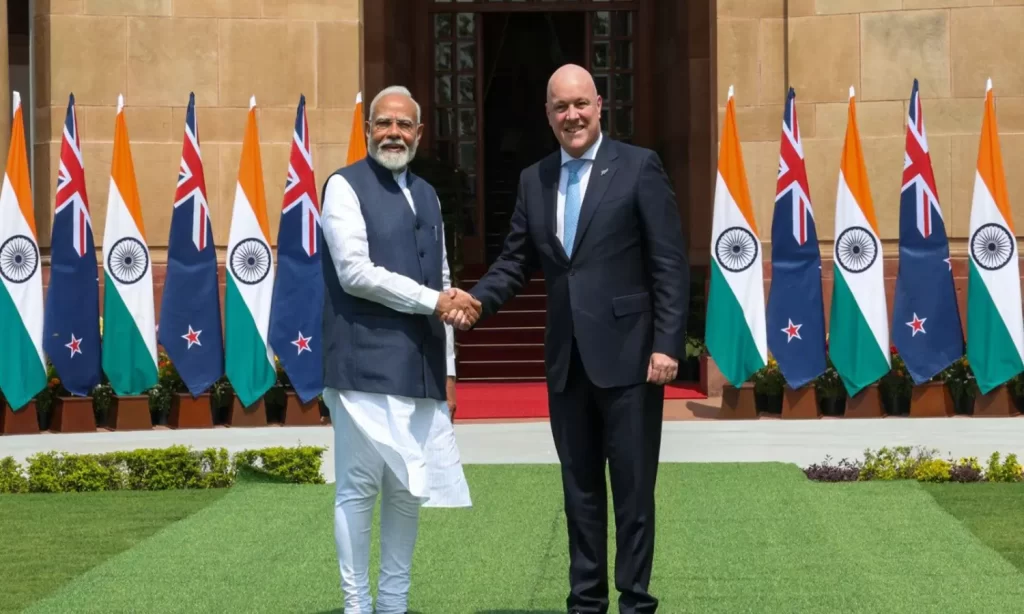
India and New Zealand have officially concluded negotiations for a landmark Free Trade Agreement (FTA), announced jointly by Prime Minister Narendra Modi and New Zealand Prime Minister Chris Hipkins on December 22. The deal, hailed as a significant step in strengthening bilateral economic ties, aims to enhance trade, investment, and strategic cooperation between the two nations.
The agreement is expected to eliminate tariffs on a wide range of goods, facilitate smoother market access for both countries, and encourage joint ventures in sectors such as technology, agriculture, and renewable energy. Indian officials emphasized that the FTA aligns with the nation’s broader strategy to diversify trade partners and bolster exports, particularly in manufacturing and services.
However, the announcement has sparked a sharp response from New Zealand’s political leadership. Foreign Minister Winston Peters described the FTA as a “bad deal,” citing two primary concerns: immigration concessions and limited access for New Zealand’s dairy exports in the Indian market. Peters criticized the agreement for not providing sufficient quota or tariff relief for dairy, a cornerstone of New Zealand’s export economy, and expressed skepticism about whether the deal adequately protects New Zealand farmers’ interests.
“This FTA fails to deliver meaningful access for our dairy sector, and the concessions on immigration could pose challenges to our workforce management,” Peters stated.
India, on the other hand, has defended the deal as balanced and mutually beneficial. Government sources highlighted that India secured favorable terms in sectors such as engineering goods, pharmaceuticals, and IT services, while maintaining regulatory safeguards for sensitive industries. Analysts suggest that the agreement could significantly boost bilateral trade, which currently stands at approximately USD 2.5 billion annually, with India as a growing export market for New Zealand’s services and technology products.
Key Highlights of the India-New Zealand FTA:
- Tariff Reductions: Significant reduction or elimination of tariffs on selected goods including electronics, textiles, and machinery.
- Services Sector Gains: Enhanced access for IT, healthcare, and education services.
- Investment Promotion: Streamlined regulatory procedures and stronger protections for bilateral investments.
- Agriculture Controversy: Limited concessions for dairy exports; agricultural protections maintained for sensitive Indian sectors.
- Immigration Terms: Flexibility in skilled worker mobility, triggering domestic debate in New Zealand.
Experts suggest that the FTA could serve as a model for India’s future trade negotiations, balancing domestic industry protection with the pursuit of international market access. Nonetheless, the controversy in New Zealand underscores the challenges of negotiating agreements that satisfy both economic imperatives and domestic political constituencies.
The conclusion of the FTA negotiations marks a significant milestone in India-New Zealand relations. However, as Peters’ criticisms indicate, the next phase—ratification and implementation—may face political hurdles, particularly in New Zealand, where parliamentary approval and public sentiment will play a decisive role. Observers will be closely monitoring how the two governments address these concerns and whether amendments or supplementary agreements will be introduced to mitigate domestic opposition.
As trade globalization continues to accelerate, the India-New Zealand FTA highlights both the opportunities and complexities inherent in modern trade diplomacy. Its success—or challenges—could influence future FTAs in the Indo-Pacific region and shape strategic economic partnerships for years to come.