
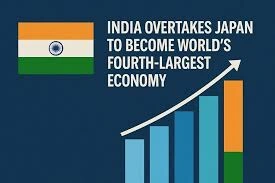
In a landmark achievement that underscores its rapidly rising economic stature, India has officially surpassed Japan to become the world’s fourth‑largest economy, according to a government economic review released at the close of 2025. This milestone signals a defining moment in India’s long-term growth trajectory and reflects the success of sustained structural reforms, robust domestic demand, and resilient macroeconomic fundamentals.
Historic Economic Leap: India at $4.18 Trillion GDP
India’s nominal Gross Domestic Product (GDP) reached approximately USD 4.18 trillion in 2025, eclipsing Japan’s economic output and elevating India into the fourth slot globally. With this shift, India trails only the United States, China, and Germany in global GDP rankings, marking a significant reshuffle of the international economic order.
Experts characterize this shift as part of a broader “Goldilocks phase” — a rare convergence of high growth, low inflation, and improving employment — conditions that together create a fertile backdrop for sustained expansion without overheating.
Drivers of Growth: Consumption, Stability, and Reform
India’s ascent has been underpinned by several key economic drivers:
- Strong GDP Growth: Real GDP expanded 8.2% in Q2 of FY 2025‑26, marking the fastest quarterly growth in six quarters and highlighting resilient domestic demand.
- Controlled Inflation: Consumer Price Index (CPI) inflation eased significantly through 2025, staying comfortably within the Reserve Bank of India’s target range and maintaining price stability.
- Employment Gains: Unemployment rates declined in late 2025, supporting stronger participation in the labour market and reflecting healthier job creation.
- Export Momentum: Merchandise exports showed consistent growth, underlining India’s rising competitiveness in global markets.
Together, these variables illustrate India’s shift from recovery to sustained expansion, driven by both internal and external economic forces. The result is a more balanced and diversified growth model that leverages private consumption, investment, and trade.
Global Economic Implications
India’s rise has significant implications for global economic dynamics:
- Reordering of Rankings: With this new status, India redefines the traditional economic hierarchy, asserting itself as a major global growth engine.
- Investor Confidence: Positive macroeconomic indicators and structural reforms such as tax rationalization and digital agenda initiatives have enhanced investor sentiment and attracted foreign direct investment.
- Policy Endorsement: International agencies have lifted growth projections for India, reinforcing confidence in the country’s medium-term outlook.
Looking Ahead: Targeting Third Place by 2030
While the fourth-largest position represents a historic achievement, the government’s forward-looking economic blueprint aims even higher. Projections indicate that India could surpass Germany to become the world’s third-largest economy by 2030, driven by accelerated manufacturing output, technological innovation, and expanded global trade integration.
To realize this vision, policymakers emphasize the importance of deepening infrastructure investment, enhancing labour market flexibility, and bolstering export-oriented sectors. These strategic priorities are expected to support long-term competitiveness and amplify India’s footprint in global value chains.
Key Economic Indicators at a Glance
| Indicator | Value (2025) |
|---|---|
| Nominal GDP | USD 4.18 Trillion |
| Real GDP Growth (Q2 FY 25‑26) | +8.2% |
| Consumer Inflation | Below Target Threshold |
| Unemployment Rate | Declining Trend |
| Export Growth | Steady Gains |

