
August 26,2025:
India on Monday urged member nations of the Shanghai Cooperation Organisation (SCO) to adopt a clear and uncompromising position against terrorism in the summit’s joint declaration, stressing that no cause or justification can legitimize violent extremism.
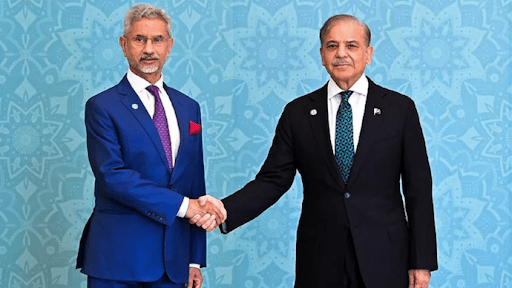
External Affairs Minister S. Jaishankar, representing India at the meeting, told delegates that terrorism continues to be the most serious threat to regional peace and stability. He reminded the gathering that the SCO itself had long identified terrorism, separatism, and extremism as the “three evils,” and said these must be tackled without exception or selective application.
India’s delegation pressed for stronger language in the final communiqué, seeking explicit condemnation of cross-border terrorism and an acknowledgment of the responsibility of states that provide safe havens or financial support to militant groups. Officials accompanying the minister said New Delhi would not support a declaration that softened the reference to terrorism.
The demand follows a series of militant strikes in Jammu and Kashmir, including the recent attack near Pahalgam, which Indian authorities have blamed on groups operating from across the border. By raising the issue at the SCO platform, India aimed to highlight the urgency of collective action and to caution against overlooking the problem for political convenience.
National Security Adviser Ajit Doval, who joined earlier sessions, also cautioned against what he described as “double standards” on terrorism. He stated that inconsistency in addressing extremist violence weakens mutual trust and only emboldens those who employ terror as an instrument of policy.
Observers noted that while several Central Asian members expressed sympathy with India’s position, consensus on a strong statement remained uncertain. Past SCO declarations have often stopped short of identifying state sponsorship of terrorism, reflecting divergent interests within the group. Diplomats said the wording of the joint text was still under discussion late in the evening.
For India, the issue goes beyond a single summit. Officials pointed out that New Delhi has consistently pushed for a global commitment to zero tolerance toward terrorism, whether at the United Nations, G20, or regional bodies. The stance at the Beijing summit was described as a continuation of that broader campaign.
Analysts added that India’s intervention also carries strategic weight, as it places pressure on member states to reconcile their political alignments with their stated opposition to extremism. The outcome, they said, will test whether the SCO can function as a credible security forum or remain hampered by internal divisions.
Whatever the result of the negotiations, India made its message unmistakably clear: terrorism in any form, from any quarter, must be condemned without ambiguity.

