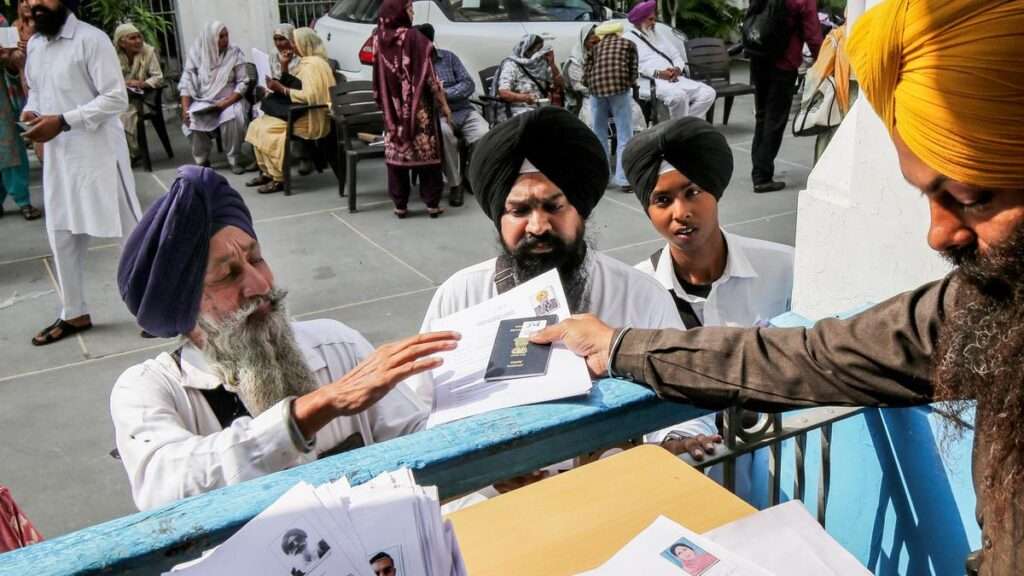
The Government of India has lifted its temporary ban on Sikh pilgrimages to Pakistan, allowing more than 2,100 Sikh pilgrims to receive visas for the upcoming birth anniversary of Guru Nanak Dev Ji. The decision, announced in October 2025, follows strong appeals from Sikh religious bodies and a review of security conditions. With visas issued by the Pakistan High Commission in New Delhi, pilgrims will now travel to major shrines including Nankana Sahib, Panja Sahib, and Kartarpur Sahib for the auspicious occasion.
The original ban, imposed by India’s Ministry of Home Affairs in September 2025, had cited security concerns and heightened diplomatic tensions with Pakistan. Sikh religious leaders and organizations immediately expressed disappointment, arguing that the restriction infringed on their spiritual rights and disrupted a long-standing tradition of pilgrimage maintained even during strained bilateral relations.
By early October, the Indian government reconsidered its stance. The Centre granted approval for Sikh jathas (groups) to visit Pakistan for Guru Nanak Dev Ji’s Parkash Purab, effectively reversing the earlier directive. Following the decision, the Pakistani High Commission in New Delhi issued visas to approximately 2,100 pilgrims, including around 1,800 from Punjab and others from Haryana, Delhi, Uttarakhand, Jammu, and Uttar Pradesh.
Despite the reopening of this channel, the Kartarpur Corridor—an important visa-free route inaugurated in 2019 connecting India’s Dera Baba Nanak to Kartarpur Sahib in Pakistan—remains closed. Authorities have cited ongoing security assessments as the reason for its continued suspension. The Home Ministry emphasized that while travel for the Guru Nanak anniversary is permitted, all participating jathas must be organized by recognized Sikh bodies, vetted through intelligence clearance, and approved on a case-by-case basis.
The reversal carries deep emotional significance for the Sikh community. The shrines in Pakistan—Nankana Sahib, the birthplace of Guru Nanak; Panja Sahib, known for the Guru’s divine handprint; and Kartarpur Sahib, where he spent his final years—are among Sikhism’s holiest sites. The earlier ban had led to widespread disappointment among Sikh religious groups, including the Shiromani Gurdwara Parbandhak Committee (SGPC), which criticized the restriction as unnecessary and insensitive to religious sentiments.
Political leaders across parties have welcomed the government’s decision. Leaders from both the Congress and the Bharatiya Janata Party (BJP) described the move as a positive and timely gesture that respects Sikh faith while maintaining national security considerations. Many observers believe the reversal could help ease religious tensions and restore goodwill between the two nations, even as diplomatic relations remain cautious.
Analysts suggest that the decision may also reflect broader political and social considerations, including addressing domestic religious sentiments and promoting limited people-to-people engagement between India and Pakistan. While the reopening of the pilgrimage route signals a small but meaningful step toward religious and cultural cooperation, the continued closure of the Kartarpur Corridor indicates that full normalization of relations remains a distant goal.
The restoration of Sikh pilgrimages and the issuance of visas to over 2,100 devotees marks a significant moment for cross-border faith diplomacy. As pilgrims prepare to celebrate Guru Nanak Dev Ji’s birth anniversary at Nankana Sahib, Panja Sahib, and Kartarpur Sahib, the move stands as a reminder of the enduring spiritual ties that transcend political boundaries and reaffirm the values of peace, faith, and unity.