In a daring step, the government has launched the Cotton Productivity Mission with a large Rs 5,659 crore budget to solve one of India’s biggest agricultural concerns. This five-year plan, which aims to boost cotton yields, ensure farmer incomes and reinforce the textile powerhouse that employs millions, was approved by the Union Cabinet just a few days ago. The push is appropriate as cotton growers are confronted with sluggish productivity and global competition.
The Cotton Crisis Extends to India
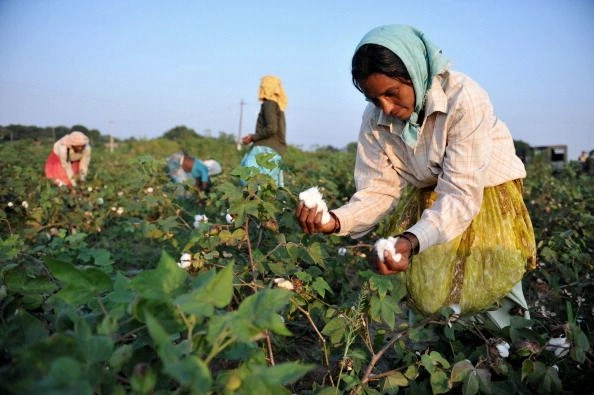
For long, cotton has been the lifeline of rural India, supporting more than 60 lakh farming households in important regions like Maharashtra, Gujarat, Telangana and Karnataka. But yields here are roughly 440 kg of lint per acre, well behind world leaders such as Brazil at 1,830 kg or the US at 1,065 kg. Pests, variable weather and old seeds have reduced production from peaks of 39.8 million bales in 2013-14 to current lows of 29-31 million bales.
Farmers get hurt bad. In the case of Maharashtra’s Vidarbha region, however, the growing input costs and pink bollworm attacks have squeezed revenues and resulted in distress sales and demonstrations. What if better seeds and technology could change that? The mission comes at a time of falling prices and premium varieties facing big threat from imports.
Mission Details: Objectives and Schedule
The plan aims to make a huge boost in production from the current 297 lakh bales to 498 lakh bales by 2031, with productivity jumping to 755 kg per hectare, beginning 2026-27 and continuing till 2030-31. No mean feat. It is in line with the government’s 5F strategy — Farm to Fibre to Factory to Fashion to Foreign — for self-reliance in textiles.
Budget Outlay: Total outlay Rs 5,659.22 crore. Funds for seeds, extension services, research hubs.
Reach: It is to reach directly 32 lakh farmers, especially in the rainfed areas which account for 67% of crops.
Timeline Milestones Initial concentrate on seed development in year one, ramp up modern procedures by year three.
Announced in Budget 2025, honed for 15 months, now cabinet-stamped for action.
Key Pillars of Change
The mission is a huge gamble on science at its foundation. Foremost among these are high-yielding climate-resilient seeds that are pest-resistant including extra-long staple (ELS) types, which are coveted for premium fabrics. Consider biotech modifications for longer fibers that can command greater mill prices.
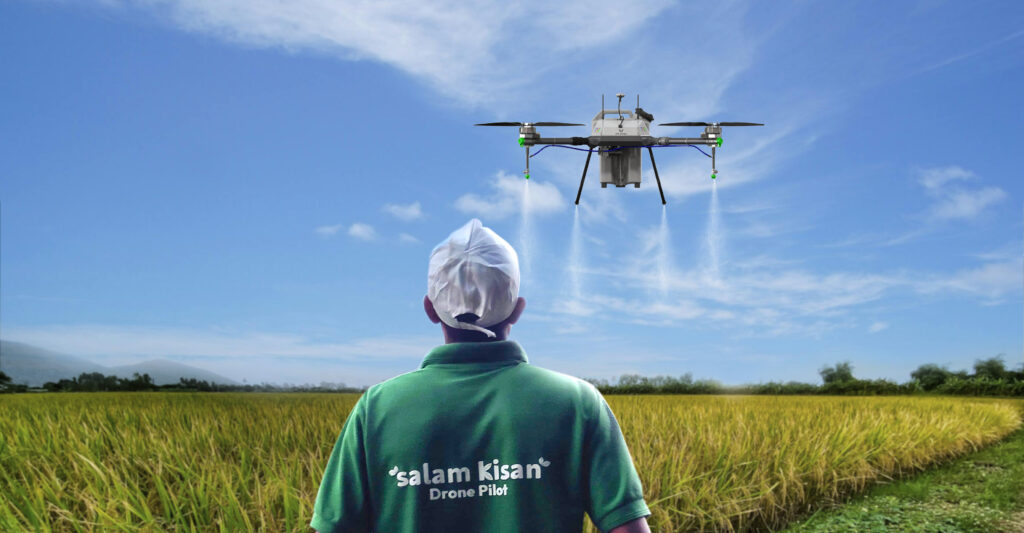
Modern farming also gets a leg up with drip irrigation, precision pest control and digital alerts via applications. Grassroots extension workers will go to villages teaching sustainable methods that reduce the use of chemicals and improve soil health.
Then there is the value chain view. Linking farmers with ginners and factories means quality lint is delivered to market without intermediaries taking a bite out of margins. This might reignite hopes in states like Gujarat, where Bt cotton previously transformed yields but now faces resistance.
Major Cotton Belts in the Limelight
Maharashtra is the top producer, but, yields are affected by fragmented holdings and water issues. Here we are targeting the mission with cluster based demos perhaps lifting the output by lakhs of bales as witnessed in recent upticks. For example, innovative co-ops in Gujarat could be the first to try out ELS, cutting down dependence on imports of high-end yarns.
Telangana and Karnataka are facing similar pest problems and integrated pest management hubs are likely to be established soon. For the rainfed farmers of these belts, many of them smallholders, the true game-changer might be affordable inputs and crop insurance tie-ups.
Nagpur in the cotton heartland stands to win greatly. Local growers have been calling for better implementation of MSP for a long time. This goal may help stabilize incomes amidst unpredictable global pricing.
Farmer Incomes: Real Gains on the Horizon?
Productivity gains aren’t simply numbers, they’re wallets. In Maharashtra, for instance, studies have shown that Bt cotton increased the net revenue by 21% due to greater yields. Now, with pink bollworm problems, farmers earn less even as acreages rise – India has 40% of global cotton area but ranks 33rd-39th in output per hectare.
The initiative has the promise of self reliance to 32 lakh growers and the tech support might double the income per acre. Like intercropping, diversification nudges, such as related farming (dairy, sericulture), create buffers. But will it reach the tiniest holdings? Extensions to the network will be important.
Economic Ripples for Textiles & Exports
Cotton supplies a $44 billion textile industry that employs 45 million. India is the largest producer of ELS cotton, but stagnant supply has hurt spinners hard, forcing them to import Consistent with Vision 2030 for fashion globals, sustained high-quality output by 2031 could supercharge exports.
This puts India in competition with China (yields of over 1,900 kg/ha) in the world. It revives clusters from Tirupur to Surat in the country providing jobs in ginning and weaving. That’s the bet – imagine less shutdowns in mills due to raw material shortages.
Challenges to Come
No plan is perfect. Previous projects have seen implementation delays, with pilots still at the conceptual stage a year after the budget was announced. Bt resistance involves careful monitoring and climate extremes – heatwaves burning bolls – test resilience.
Small farmers, often in financial traps, require access to loans and market access. Shortage of extension staff in distant locations could hamper deployment. Success depends on state-center coordination, especially in opposition-ruled cotton states.
The Way Ahead: A Brighter Cotton Age?
Cotton Productivity Mission: A crossroad for Indian agriculture With targets of 498 lakh bales and 755 kg/ha output, it might convert farmer stories from despair to success. If technology comes to the fields, and the linkages tighten, salaries will grow, textiles will flourish and exports would boom.
Can it jump history’s hurdles? Skeptics ask. Yes, early signals—recent production increases to 317 lakh bales—say yes. This is real promise for millions in the cotton belt from Nagpur’s markets to gins in Gujarat. “It’s time to sow smarter, not harder,” as one farmer put it.
India should undertake ambitious cotton productivity mission to revive farmer fortunes and increase output