
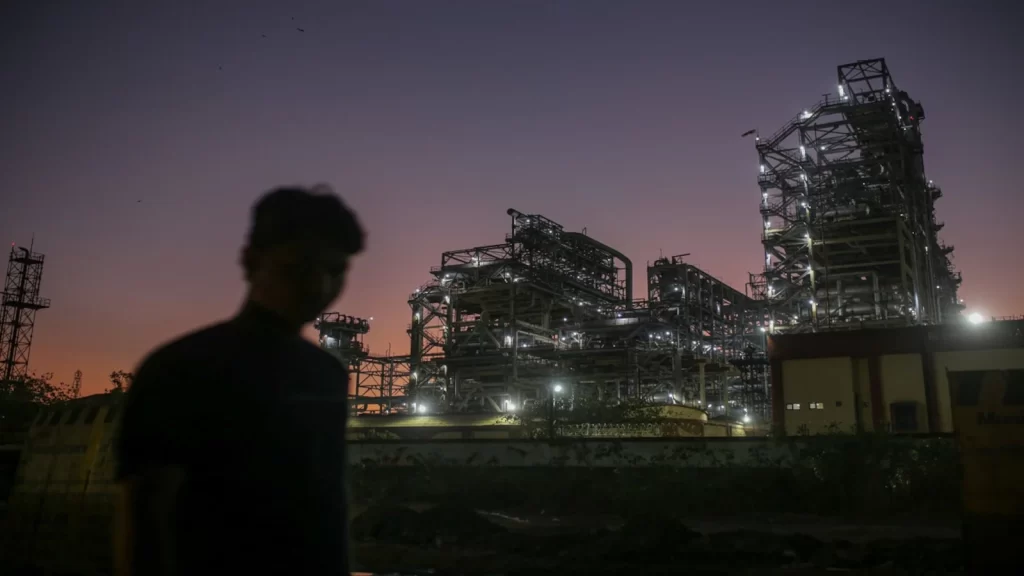
1 July, 2025-India is set to significantly increase its Strategic Petroleum Reserves (SPR) to cover 90 days of the country’s crude oil demand, aligning with international energy security standards. The move aims to enhance the nation’s preparedness against global supply disruptions and market volatility.
Currently, India holds strategic reserves sufficient for approximately 25 to 30 days of consumption. The expansion, announced by the Ministry of Petroleum and Natural Gas, will be executed in phases and is expected to boost storage capacity to meet the International Energy Agency (IEA) guideline of maintaining reserves equivalent to 90 days of net oil imports.
The new infrastructure will be developed through a mix of government funding and public-private partnerships. Plans include constructing additional underground rock caverns and above-ground tank farms at strategic locations. The total investment required for the project is estimated to be around ₹40,000 crore.
Officials stated that the expansion is part of a broader national energy security strategy aimed at reducing dependence on external supply chains. India imports over 85% of its crude oil requirements, making it vulnerable to global market disruptions. With geopolitical tensions and price fluctuations becoming increasingly common, the government views strategic oil reserves as a critical safeguard.
Industry experts have welcomed the initiative, calling it a timely intervention. “This decision reflects India’s growing awareness of energy vulnerabilities and its commitment to securing long-term stability,” said a senior analyst from a leading energy consultancy.
The government is also exploring sustainable construction methods for the new facilities, with an emphasis on minimizing environmental impact. Locations are being selected based on factors such as seismic safety, proximity to refineries, and logistical connectivity.
In addition to enhancing domestic energy security, the expanded reserves will position India to play a more influential role in global oil governance. With sufficient strategic stockpiles, the country will be better equipped to participate in international coordination efforts during global supply crises.
The plan is also expected to attract foreign investment, with global oil companies and sovereign wealth funds expressing interest in co-developing the infrastructure. The Ministry is considering leasing arrangements and revenue-sharing models to encourage private sector participation.
Once completed, the expanded SPR is expected to provide a robust buffer against both short-term shocks and long-term uncertainties in the global energy landscape. The initiative marks a strategic step in India’s journey toward self-reliance in the energy sector and economic resilience.

