
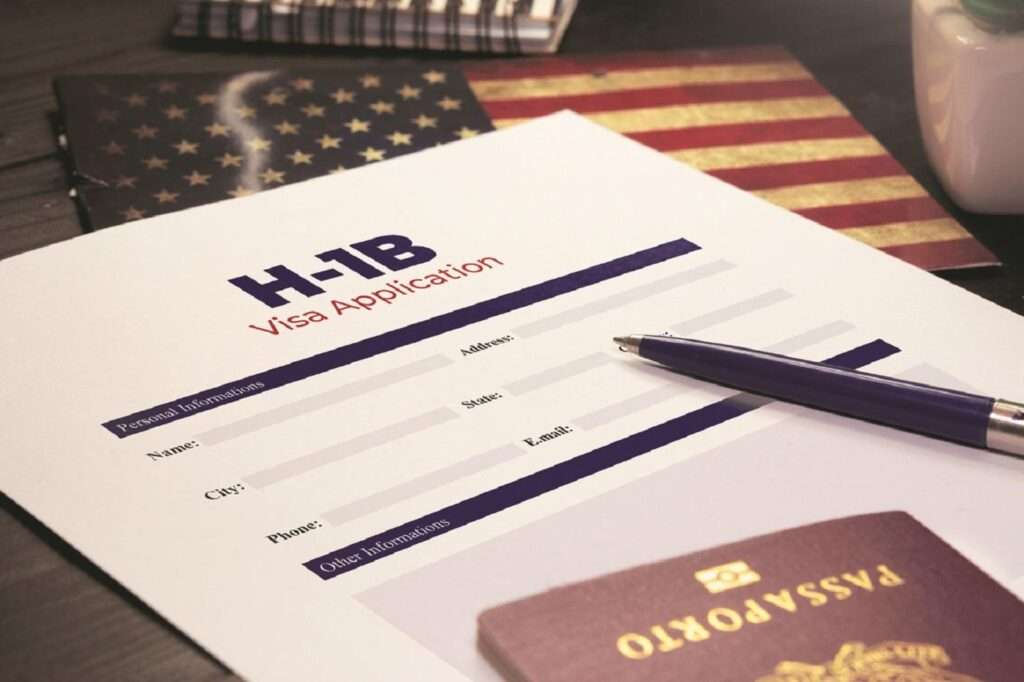
Indian IT stocks witnessed sharp declines today following reports that the U.S. administration had proposed a $100,000 annual fee for new H-1B visa applications, triggering widespread concerns across the technology sector.
The proposed policy, reportedly introduced by former President Donald Trump’s administration, initially sparked fears of a significant disruption for Indian IT companies that heavily rely on the H-1B visa program to deploy skilled professionals to the United States. The announcement prompted immediate reactions from investors, resulting in a sell-off in key IT stocks.
The NIFTY IT index, tracking the performance of major IT firms in India, dropped by 2.6%, recovering slightly from an earlier intra-day fall of 4%. Companies such as Infosys, TCS, Wipro, and HCL Technologies saw notable declines, reflecting investor anxiety over potential increases in operational costs and constraints on talent mobility.
However, the White House later clarified that the $100,000 fee would only apply to new applicants and would not affect existing H-1B visa holders. This clarification helped moderate market fears, with analysts suggesting that the long-term impact might be limited if the policy is implemented with safeguards for existing employees.
Financial experts noted that while the fee could increase costs for companies relying on U.S.-based operations, Indian IT firms have historically adapted to regulatory changes and evolving visa policies. “The immediate market reaction was overblown,” said Ramesh Kapoor, Senior Analyst at MarketWatch India. “The clarification from the U.S. administration mitigates much of the uncertainty, although companies will need to reassess their staffing strategies for new visa applicants.”
The H-1B visa program has long been a crucial pathway for Indian IT professionals seeking employment in the U.S., with tech giants leveraging the program to access specialized talent. Any policy changes affecting visa fees or application processes tend to have a direct impact on recruitment and project timelines.
Investors are now closely monitoring how Indian IT firms adjust to the potential fee, including shifting recruitment strategies, exploring local U.S. hiring, or negotiating higher service charges to offset additional costs. Analysts expect volatility to persist until more detailed regulations are released and companies outline their responses.
Despite the turbulence, the broader Indian stock market remained resilient, with the Sensex and NIFTY indices showing minor fluctuations. Sectoral experts suggest that the IT sector may experience short-term pressure but could stabilize in the medium term as companies adapt to the new policy framework.
The H-1B visa fee proposal has reignited discussions on the global mobility of IT talent and its economic implications for Indian tech firms. While the initial market reaction caused a temporary drop in stock prices, clarifications from the U.S. administration have provided some relief. Analysts emphasize the importance of monitoring policy developments and corporate strategies to understand the long-term impact on India’s IT sector.

