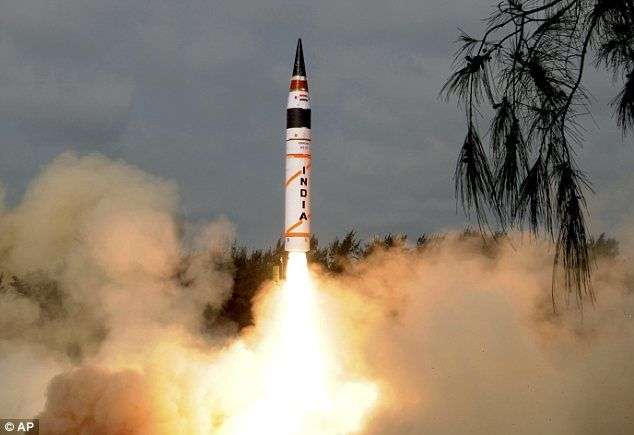
In a quiet corner of Hyderabad’s high‑tech test range, the Defence Research and Development Organisation (DRDO) has quietly redrawn the map of India’s missile ambitions. On May 9, 2026, the Defence Research & Development Laboratory (DRDL) completed a long‑duration ground test of an actively cooled, full‑scale scramjet combustor, clocking more than 1,200 seconds of continuous run time. The numbers may look like dry engineering jargon at first glance, but to strategic planners in Delhi and abroad, they signal that India is now firmly advancing along the hypersonic curve—aiming to join a tight global club that includes only a handful of countries with mature scramjet and hypersonic cruise missile capabilities.
What DRDO Actually Tested
At the heart of this milestone is the “Actively Cooled Scramjet Full Scale Combustor” tested at DRDL’s Scramjet Connect Pipe Test (SCPT) facility in Hyderabad. Unlike a conventional rocket that carries both fuel and oxidiser, a scramjet engine scoops in air at supersonic speeds and ignites fuel inside a combustion chamber, burning it at shock‑wave‑shattered velocities far beyond what ordinary jet engines can handle. For this test, the engine’s combustor was not just passively protected from extreme heat; it was actively cooled using internal channels or fluid circuits, allowing it to sustain combustion for over 12 minutes without the components melting or failing.
The test was “full‑scale” in the sense that it used a combustor geometry and thermal profile close to what would be required in a future operational hypersonic cruise missile, rather than a smaller, experimental model. Run for more than 1,200 seconds, the trial followed an earlier long‑duration test of over 700 seconds in January 2026, itself built upon a 120‑second subscale test in January 2025. Each of these steps represents a refinement in materials, cooling, flow control, and diagnostic instrumentation, gradually pushing India from theory and short‑burn tests toward credible, long‑endurance hypersonic propulsion.
Why Long‑Duration Matters
For a critic watching from a distance, a scramjet running for 12 minutes might seem excessive. After all, many tactical missiles burn for only a few dozen seconds. But hypersonic cruise missiles are built to fly at speeds above Mach 5—around 6,100 km/h or more—while sustaining powered flight for hundreds of kilometres, not just a short sprint. That is where long‑duration ground tests come in: they demonstrate whether the engine can cope with accumulated heat, pressure fluctuations, and combustion instabilities over the kind of time that would be needed for a real‑world operational mission.
By keeping the combustor “lit” for over 1,200 seconds, DRDL has effectively validated that its design can manage supersonic combustion, fuel‑air mixing, and thermal stresses in a way that supports sustained hypersonic cruise. This kind of endurance is not just a performance metric; it is a safety and reliability benchmark. If the engine cannot survive such prolonged exposure to extreme conditions on the ground, there is little chance it would hold up in flight.
How India Is Building Its Hypersonic Capability
India’s hypersonic push is not a one‑off experiment; it is a layered programme anchored in the Hypersonic Cruise Missile Development effort. The scramjet combustor is one pillar of this programme, sitting alongside work on advanced materials, aerodynamic shaping, guidance‑and‑control systems, and the associated test infrastructure. In that sense, the recent test is as much about the maturity of India’s industrial‑scientific ecosystem as it is about missile speed.
The combustion chamber and the SCPT test facility were both designed and developed in‑house at DRDL, with hardware produced in collaboration with Indian industry partners. That domestic‑built pedigree is politically as well as technically significant. It reduces dependence on foreign suppliers for critical components, an important consideration in an era of export controls and technology restrictions around hypersonics and high‑performance materials.
From a broader defence‑industry perspective, repeated long‑duration tests also help firms refine their machining, welding, coating, and inspection techniques for exotic alloys and high‑temperature systems. Each successful run effectively “trains” the domestic supply chain, converting largely theoretical know‑how into repeatable, quality‑controlled production capability. That is a slow, incremental process—but one without which India would remain stuck with limited‑quantity prototypes instead of deployable systems.
What This Means for India’s Military Strategy
Hypersonic cruise missiles introduce a new rhythm into modern warfare. Flying at Mach 5 or above, they can compress the time between detection and impact, forcing adversaries to respond in seconds rather than minutes. For a country like India, which faces multiple theatres of potential conflict and long maritime borders, that kind of speed combined with precision can offer a powerful deterrent as well as a strike option against time‑sensitive targets.
By demonstrating a long‑duration scramjet combustor, India is signalling that it is moving beyond the “concept” and “short‑burn” phase toward a more operationally credible hypersonic cruise missile capability. Officials and defence analysts have described this as positioning India at the forefront of advanced aerospace and emerging war technologies, placing it among a small group of nations with advanced hypersonic propulsion expertise.
Rajnath Singh, the Defence Minister, has publicly called the successful test a “solid foundation” for India’s Hypersonic Cruise Missile Development Programme. That language is careful, but telling. It suggests the government is treating hypersonics not as a vanity project, but as a core pillar of future defence imports replacement and strategic autonomy.
The Global Context: Who Else Is in the Race?
India’s hypersonic progress needs to be seen against a backdrop of intense global competition. The United States, Russia, and China have all conducted hypersonic tests with varying degrees of success and transparency, and each is investing heavily in scramjet and boost‑glide technologies. Speed alone is not the entire story; combining hypersonic velocity with guidance, survivability, and acceptable cost is what separates demonstrators from deployable weapons.
What makes India’s latest test stand out is its duration. Most public reports of hypersonic combustor tests abroad focus on short‑burn runs, often in the tens or hundreds of seconds. By running a full‑scale actively cooled scramjet combustor for over 1,200 seconds, DRDL has placed itself in a niche group of laboratories that can not only ignite hypersonic combustion but sustain it for meaningful periods. From a technical standpoint, this suggests India is catching up on the “art” of managing extreme thermal loads and complex flow physics—two of the hardest challenges in scramjet design.
How will established military powers react? Will India’s hypersonic progress translate into more cautious diplomacy in the region, or into a new round of arms‑planning exercises by rival states? These are questions that defence planners across Asia and beyond will be quietly weighing as they study the implications of a scramjet combustor that can burn for 20 minutes on the ground.
Under the Hood: Science Behind the Scramjet Combustor
To appreciate the scale of DRDO’s achievement, it helps to look under the hood. A scramjet combustor is not a simple pipe; it is a carefully sculpted chamber where supersonic air flows in at several thousand kilometres per hour, fuel is injected, and combustion happens in a fraction of a second, all while the chamber walls are being pounded by extreme heat and pressure.
Achieving long‑duration operation means solving multiple intertwined problems at once:
Thermal management: Actively cooling the combustor walls—often with circulating coolant or special internal channels—prevents the metal or composite structure from warping or cracking under intense heat.
Fuel‑air mixing: Fuelling a stable flame in a supersonic stream is like lighting a match in a hurricane. The engine must atomise and mix the fuel so precisely that it ignites reliably and does not create destructive pressure spikes.
Flow control and stability: Any small disturbance in pressure or fuel flow can trigger combustion instability or even blow out the flame. Long‑duration tests reveal how well the design can dampen these oscillations.
In this light, the 1,200‑second run is a durability and stability test wrapped in a speed‑record disguise. It is DRDO saying, in effect: not only can we make a scramjet burn, but we can make it burn safely and predictably for the kind of time that matters in real‑world operations.
From Hyderabad to the Battlefield: What Comes Next?
Ground tests are not the final battlefield, of course. Before any hypersonic cruise missile can be fielded, the same engine must fly as part of an integrated vehicle, enduring vibrations, atmospheric variations, and the stresses of launch and separation. DRDL and other DRDO labs will likely follow up with flight‑like integration tests, captive‑carry trials, and eventually full‑scale hypersonic flight demonstrations.
Industry partners, meanwhile, will need to scale up manufacturing of combustors, nozzles, and cooling systems to meet potential production requirements. Here, the question is not just technical but economic: how many hypersonic missiles can India realistically afford, and for which missions will they be most valuable?
Another subtle but important question is doctrinal: how will the Indian military integrate hypersonic weapons into its existing mix of air‑ and missile‑based platforms? Will they be reserved for high‑value strategic targets, or woven into conventional conflict‑planning to create uncertainty and hesitation in adversaries’ decision‑making?
Looking Ahead: India’s Place in the Hypersonic Era
India’s successful long‑duration scramjet combustor test is more than a one‑day headline. It is a marker of how far the country’s aerospace and defence ecosystem has come over the past decade: from small‑scale scramjet demonstrations to full‑scale, actively cooled engines that can burn for 20 minutes. For a nation seeking greater strategic autonomy and the ability to deter aggression in a complex neighbourhood, hypersonic cruise missiles are no longer a futuristic dream but a serious engineering project with measurable milestones.
As other nations continue to test their own hypersonic systems, India’s latest achievement invites a larger, more uncomfortable question: how will the world balance the military advantages of hypersonic speed against the risks of faster escalation and shorter decision windows in a crisis? On the ground in Hyderabad, the scramjet may be cooled and contained, but the strategic implications of this technology are only beginning to heat up.
India’s Big Leap in Hypersonic Missiles: DRDO’s Long‑Duration Scramjet Test