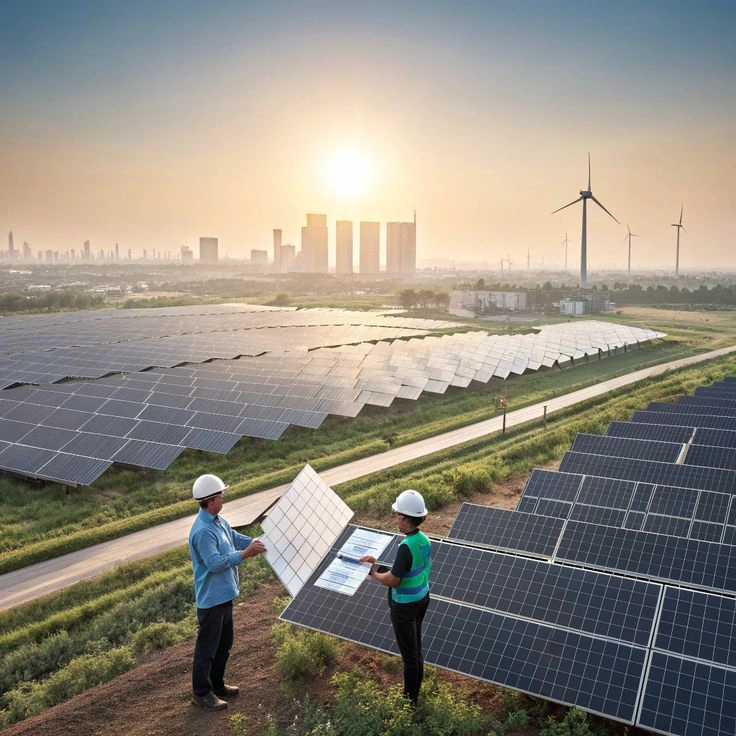
India’s renewable energy push is gaining steam, fueled by the sun-drenched expanses of Rajasthan and the breezy shores of Tamil Nadu. The government is actively supporting a significant expansion of solar and wind initiatives, aiming to reduce its reliance on coal and oil while striving to meet its ambitious clean energy targets. This isn’t just a matter of words; it’s backed by substantial financial investments, expedited approvals, and a race against climate deadlines. India currently ranks as the third-largest holder of renewable energy capacity globally. These developments have the potential to reshape the nation’s electricity landscape by 2030.
But can they get there on time?
The urgency for transformation is clear.
India’s energy needs have, for an extended period, been met primarily through fossil fuels.
Coal, in particular, generates about 70% of the country’s electricity. This dependence makes India the world’s second-biggest carbon dioxide emitter, surpassed only by China.Cities like Delhi are choked by air pollution, which makes it hard to see and sends more people to the hospital. Last year, the cost of relying on imported oil and gas was above $200 billion. Solar panels, capturing the sun’s relentless energy, and wind turbines, harnessing coastal gales, offer a cleaner alternative.
The National Solar Mission and wind energy programs are making the government’s plan work better. Recent promises promise more than 500 gigawatts (GW) of non-fossil capacity by 2030, which is more than the 200 GW we have now. Solar wants to reach 100 GW by the end of the decade, and wind wants to reach 100 GW more. It’s also a practical answer to global pressures, such when PM Modi promised to reach net-zero by 2070 at COP conferences. States like Gujarat and Karnataka are becoming green hubs, which is good for the environment and good for business because it cuts power costs for both farmers and industry.
Why now? Extreme weather is quite bad. Climate change isn’t just a theory here; it’s real. Floods in Kerala and heatwaves in Bihar are proof of this. Renewables promise stability: solar power peaks in the middle of the day when demand is high, and wind fills in the gaps at night. One issue remains: Will this change create enough jobs to make up for the loss of jobs in countries like Jharkhand where coal mines are closing?
Solar Surge: From Roofs to Deserts
India’s renewable energy expo is all about solar electricity. Thanks to falling panel prices—down 85% in ten years—capacity went up from 2.5 GW in 2014 to more over 90 GW today. The government started things off with ultra-mega solar parks. The Bhadla Solar Park in Rajasthan is the world’s largest at 2.2 GW and covers 14,000 acres. Panels stretch out like a sparkling sea, making enough power for 1.3 million houses.
There have been recent bids for 20 GW more in the past year. The Production Linked Incentive (PLI) program gives ₹24,000 crore to Indian manufacturers, which means they don’t have to rely on imports from China as much. The PM Surya Ghar initiative also helps rooftop solar by giving subsidies of up to ₹78,000 for each installation to 1 crore families. Nashik’s own solar farms are lighting up rural areas in Maharashtra and powering irrigation pumps without using a lot of diesel.
Key solar goals include reaching 120 GW by 2026, adding 30 GW per year, lowering utility-scale prices to ₹2.50 per unit (cheaper than coal in sunny areas), and new ideas like floating solar on Kerala lakes to make up for land shortages.
There are still problems. Dust storms block panels, while monsoon clouds make output less bright. Storage is important. The cost of batteries is going down, but making gigawatt-hour packs bigger is still hard. Still, governments like Andhra Pradesh are bidding hard, which is bringing in companies like Adani Green and Tata Power.
The steady rise of wind power
Wind isn’t far behind. India is fourth in the world with 47 GW deployed, largely in southern states on land. The Kutch region of Gujarat has huge farmland because it has a continuous breeze for 300 days a year. Recent hybrid projects combine wind and solar energy. For example, 1 GW sites in Gujarat make power all the time.
The Wind-Solar Hybrid Policy from the government aims for 10 GW by 2025, and it’s already halfway there. Repowering aging turbines increases output by 20–30% without needing new land. The next step is offshore wind: an auction off the coast of Gujarat for 1 GW might open up 70 GW of potential over 7,500 km of shoreline. Tamil Nadu is in the forefront with 10 GW already; its Muppandal fields have been spinning for decades.
Some of the biggest wins are adding 4 GW in 2025, with 7 GW planned each year after that, lowering prices to ₹3 per unit to compete with thermal facilities, and creating over 300,000 employment in turbine production and maintenance.
Is there going to be turbulence? Interstate transmission delays power from breezy Tamil Nadu to Uttar Pradesh, which needs it. Land issues and bird strikes slow down construction. But with viability gap financing, offshore pilots might be ready by 2028.
Incentives and Infrastructure: Policy Powerhouse
Smart policy is what makes all of this happen. The PM-KUSUM initiative, which costs ₹96,000 crore, brings electricity to 15,000 communities using solar pumps. Green Energy Corridors have already installed 1,400 km of wires to bring renewable energy to towns. Single-window clearances cut down on red tape. Projects can now get the go-ahead in 45 days instead of years.
The budget for 2026 set aside an extra ₹20,000 crore for renewable energy projects, such as hydrogen missions. The International Solar Alliance, which India and France co-lead, raises $1 trillion around the world. up the US, viability gap funding fills up gaps that aren’t making money, which is important for areas with little wind. The entire percentage of renewables will rise from 25% to 45% between 2020 and 2026. Solar power will go from 40 GW to 120 GW, and wind power will go from 38 GW to 70 GW.
FDI is pouring in—$15 billion since 2020. Adani’s 30 GW pipeline and ReNew’s global purchases show that they are confident.
Taking on problems head-on
Things don’t always go smoothly. Grid integration puts a lot of stress on aging infrastructure, and when lines get too full, 20% of renewable energy is cut off. Coal lobbyists fight back by saying that baseload reliability is important. There aren’t enough skilled people; we need a million more by 2030.
Buying land causes protests in indigenous places. What are the solutions? Green hydrogen for steel factories and pumped hydro storage in the Himalayas. According to reports from the IEA, India will reach 50% non-fossil by 2030. What about fairness? Making sure that Bihar’s villages get as much as Gujarat’s?
Global connections are helpful: US-India clean energy deals pay for tech transfers. China’s supremacy in panels leads to “Make in India” campaigns.
Jobs, the economy, and everyday wins
This boom has effects that spread. Renewables already employ 1.2 million people, which is more than coal. Solar companies in Nashik hire people from the area to put things together. Costs go down: solar irrigation saves farmers ₹50,000 a year. Companies in Pune switch, which cuts costs by 30%.
It’s a major deal for the environment since it will stop 1 billion tons of CO2 from entering the atmosphere by 2030. Rivers are cleaner without thermal ash, and the air in cities is easier to breathe.
India’s Bold Leap: How the Government is Supercharging Solar and Wind to Ditch Fossil Fuels