India’s electric vehicle revolution is no more merely a headline trend; it’s a visible rolling shift on city roads, highways, even small-town marketplaces. With companies such as Tata Motors scaling up their EV production at a rapid pace and a rising legislative push from the government, the country is going from trial to mainstream acceptance faster than many thought. The more critical question is not if India will become electric, but how seamless and inclusive that transition will be – for consumers, industry and the environment.
Just how fast is India going electric?
Recent data gives a clear picture: the Indian EV sector is presently in an acceleration phase. The share of electric vehicles in total motor vehicle sales grew from around 0.7% to 6.3% between 2020 and 2024, and today over 6% of all vehicles on Indian roads are electric. That means around 5 million registered EVs including two wheelers, three wheelers, buses and passenger automobiles. That increase has already helped save an estimated 10 million tonnes of carbon emissions since 2020, and the environmental stakes behind every new EV rolling off the line are high.
The figures for 2025–26 are even more stunning. “Four-wheeler EVs registrations in FY25-26 were almost double the previous year while electric two-wheelers registered a growth of more than 20%. Electric vehicle sales soared in March 2026 across practically all segments. E-two-wheelers crossed 1.9 lakh units in a month while e-four-wheelers were close to 22,000. That’s a rise that’s hard to miss – and hard to ignore in a country where the roads are still dominated by diesel automobiles and petrol two-wheelers.
The Tata narrative is the tale of Tata Motors
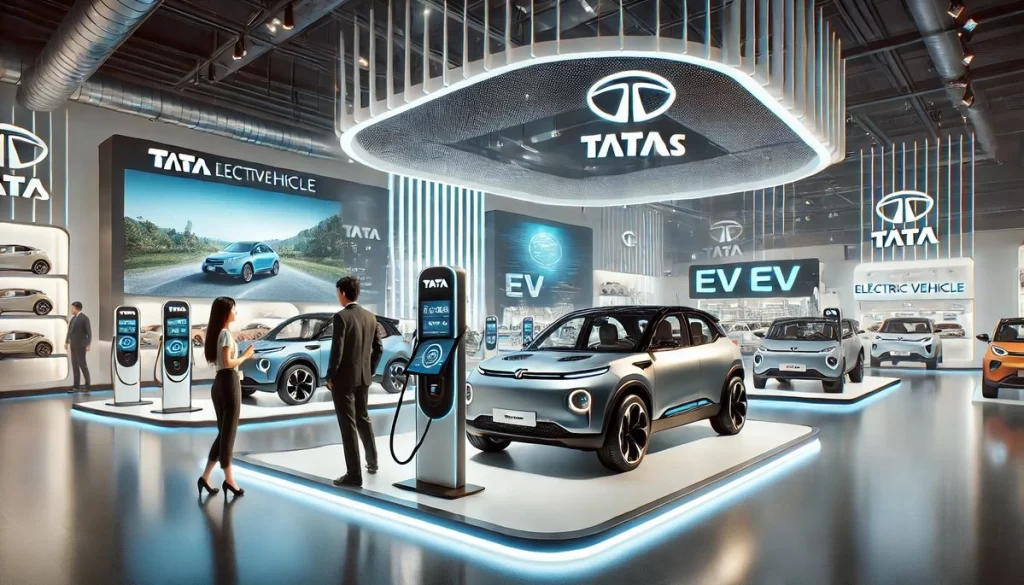
If there is a “EV poster brand” in India, it’s Tata Motors. Recently, the company’s TATA.ev sub-brand crossed the 250,000 cumulative sales mark, cementing its position as the undisputed leader in the electric passenger car space in India. Nexon EV in particular, became the first indigenous EV to reach 100,000 cumulative sales, indicating that the mainstream Indian buyers are willing to choose for home-grown EVs over imports.
Those statistics are an intentional attempt to increase output. In recent years, Tata has continually boosted capacity, doubled anticipated EV output, and retooled assembly lines to meet increased quantities. The company also said EV-related revenue is reaching $1 billion, a hint that what was once a niche experiment is becoming a major pillar of the business. With several new EV nameplates – Sierra.ev, a revamped Punch.ev and the impending Avinya – due to emerge through 2026, Tata is not just riding the EV wave; it is aiming to shape it.
Can other automakers keep up with Tata, or will this early lead translate into a long-term advantage in an increasingly congested market?
Policy fuel: FAME, PLI and the route to 2030
A larger platform of policy underpins Tata’s expansion. India’s $1.2 billion FAME II initiative has been instrumental in subsidising electric two‑wheelers, three‑wheelers and buses, making them viable options for fleet operators and individual purchasers alike. At the same time, the Production-Linked Incentive program for Advanced Chemistry Cells has allocated about ₹18,100 crore for local battery manufacture, with an emphasis on lithium-iron-phosphate (LFP) technology. The aim is straightforward: cut reliance on imported batteries, lower overall EV prices and make India a manufacturing hub, not simply a consumer market.
Policymakers are also thinking longer‑term. Official targets imply that electric new passenger cars should account for roughly 30% in 2030, and up to 80% of new two- and three-wheelers. These are bold targets, but they reflect a growing realization that India cannot afford to lock itself into another cycle of fossil-fuel fueled personal mobility, especially as constraints on urban air-quality and climate change intensify.
Costs, charges and the ‘real-world’ test
Day-to-day practicalities are still one of the largest barriers to EVs, despite the regulatory push and the Tesla-style fanfare. Range anxiety, charging infrastructure and up-front expense still influence the speed with which the average buyer takes the leap. In India, electric two- and three-wheelers have found an easier entry point: they are cheaper to run, they have smaller batteries, and they are utilized in short-range, high-utilisation urban situations such as delivery fleets and last-mile transport.
For four-wheelers, it is more complicated. An EV in India still demands a greater initial price than its petrol or diesel brother, however the cost of ownership over a period of time, through lower running costs and maintenance, frequently works out cheaper. The funding has changed: banks and NBFCs are more open to EV loans and manufacturers are combining charging-bundle choices with purchases, which eases the psychological barrier.
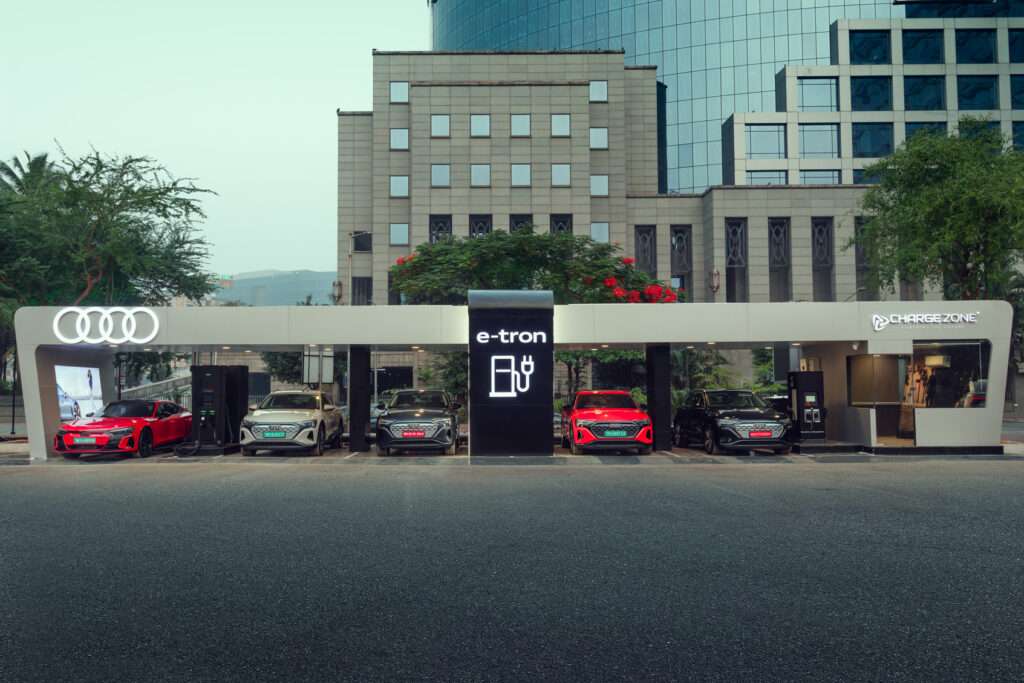
The charging ecosystem is growing, yet at the same time unevenly. Fast-charging stations are popping up in big cities and highway corridors, but not so much in small towns and rural areas. This spotty implementation raises a key question: can India’s EV dream be genuinely inclusive if charging infrastructure continues to be confined in a few metros and corridors?
Environmental promise against industrial reality
The environmental upside of the EV shift is evident. Research following India’s EV adoption between 2020 and 2024 estimates that the 5 million or so EVs on the road have already prevented over 10 million tonnes of carbon emissions, not to mention the larger decrease in local air pollution in cities. Any drop in transportation emissions matters for a country ranked among the world’s most polluted and sensitive to climate impacts.
But the industrial and resource story is more nuanced. Batteries depend on minerals such as lithium, cobalt and nickel, and India’s capacity to acquire them responsibly — without exacerbating environmental damage or social problems overseas or at home — is a significant worry. The PLI program push for domestic battery manufacturing is an attempt to limit that risk but it also implies India will require strict regulations on mining, recycling and second life use of batteries.
In other words, going electric is only half the issue. The other is how cleanly and responsibly the supply chain behind those batteries is handled.
Jobs, start-ups and the wider ecosystem
One of the more subtle but profound impacts of India’s EV push is the new layer of employment and businesses it is creating. Outside of the assembly line workers at factories such as Tata’s, thousands are now working in EV-specific areas such as battery pack assembly, charging-network operations, software for fleet management and even reverse-logistics for battery recycling. Serious funding has gone to startups working on swappable batteries, last-mile electric fleets and charging-management software, implying investors perceive structural transformations, not just fashion.
That dynamism is important for an economy as labour-intensive as India’s. The question is whether these new jobs will be available to individuals retrained from traditional auto production, or whether they will remain clustered in a few tech-savvy centers.
India’s Electric Vehicle Revolution Picks Up Speed as Tata Motors Ramps Up Production