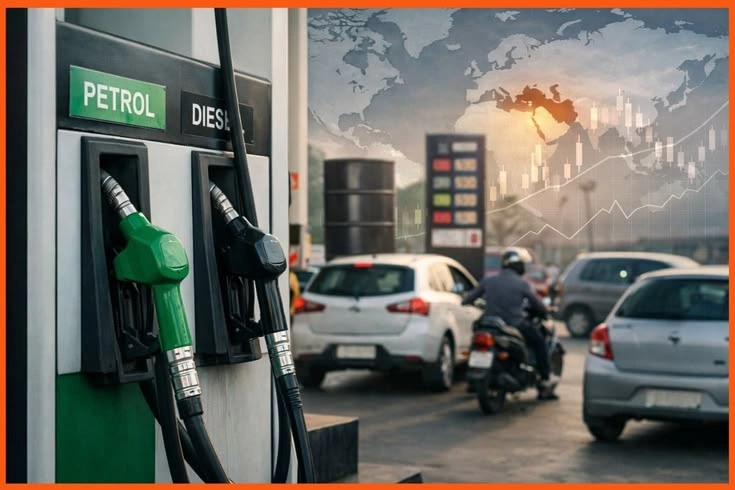
While tensions are mounting in the Middle East and international crude oil prices have breached $115 a barrel, petrol and diesel costs in Indian cities have seen no change. Delhi to Mumbai drivers are filling up at the same prices they have seen for weeks, a rare bright spot for households and companies battling inflation worries.
This stability is happening at a time when headlines are screaming about supply concerns from the Strait of Hormuz and new conflicts involving Iran connected forces. Brent crude recently surpassed $114.50, a big jump from earlier in the year, yet the pumps in major metros are same – petrol in Mumbai at ₹103.49 a litre and diesel in Delhi at ₹87.67. The puzzle everyone is talking about is how India is avoiding the fuel price bullet.
Crude Spikes Driven by Global Chaos
Oil traders edgy as Middle East fires threaten supply. The US-Iran conflict, now in its third month, has restricted traffic through major chokepoints like the Strait of Hormuz where a huge chunk of world oil passes. Strikes in the UAE and wider Israel-Iran escalations pushed WTI crude skyrocketing above $105, while Brent reached highs last seen in 2022.
OPEC+ isn’t helping ease the situation either. Eight countries, including Saudi Arabia and Russia, just increased production by 206,000 barrels a day starting in April to balance markets at low stockpiles. But that is trumped by tensions, with prices jumping 4-6% in days, pricing in chance of disruption. If things do get worse, analysts now whisper $160 WTI by mid-year.
It strikes India hard. The country uses more than 5 million barrels per day and imports 88% of its petroleum, rising from last year as demand spikes with economic expansion. The agony is being compounded by a lower rupee versus the dollar, making each barrel more expensive. But retail prices remain firm. Oh, yes?
How India Regulates Pump Prices
The key is with oil marketing corporations (OMCs) such as Indian Oil, BPCL and HPCL. “They have absorbed shocks since 2022 by eating into marketing margins, essentially selling fuel at a cost that is less than the cost of keeping stability. Govt says buffer stock of 60 days across critical reserves & OMC inventory cushions against increases.
OMCs started dynamic daily pricing in 2017, which means they can change prices at 6AM based on global signals. But lately they have held back. Discounts helped grow margins and cheap Russian imports played a large role earlier, but those have reduced amid US trade tensions and sanctions fears, pushing India to cut back. However, broad sourcing from the U.S., Iraq and others keeps average costs low.
And taxes cement the status quo as well. Over half of the pump price is made up of central excise and state VAT – Delhi’s ₹94.77 petrol contains heavy charges unaltered since reduction in 2022. States like Maharashtra and Karnataka have modified VAT recently but in general it is a high base that OMCs offset with margins rather than pass rises.
In Delhi: Petrol is ₹94.77 (unchanged) and Diesel is ₹87.67 (unchanged).
Mumbai: Petrol ₹103.49, Diesel ₹90 (flat for days)
Chennai: Petrol ₹100.79, Diesel ₹92.81 (little changes).
Bangalore: Petrol ₹102.9, Diesel equivalent stability
These numbers, stuck for the last 10 days in many places, are the result of OMC planning over knee-jerk reactions.
Internal factors that are saving Indian wallets
India’s fuel story is not only global, local moves count. Ethanol blending in fuel has touched record highs of over 15%, bringing down crude demand and import bills. Billions saved by sugarcane biofuels and government wants more.
Plus, the rupee volatility. The dollar has been stable so imports haven’t been pounded too heavily, like in previous crises. And OMCs’ under-recoveries – losses from selling below cost – are down from peaks, allowing them some breathing space. No big hikes since April 2022 battles from Ukraine to Gaza .
But there are some bumps in the road. Ripples in aviation fuel and LPG- ATF higher in some places- but auto fuels steady. Have you ever wondered whether this quiet is lasting or simply a lull before the storm?
Real-Life Ripples for the Average Indian
Pump stability soothes inflation worries. Transportation costs, a major driver of the CPI, are still predictable – cab drivers in Pune or truckers moving cargo from the Mumbai ports can breathe a little easier. Food costs, sometimes jacked up by increases in diesel, are also less volatile.
Businesses love it. Manufacturing momentum builds, logistics firms plan without wild swings Auto hubs, IT parks in Pune reap indirect growth benefits, decrease commuting costs While the UK or US are grappling with fuel riots, India is free of that burden.
But questions remain. Farmers using diesel pumps are worried about the long-term costs. The city commuters are cutting down on the consumption of alternatives like CNG, which is now cheaper with lower rates in Delhi. Sales of electric vehicles are growing 30% annually as they gain traction, but broad adoption is years away.
This breather helps India to focus on its energy security. Mangalore and Padur keep strategic stocks for emergencies. Renewables are growing fast, solar capacity has doubled since 2020. But oil addiction remains. Can blending reach 20% soon?
Looking Ahead: Will Stability Hold?
There are cracks. OMC margins thinning: BPCL, IOC stocks slump on oil increase If Brent remains over $110, pressure is on to raise. Geopolitical concerns are not going away; Hormuz threats or Iran sanctions could spike supply.
Government considers reforms—perhaps more refineries to be privatized or further duty cuts. But elections are looming. No one wants the blowback from voters over pump shocks.
Lessons from History and a Way Forward
2022 rewind: Crude at $130 on Russia-Ukraine war; India insulated by Russian purchase. Today it’s diversification – imports from 30+ countries.
Stability allows time for future green shifts. Less import pain with EVs, hydrogen pilots, biofuels. Net-zero targets could cut oil needs by 20% by 2030. But short term? Watch OMCs. Margins at nil? Expect some adjustment.
For now, the world’s storm, India’s fuel calm is a victory. It illustrates that careful stockpiling, diversification and buffers are paying off. Drivers. Budgets intact. Economy hums. Will it survive summer peaks or crack with heat? Time will tell but so far India has played it carefully.
India’s fuel prices unchanged as global oil market storm brews