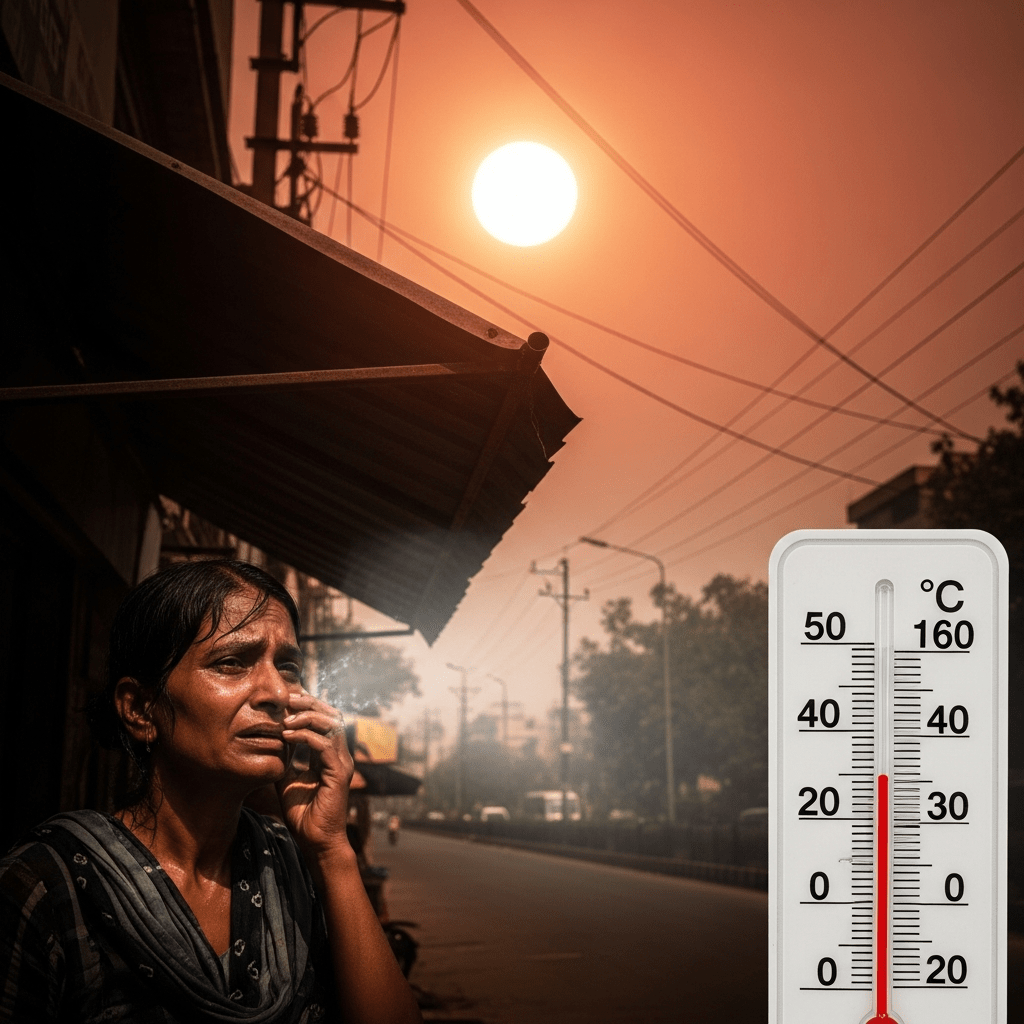
Temperatures cross 45°C across northern India as the 2026 heatwave grips millions — and experts say this is no longer unusual weather. It’s the new normal.
45°C+ Peak temp recorded in Delhi region
43°C Sustained heat in multiple states
IMD Red alert issued across North India
On the ground
Step outside in Delhi on any given afternoon this week, and the air doesn’t feel like air anymore. It feels like an oven door swung open — dry, oppressive, relentless. The India Meteorological Department has confirmed what residents already knew: temperatures across several northern Indian states have crossed 45°C, making this one of the most severe heatwaves the region has faced in recent memory.
For tens of millions of people who live and work outdoors — the vegetable vendor at the roadside market, the construction worker balancing steel rods on bare shoulders, the autorickshaw driver waiting in traffic — this extreme summer is not an abstraction. It is a daily negotiation with survival.
“The heat this year feels different. It doesn’t cool down at night the way it used to.” — Resident, West Delhi What the numbers mean The India Meteorological Department (IMD) has issued its most severe weather alerts, telling citizens to stay out of the sun as much as possible during peak hours. In a typical Delhi summer, temperatures of around 40°C are uncomfortable but manageable. When the mercury crosses 45°C — as it has been this week — the human body’s capacity to cool itself through sweating begins to fail. Heat exhaustion, and in serious cases heatstroke, becomes a real and immediate danger.
State authorities across Rajasthan, Uttar Pradesh, Haryana, and Delhi have activated emergency protocols. Water distribution trucks have been deployed to dense urban neighbourhoods, cooling centers have been set up in public buildings, and hospitals have been put on alert to handle a surge in heat-related illness. Power demand has hit seasonal highs as households that own air conditioners keep them running around the clock — placing strain on a grid already stretched thin.
Schools and children in the heat
In a quiet but significant decision, school authorities in several districts have revised their daily schedules. Morning assembly has moved earlier. Outdoor classes and sports periods have been cancelled. Some schools have shifted entirely to early-dismissal schedules so that children are safely home before the hottest hours of the afternoon. Authorities across the region have urged parents to keep children indoors, drink plenty of fluids and be aware of the early signs of heat stress.
It’s a small change, but it means so much more. It is disrupting the ordinary rhythms of life in ways that demand institutional responses.
When schools start rescheduling their day around the thermometer, you know the climate has crossed a threshold.
A pattern, not an anomaly
Climate scientists have been measured but clear in their assessment. The unusual heat pattern gripping South Asia this season is not a freak occurrence — it is consistent with long-term trends driven by climate change. Warmer baseline temperatures mean that heatwaves are starting earlier, lasting longer, and reaching peaks that would have been statistically improbable just two decades ago.
The Delhi temperature today is not just a weather story. It is a climate story — one that connects local suffering to a global failure to curb greenhouse gas emissions at the pace science demands. South Asia, home to some of the world’s most climate-vulnerable populations, is bearing a disproportionate share of that cost.
Experts tracking extreme summer India events note that the frequency of days exceeding 44°C in the northern plains has increased substantially over the past decade. The IMD weather alert system, designed for rare emergencies, is being activated more and more routinely. That shift, quiet as it seems in bureaucratic language, is a warning sign that deserves attention beyond seasonal news cycles.
What needs to happen
Immediate relief measures — water trucks, cooling centers, adjusted school hours — are necessary and humane. But they are not sufficient. Urban heat is intensifying because India’s cities, like cities around the world, are built for a climate that no longer reliably exists. More trees, more shaded public spaces, better insulated affordable housing, and heat action plans embedded in municipal governance are the medium-term answers. The longer-term answer requires global cooperation on emissions — a conversation that remains painfully slow relative to the pace of warming.
For now, though, the most urgent task is making sure that people survive this week. Drink water before you feel thirsty. Stay indoors between noon and four. Check on elderly neighbours. The IMD weather alert is not bureaucratic noise. In 45°C heat, it is the difference between caution and catastrophe.