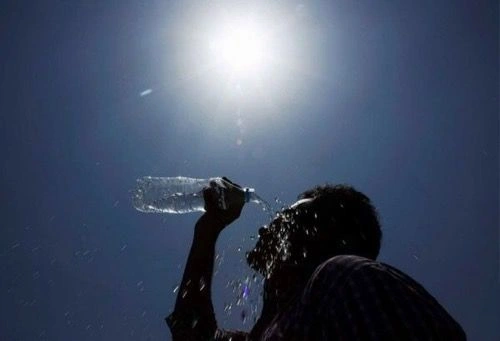
April 2026 is shaping up to be a scorcher.Even though it’s not summer yet, the weather is already starting to feel like it is.Temperatures in Delhi and Hyderabad are now above 42°C, making it quite hot.And the hottest weeks are still to come.Farmers in Rajasthan are watching their fields dry up, which is very different from people in the city who are wanting to get away from the heat. Hospitals are getting ready for a lot of people to come in with heat-related illnesses.
This isn’t just a weather event; it’s a clear sign of the changing climate, especially for the world’s most populous country. With water running low and the power grid struggling, the big question remains: how much more heat can we expect before we really do something about it?
A Fire That Isn’t Usual Across the Map
Normally, heat waves in India reach their climax in May and June. This year, though, they came early. By the end of March, the India Meteorological Department (IMD) had issued red alerts for northwest India. On April 2, Delhi reached 43.5°C, which is five degrees more than typical. Churu in Rajasthan reached 45.2°C, while portions of Madhya Pradesh and Maharashtra aren’t far behind. Hyderabad even got close to 41°C in southern regions like Telangana, which is rare for this time of year.
What’s making this happen? Experts think it’s a mix of things. The burn is getting worse because high-pressure systems are trapping hot air and the winter rainfall was feeble, leaving the ground dry. The consequences of last year’s El Niño are still being felt, which has made things worse by taking away rainfall and letting temperatures rise without any control.
Rajasthan (45+°C), Delhi-NCR (42–44°C), Uttar Pradesh (41–43°C), and Gujarat (40–42°C) are the most important hot places.
Urban heat islands: Cities trap heat from concrete and traffic, making it seem 4 to 6 degrees hotter.
Rural strain: In dry places like Bundelkhand, ground temperatures can reach above 50°C, which cooks both soil and seeds.
This early attack disturbs up daily existence. In Bihar, schools close early, building sites stop working after noon, and trains are late because the tracks are bent. Last week, mercury hit 40.8°C in Nashik, Maharashtra, where people are used to milder Aprils. This made fruit sellers sell off their mangoes before they went bad.
What did the government do? States like Uttar Pradesh provide water by air to dry communities, while Tamil Nadu tests cloud seeding. But experts say they are just quick fixes. Dr. Roxy Mathew Koll, a climatologist, says, “We’ve seen this cycle before,” pointing to glaciers in the Himalayas that are melting and supplying rivers in the north. He thinks that summer flows could drop by 30% by 2030.
One person in Jaipur said, “We boil water to drink, but there’s hardly any left to boil.” How long can India keep up with the needs of 1.4 billion people while supplies are getting smaller?
Health on the Line: A Rising Cost
Heat doesn’t just kill plants; it also hurts people. Since March, hospitals have seen a 40% rise in cases of heatstroke, dehydration, and exhaustion. The elderly, kids, and people who work outside are the most at risk.
Dizziness, a fast pulse, and nausea are some of the first signs. If not treated, they get worse and cause organ failure. Last year, more than 100 people officially died from the heatwave, but the real number is probably higher—maybe 2,000, according to Lancet study. Uttar Pradesh has 15 deaths in only this April.
Women and immigrants are at greater danger. Pregnant women who go to clinics in Delhi are having more miscarriages because of overheating. Many of the brick kiln workers in Haryana are from Bihar, and they pass out without shade or electrolytes.
Public health campaigns are getting stronger: railway stations are giving out free oral rehydration salts, and more than 50 cities have “hot action plans” that require work to stop when the wet-bulb temperature reaches a certain level. But enforcement is slow. A worker in Gujarat told reporters, “Bosses say work or starve, no matter how hot it is.”
The Unseen Cause of Climate Change
Is this how things are now? People are to blame for the warming. According to IMD data, India’s average temperature has gone up 0.7°C since 1901, and heatwaves have been 50% more common during the past 20 years.
Greenhouse gasses trap heat, and deforestation makes things worse in India, where 2.3 million hectares of forest were lost between 2001 and 2023. Urban sprawl in Bengaluru and Pune turns verdant spaces into hot asphalt.
It’s all in sync around the world: Europe broiled in the record heat of 2025, while Australia witnessed bushfires early on. But India suffers more than anyone else. It’s the third biggest carbon emitter in the world (after China and the US). It’s pushing renewables (solar capacity exceeded 100 GW this year), but coal still powers 70% of grids.
Countries that are weak, like India, want more from the COP meetings. People will ask for adaptation funds at COP30 in Brazil later this year. Sunita Narain, an environmentalist, says that “equity counts.” “We feel the heat because rich countries warmed the world.”
Stories from the Ground: Daily Life Turned Upside Down
For example, Priya Sharma is a teacher in Agra. “Inside, classrooms reached 38°C. Kids pass out during recess. “We fan them with notebooks.” Her school now ends at 11 AM, which means she has to fit lessons into the morning.
Raju Khan, an auto-rickshaw driver in Hyderabad’s Old City, skips busy times. “AC Taxis steal my money, but I can’t pay for the hospital.” He has buttermilk in stock, but his profits fell by 30%.
Farmers aren’t safe either. In Vidarbha, Maharashtra, soybean fields turn yellow too soon. “Loans keep piling up,” says Vijay Patil, a farmer. “Insurance pays for losses, but not despair.”
These stories make the numbers more real. Heat waves don’t care—they show problems in society, such unfairness and bad planning.
Pushback from the government and the community
India is not standing still. The National Disaster Management Authority sent out updated heat action plans to 200 cities with the start of the monsoon season. The steps are:
Cooling facilities in slums with fans and misters.
Early warning apps through UMANG that deliver SMS notifications.
New buildings must have solar panels on their roofs to help the grid.
Reforestation promotes planting 50 million trees this year.
States also come up with new ideas. Kerala has “heat helplines,” and Rajasthan pays for cool roofs. Goonj and other NGOs give out cooling vests to workers.
The 2026 budget sets aside ₹10,000 crore for climate resilience projects including urban greening and better irrigation. PM Modi’s “LiFE” (Lifestyle for Environment) campaign encourages people to save water.
There are still problems: corruption steals money, and rural access is uneven. Still, there are signs of development. Ahmedabad’s plan from 2013 lowered heat mortality by 25 times.
Looking Ahead: Getting Ready for Worse?
The IMD says that more red alerts may happen in April and May, with temperatures in Rajasthan possibly reaching 48°C. The monsoon rains, which are anticipated in June, will bring some respite, but projections say they will come late and in an unpredictable way.
In the long run, the IPCC says that 1.5°C of global warming will lead to more intense temperatures. That means that by 2050, India would have 30 more days of heat waves each year. Urbanization will make it worse; by 2030, 600 million people living in cities will be at much greater danger.
Adaptation requires determination: cities that are wiser with green corridors, crops that can survive drought, and fair policies. People matter too—drink plenty of water, stay out of the sun from 10 AM to 4 PM, and vote for green candidates.
It’s not a freak heat wave; it’s a forecast. Will India change the course of events, or will it just have to deal with them? In the next few months, the planet will get warmer, and we will have to be strong, creative, and together.
India’s heat wave has come back with a vengeance, and it’s hitting hard and fast. It’s also causing a lot of water problems and health warnings.