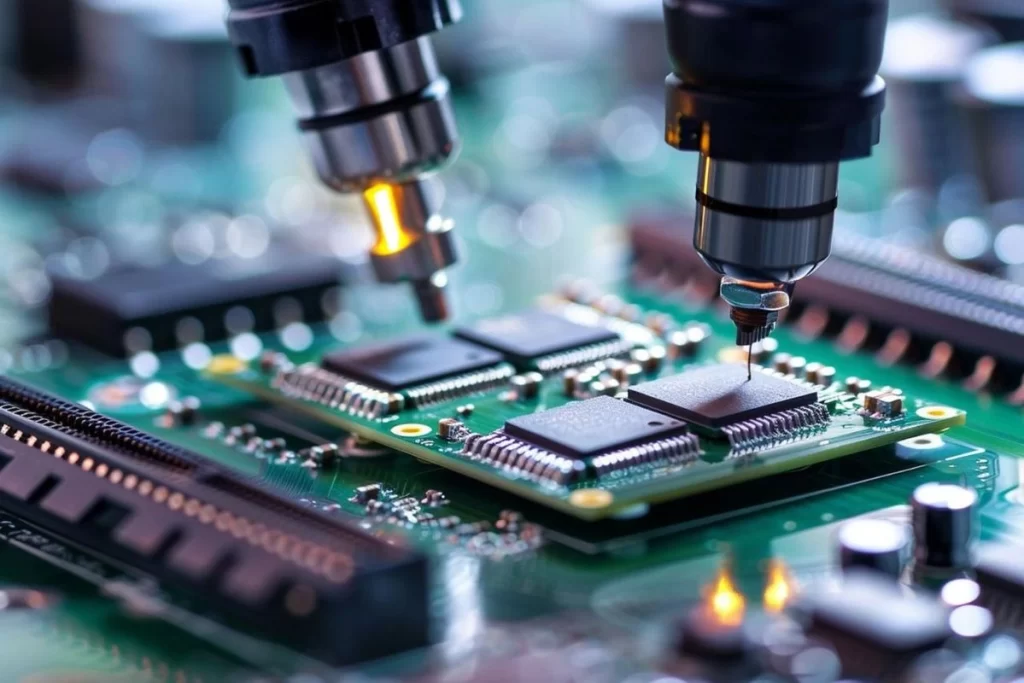
India is quietly staging one of the most important industrial transformations of this decade: the build‑up of a home‑grown semiconductor ecosystem. Through the India Semiconductor Mission and a web of linked incentives, the government is betting billions to turn the country from a massive chip importer into a credible manufacturing and design hub. If it works, it could reshape India’s role in global tech supply chains, create high‑value jobs, and dramatically reduce dependence on imports at a time when chip shortages still haunt everything from cars to smartphones.
Why chips matter now
Semiconductors are no longer just a niche tech story. They sit at the heart of electric vehicles, smartphones, data centres, defence systems, and even smart agriculture and medical devices. In 2023, India’s semiconductor market was valued at roughly 34–35 billion dollars; multiple industry projections now see it crossing 100 billion dollars by 2032, driven by smartphones, consumer electronics, automotive tech, automation, and healthcare.
Yet almost all of those chips are imported. This dependence has become a strategic vulnerability, especially after global supply‑chain disruptions during the pandemic and the ongoing push by major powers to “onshore” chip production. India’s response: stop being a passive buyer and start building—and designing—its own chips.
The backbone: India Semiconductor Mission The India Semiconductor Mission (ISM) set up by the Ministry of Electronics and Information Technology (MeitY) in 2021 is the key mechanism for this ambition. It acts as the nodal agency to design incentives, screen projects, and coordinate with states, global partners, and domestic players. The core idea is simple but bold: subsidise the capital‑heavy parts of the chip supply chain so that India stops being a “manufacturing‑reluctant” market and becomes a “manufacturing‑ready” one.
Under the initial phase, the government committed roughly 76,000 crore rupees—about 10 billion dollars—towards semiconductor investments, including fabs (fabrication plants), OSAT (Outsourced Semiconductor Assembly and Test) units, compound‑semiconductor units, and display manufacturing.
What makes the scheme unusually aggressive is its level of support:
Up to 50% of the project cost is reimbursed for semiconductor fabs and OSAT facilities.
Similar levels of fiscal support are extended to compound‑semiconductor units based on silicon‑carbide (SiC), gallium‑nitride (GaN), MEMS sensors, photonics, and related packaging and testing.
Analysts note that this is among the most generous chip‑incentive programmes globally, rivaling large‑scale pushes in the United States, Europe, and parts of East Asia.
The current pipeline: From Gujarat to Bengaluru
The early results are already visible on the ground. By mid‑2026, the India Semiconductor Mission had approved around 10 major projects, with an estimated total investment of about 1.6 lakh crore rupees (roughly 19–20 billion dollars, depending on forex rates). Several of these anchor projects are clustered in Gujarat and Karnataka, which are being positioned as India’s twin semiconductor heartlands.
Gujarat’s growing hub
In Gujarat, the most visible flagship is the Tata‑PSMC fab in Dholera, backed by the Tata Group and Taiwan’s Powerchip Semiconductor Manufacturing Corporation. This project alone is estimated at around 91,000 crore rupees and is expected to be one of India’s first large‑scale advanced semiconductor fabrication plants. Alongside it, the state is also hosting a Tata‑built chip packaging unit, reinforcing the “fab plus packaging” ecosystem.
Another major anchor is Micron’s OSAT (assembly, test, and packaging) facility in Sanand, which received government incentives and is slated to be one of the first large‑scale chip‑packaging plants in the country. These projects are not just symbolic; once fully operational, they are expected to create tens of thousands of direct and indirect jobs, most of them in engineering, operations, and supporting services.
Karnataka and other clusters
Karnataka, already home to India’s largest IT and design ecosystem, is also being positioned for advanced design‑linked and foundry‑linked activities. The Design Linked Incentive (DLI) scheme, part of the semiconductor package, offers up to 50% of design‑related costs (capped at around 15 crore rupees per project) plus a percentage of net sales over five years, aimed at Indian‑registered companies that develop ICs, SoCs, and system‑level designs.
Planned and proposed fab units in Karnataka and other states are meant to tap into this talent pool and create a “design‑plus‑manufacturing” arc across the country.
Beyond fabs: Building the full ecosystem
If India’s ambitions stayed only at building a few fabs, the story would be impressive but incomplete. The policy framework is deliberately multi‑layered, recognising that chips are not made in isolation.
Key elements of this broader ecosystem push include:
Sub‑micron and advanced‑node targets: The government has moved away from a narrow focus on 28‑nanometre or smaller nodes and now offers support for fabs across technology nodes, plus testing and packaging, to encourage a broader base of manufacturers.
Compound semiconductors and niche chips: Incentives for silicon photonics, MEMS, power electronics, and sensors back India’s bid to capture niches relevant to electric vehicles, renewable energy, defence, and industrial automation.
Domestic supply chains: Recent policy tweaks also aim to create a domestic ecosystem for passive and active electronic components, so that Indian chipmakers can source more locally instead of relying on global suppliers for every capacitive or resistive element.
This “entire‑stack” approach is what separates India’s move from a mere factory‑building exercise. It signals an intent to weave semiconductors into India’s broader tech‑manufacturing narrative, touching everything from smartphones made under the PLI schemes to electric vehicles and defence platforms.
Jobs, skills, and the human side
Behind every wafer, there are people. Government estimates suggest that the semiconductor push could generate over 85,000 jobs by the mid‑2020s, with more to follow as the ecosystem matures. These are not low‑skilled assembly‑line roles; they span process engineers, equipment technicians, automation specialists, design engineers, and materials scientists.
The challenge is not just hiring, but skilling. India’s engineering colleges produce hundreds of thousands of graduates each year, but relatively few have hands‑on experience in semiconductor clean‑room operations or advanced design tools. To bridge this gap, the government and industry are expanding tie‑ups with universities, polytechnics, and vocational institutes, launching specialised diploma and certification programmes in semiconductor manufacturing and packaging.
Ask anyone in a planned semiconductor hub in Gujarat or Karnataka: “Can India really train enough engineers to run a world‑class fab?” The answer is increasingly moving from “maybe” to “we have to.”
India’s place in the global chip race
Globally, the semiconductor industry is in a phase of intense consolidation and strategic realignment. The United States, Europe, and parts of Asia have launched 10–20 billion‑dollar class programmes to attract fabs and secure supply chains. India’s 10‑billion‑dollar initial package, now expanding into a Semiconductor Mission 2.0 framework with an additional outlay of around 1.2 lakh crore rupees (roughly 14–15 billion dollars), positions it as a serious contender, especially for mid‑range and specialised nodes.
The official ambition is clear: by 2029, India should be able to design and manufacture chips for roughly 70–75% of domestic applications, cutting reliance on imports across key sectors. By 2035, the country aims to be among the top semiconductor‑manufacturing nations globally, not just a consumer of foreign chips.
That is an enormous leap. Today, India’s share of global semiconductor manufacturing is effectively negligible, while Taiwan, South Korea, China, and the United States dominate advanced nodes. But India’s demographic dividend, growing digital economy, and strong domestic demand for electronics give it a credible niche: if it can attract the right mix of technology partners, equipment suppliers, and skilled labour, it has a fighting chance to capture a meaningful slice of global capacity.
Risks and realities on the ground
Betting billions on semiconductors is inherently risky. Chips are among the most capital‑intensive, R&D‑heavy industries in the world. A single advanced fab can cost tens of billions of dollars and take three to five years to ramp up. For a developing economy like India, that means balancing chip investments with other pressing priorities—infrastructure, health, education, and defence.
Some of the key questions that remain open are:
Will foreign partners feel comfortable exposing cutting‑edge IP to a relatively new ecosystem with evolving regulatory and IP‑protection frameworks?
Can India create a stable supply of power, water, and high‑quality infrastructure that fabs demand, without constant outages or bottlenecks?
Will the first‑wave fabs and OSAT units achieve the yields and quality standards expected by global OEMs, or will they struggle to break into top‑tier supply chains?
Early signs are encouraging, but not yet conclusive. The Micron OSAT and Tata‑PSMC fab represent real commitments, not just paper‑only MoUs. Yet 2026 is still early in the ramp‑up phase; the true test will come when these plants are running at high capacity and shipping wafers to global customers.
One critical measure will be how much of India’s semiconductor market India actually supplies. If, by 2030, Indian‑made chips are powering a growing share of smartphones, electric vehicles, and data‑centres within the country, it will be a sign that the Semiconductor Mission is more than a policy slogan.
India’s Silicon Ambition: How the Semiconductor Mission Is Rewiring the Country’s Tech Future