
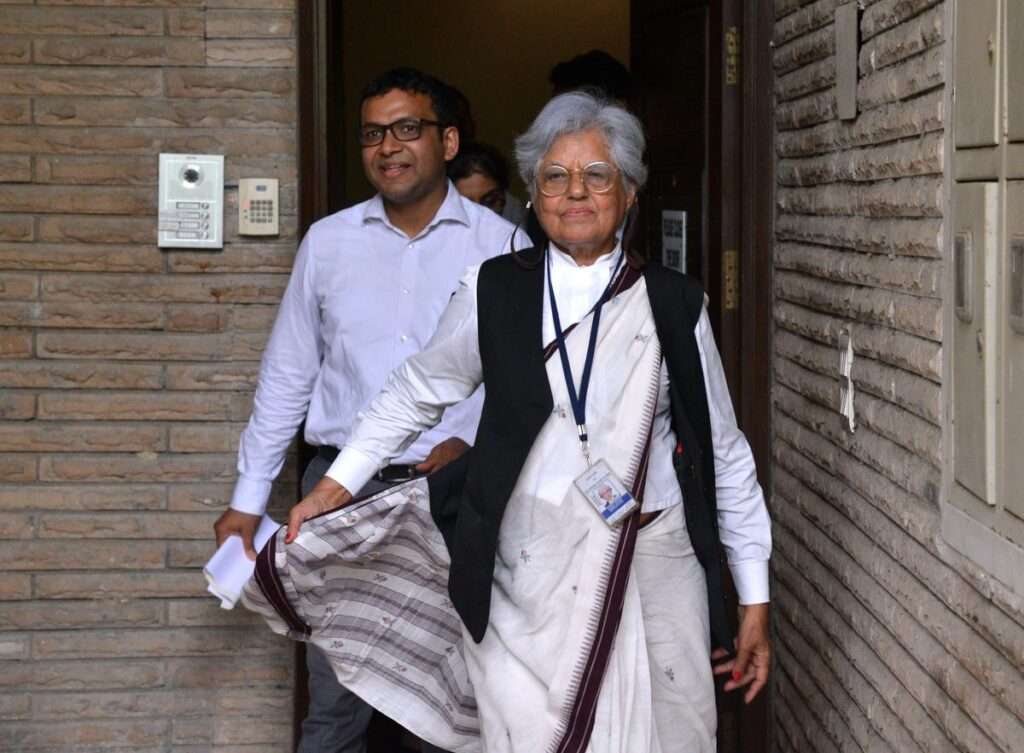
July 26, 2025 — Senior advocate and human rights activist Indira Jaisingh on Thursday urged the Supreme Court of India to reconsider the existing legal age of consent for sexual activity, advocating for its reduction from 18 to 16 years. The plea was made during the hearing of a public interest litigation concerning the interpretation and application of the Protection of Children from Sexual Offences (POCSO) Act.
Jaisingh argued that the current age of consent under Indian law criminalizes consensual sexual relationships among adolescents aged 16 to 18, leading to the misuse of legal provisions and unjust criminal prosecution of teenagers. “The law must distinguish between exploitative sexual behavior and consensual acts between adolescents,” she stated before the bench.
Presently, under Section 375 of the Indian Penal Code (IPC) and the POCSO Act, any sexual activity with a person below 18 years of age is considered statutory rape, regardless of consent. The advocate pointed out that in many cases, complaints are filed by parents or guardians opposed to the relationship, particularly in situations involving inter-caste, inter-religious, or socially stigmatized associations.
Jaisingh cited recent data and judicial trends to support her argument. Multiple High Courts, including those in Delhi, Karnataka, and Madras, have issued observations indicating the need for a nuanced approach when dealing with consensual adolescent relationships. In numerous cases, courts have expressed concern over the rigid implementation of the law, which has resulted in the incarceration of teenage boys for consensual relationships with girls aged 16 or above.
“There is a clear need to align legal provisions with evolving social realities and adolescent psychology,” Jaisingh said. She also emphasized that global legal frameworks, including those in countries like the UK, Canada, and Australia, recognize 16 as the age of consent, thereby providing legal protection without penalizing consensual relationships.
The Supreme Court bench, led by Chief Justice D.Y. Chandrachud, took note of the submission and indicated that the matter would require careful examination, especially in balancing child protection with adolescent rights. The court acknowledged the complexity of the issue, noting that any changes to the age of consent would involve policy considerations and potential legislative action.
The call for reform has sparked widespread debate among legal experts, child rights activists, educators, and lawmakers. While some support the move, citing increasing cases of misuse of POCSO in consensual matters, others warn that lowering the age of consent could lead to higher vulnerability and exploitation of minors.
The Ministry of Women and Child Development has yet to respond officially to Jaisingh’s plea. However, sources indicate that internal discussions on potential amendments to the POCSO Act have been ongoing, especially after recent judicial recommendations.
As the debate intensifies, the Supreme Court’s future deliberations are expected to play a crucial role in shaping India’s stance on adolescent rights and legal consent.

