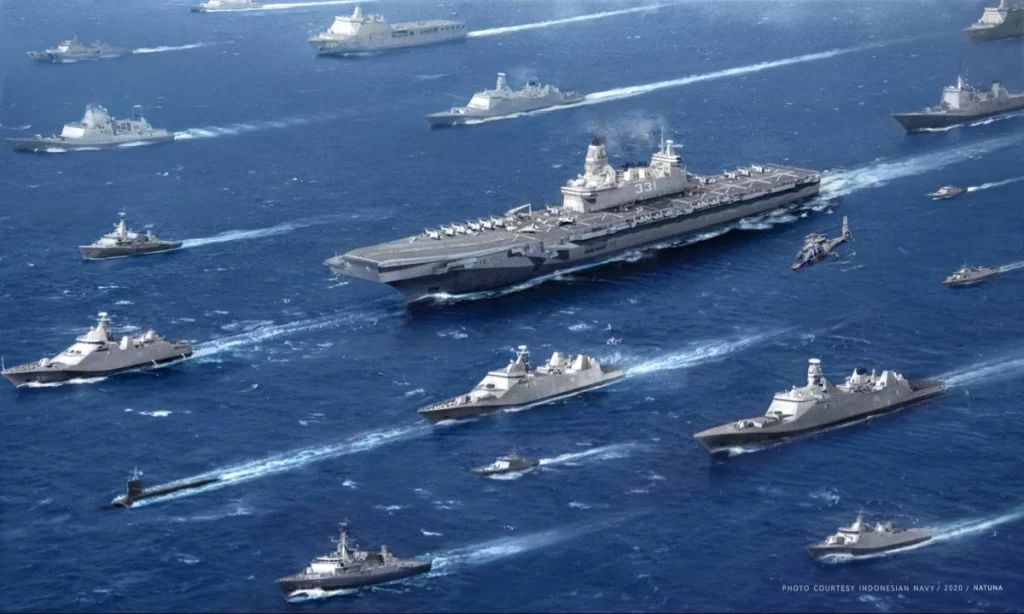
Across the wide blue expanse stretching from the shores of Gujarat to the coral reefs of the South China Sea, the Indo‑Pacific is no longer just a word on a map. It has become the nerve center of 21st‑century power politics, where aircraft carriers slice through the waves, anti‑submarine planes criss‑cross the sky, and a quiet arms race for maritime influence is quietly redefining who shapes the region’s future. At the heart of this shift is a rising focus on Indo‑Pacific security cooperation, with naval drills and alliances becoming more frequent, more complex, and more politically charged than ever before.
For countries like India, it is personal. The Indian Ocean is not “just another body of water” but a lifeline for trade, energy supplies and regional prestige. As Chinese naval activity grows, as Russia and Iran test new partnerships, and as the United States re‑prioritises the Indo‑Pacific, a web of exercises, patrols, and diplomatic dialogues is quietly stitching together a new security architecture. The big question is: are these drills stabilising the region—or are they quietly edging the world closer to a maritime flashpoint?
Indo‑Pacific: More Than a Buzzword
The “Indo‑Pacific” today is less a strict geographical term and more a strategic concept. It links the Indian Ocean, the Bay of Bengal, the South China Sea, and the Western Pacific into a single security ecosystem. Economically, the region accounts for the lion’s share of global maritime trade, including oil and gas shipments that feed India’s growing industrial base. Militarily, it is where the world’s largest navies now routinely operate, train, and occasionally posture in each other’s faces.
In this context, Indo‑Pacific security cooperation has become a catch‑all phrase for everything from joint naval exercises and intelligence sharing to freedom‑of‑navigation patrols and maritime‑domain‑awareness initiatives. Instead of isolated bilateral deals, major powers now favour “like‑minded” coalitions—groups of countries that share concerns about coercion, grey‑zone tactics, and excessive maritime claims.
For Indian readers, the picture is familiar: sea lanes from the Strait of Malacca to the Arabian Sea are critical for everything from crude oil imports to the movement of Indian naval units between the east and west coasts. Any disruption here hits the economy directly. So when India anchors multilateral drills or joins anti‑submarine warfare exercises in Guam, it is not just about waving the flag; it is about hard‑wiring ties that can matter in a real crisis.
Naval Drills: From Training to Signaling
The most visible sign of this growing Indo‑Pacific security focus is the surge in naval exercises. In recent years, the number, frequency, and complexity of drills have increased sharply. What once looked like periodic goodwill voyages now often resemble high‑tempo rehearsal scenarios for contested environments.
Take the 20‑day Sea Dragon 2026 anti‑submarine warfare exercise hosted by the United States Navy near Guam. India, Japan, Australia, and New Zealand joined US forces in tracking and simulating the neutralisation of undersea threats in what officials describe as a “complex operational environment.” The presence of P‑8A Poseidon maritime patrol aircraft from the Indian Navy, Japan’s Maritime Self‑Defense Force, the Royal Australian Air Force, and the Royal New Zealand Air Force shows how interoperability now extends far beyond port calls and friendly harbour visits.
Similarly, India’s own MILAN 2026 exercise, held in Visakhapatnam, drew naval units from over 70 countries, making it one of the largest Indo‑Pacific naval gatherings in recent memory. On the surface, MILAN is framed as a platform for maritime cooperation, humanitarian‑assistance drills, and professional exchange. Beneath that, it sends a clear message: India is carving out a position as a preferred security partner for smaller states that want to diversify their ties without fully aligning with any one great power.
Other notable examples include:
The La Perouse exercise led by France, with participation from India, Japan, Australia, and others, using high‑end platforms like nuclear aircraft carriers and submarines to project interoperability across the Indo‑Pacific.
These are not small‑scale passing‑exercise (PASSEX) drills; they are dress rehearsals for high‑end maritime warfare in a congested, contested region.
So what does this mean for strategic stability? Are these exercises reassuring the region or intimidating it? That depends on who you ask and where they sit on the map.
Alliances and Coalitions: The Quad and Beyond
Naval drills do not float in a vacuum. They are anchored in a dense network of alliances, partnerships, and informal coalitions. At the top of this structure sits the Quadrilateral Security Dialogue (Quad)—the grouping of the United States, Japan, Australia, and India. While the Quad insists its purpose is broad (covering issues such as climate, health, and maritime security), in practice, it has become the centerpiece of efforts to balance China’s growing naval and economic footprint.
For India, the Quad is a double‑edged tool. On one side, it provides access to advanced technology, intelligence, and interoperability with three major maritime powers. Indian participation in Malabar, in joint anti‑submarine drills, and in initiatives on maritime domain awareness (MDA) gives New Delhi a front‑row seat in shaping how the Indo‑Pacific monitors, tracks, and responds to suspicious activity at sea. On the other side, closer alignment with the Quad can strain India’s delicate relationship with Beijing, especially when exercises are staged near the South China Sea or the East China Sea.
Beyond the Quad, the United States is also deepening its “hub‑and‑spoke” alliances with treaty partners such as Japan, Australia, the Republic of Korea, the Philippines, and Thailand. At the same time, Washington is encouraging these same countries to strengthen their intra‑regional links—Japan‑Australia, Japan‑India, Australia‑India—so that the security web is not just Washington‑centric but genuinely regional.
For smaller states, this is both an opportunity and a risk. Engagement with multiple powers offers leverage, bargaining space, and access to defence equipment and training. But it also raises the fear of being caught in the middle of a great‑power rivalry. Is it possible for a country to benefit from US‑led security networks while still maintaining economic ties with China? Can India straddle both camps without triggering a backlash at sea?
India’s Maritime Diplomacy: From “Neighbourhood First” to Indo‑Pacific Leader
India’s role in Indo‑Pacific security cooperation is especially interesting because it combines a regional power with a self‑proclaimed “non‑aligned” tradition. Officially, New Delhi says it wants a “free, open, and inclusive” Indo‑Pacific, where no single power dominates and smaller states can operate without coercion. Practically, this means India is investing heavily in its navy, its strategic partnerships, and its maritime‑diplomacy toolkit.
In recent years, the Indian Navy has:
Expanded joint exercises with partners such as Singapore (SIMBEX), Indonesia (coordinated patrols or CORPAT), and France (including La Perouse‑style drills).
Taken a lead role in regional initiatives like the Indo‑Pacific Ocean Initiative (IPOI), which promotes cooperative frameworks for maritime security, disaster response, and sustainable use of ocean resources.
At the same time, India has stepped up its physical presence in the Indo‑Pacific. Port visits, harbour‑turn‑around visits, and forward deployments in the South China Sea and the Western Pacific have become more routine. This is not just about symbolism; it is about building the experience, relationships, and operational familiarity that matter when a crisis erupts.
India’s growing emphasis on maritime domain awareness—using satellites, sensors, and information‑sharing networks to track vessel movements across a vast area—also gives it a disproportionate influence in the region. When Australia, Japan, and the United States publicly commit to supporting India’s maritime‑surveillance efforts in the Indo‑Pacific, they are effectively acknowledging that India can act as a regional node in a broader security network.
But India’s choices are not cost‑free. Closer naval integration with the Quad and expanded anti‑submarine drills with the United States can be read in Beijing as part of a containment strategy. How does India balance its security needs with its desire to avoid an open military standoff with China? And how does it ensure that smaller Indo‑Pacific states see New Delhi as a stabilising force, not as a second front in a US‑China rivalry?
India–US–Japan–Australia: The Core of the Network
The four‑corner relationship between India, the United States, Japan, and Australia is rapidly becoming the backbone of Indo‑Pacific security cooperation. Each node brings its own strengths to the table: The United States brings the largest navy, advanced technology and global intelligence networks. Japan brings a highly capable maritime force, financial resources and a deepening defence-industry partnership with other Quad members. Australia brings advanced submarines, long-range surveillance and geographic reach across the Southern Pacific.
India brings a large navy, a strategic position straddling the Indian Ocean, and a growing defence‑industrial base.
When these four come together in exercises like Malabar or coordinated anti‑submarine drills, they are not just rehearsing for hypothetical war. They are also building the habits of cooperation that matter in peacetime:
Shared communication protocols.
Joint rules of engagement for maritime operations.
Common data‑fusion nodes for tracking ships and submarines.
This kind of interoperability is fragile and takes years to build, but it can break down in months if political relationships sour. So every naval exercise is also a political test: how willing are these democracies to stick together when the temperature rises over the South China Sea or Taiwan?
Indo‑Pacific on Edge: Naval Drills and Security Alliances Reshape Asia’s Maritime Future