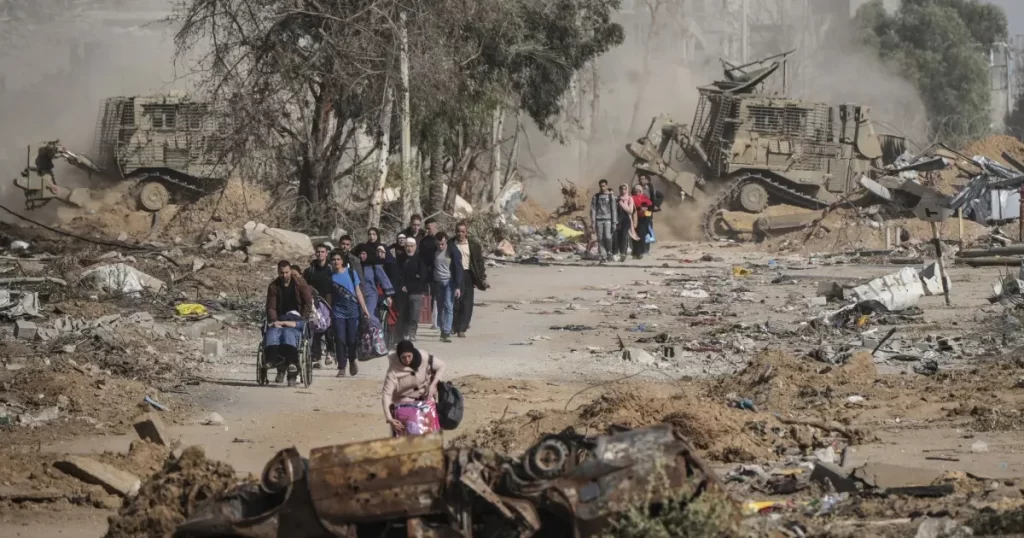
Israeli forces launched a renewed wave of heavy air and artillery bombardment across the Gaza Strip on Friday, targeting key areas including Rafah, Khan Younis, Deir el-Balah, and Gaza City. The escalation coincides with large-scale efforts to recover bodies buried under rubble, highlighting the fragile state of the ceasefire that both sides accuse each other of repeatedly violating.
Renewed Strikes Across Gaza
Israeli bombardments resumed in northern and eastern Rafah, while artillery targeted densely populated neighborhoods such as al-Tuffah and al-Shuja’iyya in Gaza City. Residential buildings in eastern Khan Younis were reportedly demolished amid intense gunfire from military vehicles.
Gaza authorities report that Israel has launched hundreds of ceasefire violations since October, combining airstrikes, artillery shelling, and gunfire. Hundreds of Palestinians have been killed or wounded in recent weeks, with over 300 fatalities recorded since the ceasefire began.
Accusations and Counter-Accusations
Israel maintains that its strikes are retaliatory, aimed at countering ceasefire breaches by Hamas, including cross-border fire and attacks on Israeli troops. Hamas denies some of these allegations, asserting its commitment to the truce and accusing Israel of deliberate escalation.
A key point of contention remains the so-called “yellow line,” a demarcation under the ceasefire agreement. Israel claims Hamas fighters have repeatedly crossed this line, while Hamas insists Israeli forces are operating beyond agreed boundaries, fueling a cycle of blame and retaliation.
Human Cost and Recovery Efforts
Since the ceasefire took effect, Gaza authorities report at least 313 Palestinian deaths and approximately 760 injuries. Amid the devastation, authorities have recovered over 570 bodies, underscoring the scale of destruction and human loss.
Renewed strikes risk disrupting ongoing body-recovery operations, a critical and deeply traumatic effort for families seeking closure. Emergency teams continue to work amid the threat of further bombardment, highlighting the persistent danger faced by civilians.
Implications for Ceasefire and Humanitarian Relief
The ongoing violence raises serious concerns over the durability of the ceasefire and the potential for further escalation. Destruction of homes and infrastructure continues to impede humanitarian aid delivery, which is already falling short of urgent needs.
International mediators, including representatives from the United States, Egypt, and Turkey, are likely to face renewed pressure to enforce compliance and prevent further violations.