
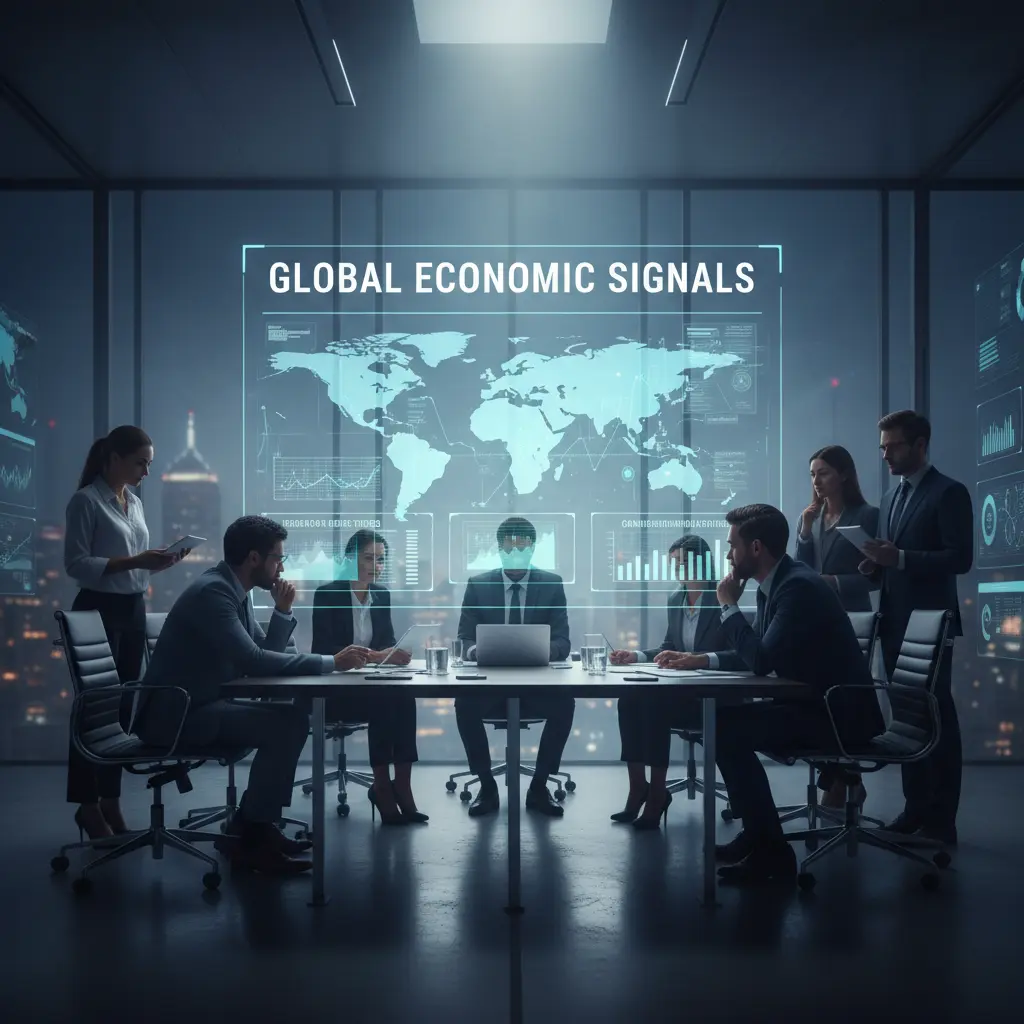
One theme has been reverberating through trading floors and boardrooms around the world this year: uncertainty is the only certainty. Inflation trends, interest rate expectations and international trade developments are closely watched by investors trying to decipher the next steps for the global economy. It’s a fine balancing act and every new data release seems to push the conversation a little further in a different direction, keeping markets on their toes.
Inflation Remains The Word On Everyone’s Lips There’s one topic on the minds of people in financial circles and that’s inflation. Central banks across the globe have spent the past few years trying to strike the right balance between reining in rising prices and avoiding an economic slowdown. With that, every inflation report now carries outsized weight, often moving the stock market within minutes of release.
For the average consumer, inflation isn’t some abstract economic concept. It’s felt directly in grocery bills, fuel prices and household budgets. That’s part of why investors watch it so closely. Higher-for-longer inflation can mean central banks keep interest rates higher for longer, affecting everything from mortgage rates to corporate borrowing costs. Conversely, signs of decelerating inflation tend to generate optimism and the big indexes often rally on the assumption that monetary policy will be more accommodative down the road.
Interest Rates and the Waiting Game Interest rate expectations are still at the top of the agenda, along with inflation. Market participants have become used to dissecting every word from the mouths of central bankers looking for any hint of where rates may be headed. A single word change in a policy statement is enough to shock bond markets and equity indices alike.
This constant waiting has created an atmosphere that many analysts have said resembles a “waiting game” in the global economy. Businesses are also incorporating these expectations into their planning. For companies trying to grow or to hire or to make new investments, the costs of borrowing are being carefully calculated with the awareness that a change in interest rates could change the economics of their decisions almost overnight.
Another Layer to Trade Developments
The developments in international trade add another layer to an already complex picture. Changes in trade policy, tariffs and cross-border agreements can reshape supply lines and affect corporate earnings in ways that reach far beyond the nations directly implicated. For companies that operate globally this means continually re-assessing sourcing strategies and cost structures.
Economists say that companies are factoring geopolitical risk into their calculations to a much greater extent than before. “Decisions previously based primarily on costs and efficiency are now also being influenced by a country’s political stability, changes in regulation and the risk of a sudden swing in policy.” This has turned corporate strategy into a more cautious, scenario-based exercise, with companies often preparing contingency plans rather than committing themselves to a particular course of action.
Factory Activity and Consumer Demand Of course, inflation and interest rates are the headlines, but economists are also turning their attention to more down-to-earth indicators like consumer demand and manufacturing activity. These numbers can often give early clues to the direction of the broader economy. Strong consumer spending, for instance, might show strength in the face of rising prices, or poor manufacturing numbers may suggest a deceleration before the rest of the economy follows suit.
These are signals businesses use to adapt their own strategies . A retailer can modify its inventories in response to trends in demand and a manufacturer can modify its production schedules in response to changing order volumes. These day-to-day business decisions collectively add up to bigger changes in the economic outlook that eventually show up in quarterly reports and annual forecasts.
Markets Respond, Sometimes Quickly
One of the most obvious consequences of this all-pervasive surveillance is the speed at which financial markets react to global policy pronouncements. A policy pronouncement, a trade declaration or an unexpected inflation figure can make a seemingly calm day on the stock market turn quite volatile the next day. Such a response demonstrates how interconnected the world economy is today, with an event in one part of the world able to influence investor sentiment thousands of miles away.
For the average investor, this can be a challenging environment. Market swings are often driven by the outlook for the economy, corporate news and changes in policy, and this can tempt investors to react to every headline. But a lot of financial advisors still say it’s important to concentrate on the longer term trends rather than getting swept up in the daily market noise.
The wider picture
It’s a reflection of how deeply entangled economic factors have become, what’s happening now. Inflation, interest rates, trade policy, consumer behavior and geopolitical developments are all interconnected and influence the broader trajectory of the global economy, they are not operating in a vacuum.
Information is not just helpful, it is essential for investors and businesses. Anyone who can read these signals accurately, without overreacting to short-term noise, is likely to be better placed to navigate the uncertainty ahead. As the year unfolds, the focus will be on how those different strands – inflation, interest rates, trade and market sentiment – continue to interact and influence decisions in boardrooms and households across the world.

