
June 20:
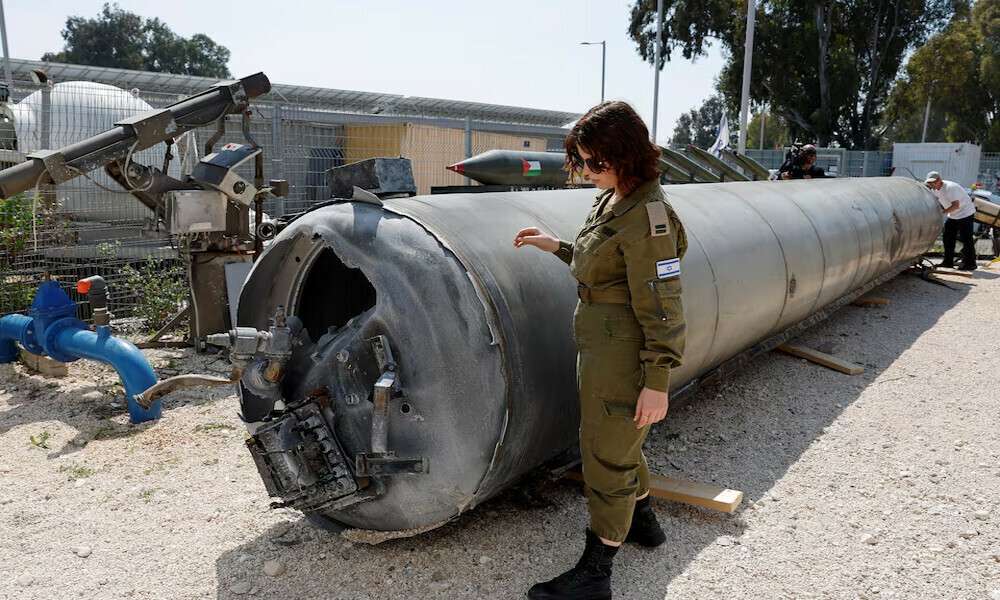
Iran launched a fresh missile attack on Israel early Thursday, firing projectiles equipped with cluster munitions as the conflict between the two nations entered its eighth consecutive day. One of the submunitions struck a residential structure in Azor, a town near Tel Aviv, causing property damage but no injuries, Israeli authorities confirmed.
According to Israel Defense Forces (IDF), the majority of the incoming missiles were intercepted by the Iron Dome missile defense system. However, several munitions breached the system, with at least one cluster submunition exploding in a populated area.
“This is a grave escalation,” said Rear Admiral Daniel Hagari, IDF spokesperson. “The deliberate targeting of civilian zones using cluster munitions crosses a red line and will not go unanswered.”
The Iranian Revolutionary Guard Corps (IRGC) claimed responsibility for the attack, labeling it a “measured response” to Israeli airstrikes earlier this week that targeted Iranian military facilities in Syria and Iraq. Tehran warned of “continued retaliation” if Israeli operations persist.
Cluster munitions, which release multiple smaller bomblets over a wide area, are widely condemned for their indiscriminate nature and long-term danger due to unexploded remnants. Though both Iran and Israel are not signatories to the 2008 Convention on Cluster Munitions, international organizations, including Human Rights Watch and Amnesty International, have denounced their use in civilian areas.
The missile strike comes amid a rapidly intensifying conflict that has seen tit-for-tat attacks across the region, including missile launches, drone strikes, and air raids. Over the past week, Israeli forces have reportedly conducted more than a dozen operations targeting Iranian-linked military assets in Syria and Lebanon, while Iran has stepped up its support to allied groups in the region.
The United Nations Security Council is expected to hold an emergency session later today to discuss the growing regional instability. UN Secretary-General António Guterres issued a statement expressing deep concern over the use of cluster munitions and called on both parties to exercise maximum restraint.
Meanwhile, the United States and European Union have urged both Israel and Iran to halt hostilities and return to diplomatic channels. U.S. Secretary of State Antony Blinken said Washington is closely monitoring the situation and remains in close contact with its allies to prevent further escalation.
As of now, there have been no reported casualties from the latest round of attacks, but analysts warn that continued use of advanced and widely destructive weaponry could significantly raise the human and geopolitical costs of the conflict.
The strike on Azor underscores the growing threat to civilian populations as the Israel-Iran conflict spirals further out of control, with no signs of de-escalation in sight.

