
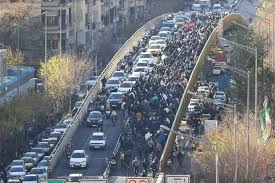
As of January 6, 2026, nationwide protests in Iran have entered their tenth consecutive day, marking one of the most extensive waves of civil unrest the country has witnessed in recent years. Demonstrations have spread to approximately 222 locations across 78 cities, spanning at least 26 of Iran’s 31 provinces, underscoring the scale and intensity of public anger. What began as outrage over the record collapse of the Iranian rial and soaring inflation has rapidly evolved into a broader movement openly demanding regime change in Iran.
Economic Collapse Sparks Mass Unrest
The immediate trigger for the protests was a sharp deterioration in Iran’s economic conditions. The Iranian rial plunged to historic lows against foreign currencies, severely eroding purchasing power and pushing essential goods beyond the reach of ordinary citizens. Rising food prices, fuel costs, and unemployment have intensified pressure on households already struggling under prolonged economic sanctions and domestic mismanagement.
Key economic grievances driving the protests include:
- Record inflation in Iran, particularly affecting food and housing
- Currency devaluation, wiping out savings and wages
- High youth unemployment, limiting future prospects
- Widening inequality, fueling perceptions of systemic corruption
These factors have combined to create what many analysts describe as a full-scale economic crisis in Iran, transforming localized demonstrations into a nationwide uprising.
From Economic Anger to Political Defiance
While earlier protests focused on economic demands, the current unrest has taken a distinctly political turn. Protesters in multiple cities have reportedly chanted slogans calling for the end of clerical rule, signaling a shift from reformist demands to explicit challenges against the Islamic Republic’s authority.
This evolution reflects deep-seated frustration with governance, accountability, and perceived repression. The Iran nationwide protests are increasingly characterized by their coordination across provinces and their persistence, suggesting a level of organization and resolve not seen in shorter-lived uprisings.
Government Response and Rising Tensions
Authorities have responded with heightened security measures, including an expanded presence of police and paramilitary forces in major urban centers. Reports of arrests and internet restrictions have surfaced, indicating attempts to curb both street mobilization and information flow.
Despite these measures, protests have continued to spread, highlighting the difficulty of containing unrest rooted in structural economic and political grievances. The ongoing demonstrations have raised concerns about internal stability and the potential for further escalation.
Scope of the Protests at a Glance
| Indicator | Current Situation |
|---|---|
| Duration of protests | 10 days |
| Cities affected | 78 |
| Locations involved | ~222 |
| Provinces impacted | At least 26 of 31 |
Broader Implications for Iran’s Future
The tenth day of protests marks a critical juncture. The combination of Iran inflation crisis, currency collapse, and open calls for political change suggests the unrest is no longer episodic but systemic. Whether the government pursues economic concessions, political reforms, or intensified repression will shape the country’s trajectory in the coming weeks.
As the Iran unrest 2026 continues to unfold, the protests stand as a stark indicator of public discontent and a warning of the profound consequences of prolonged economic instability. The outcome may redefine Iran’s domestic landscape and its relationship with its citizens for years to come.
alt txt in 4-5 words

