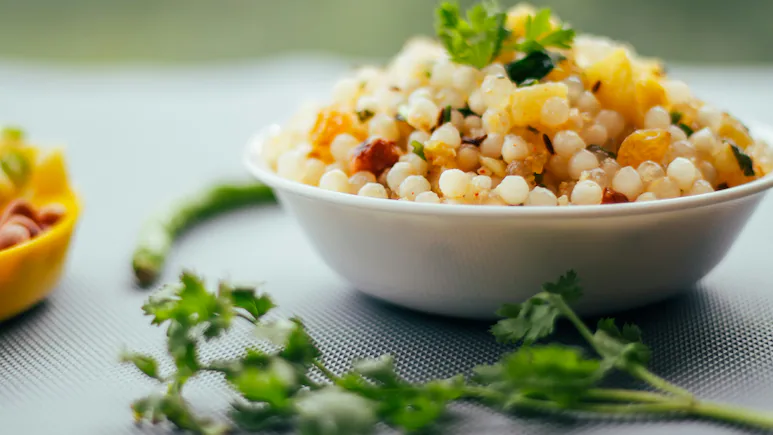
Sabudana, also known as tapioca pearls, is a staple in many Indian households, especially during fasting periods like Navratri. While it’s celebrated for providing a quick energy boost, it’s essential to understand its nutritional profile and how to incorporate it healthily into your diet.
Nutritional Profile of Sabudana:
Sabudana is primarily composed of carbohydrates, making it an excellent source of energy. A single cup contains approximately 544 calories and 135 grams of carbohydrates, with minimal fat and protein content. It’s also gluten-free, making it suitable for individuals with gluten intolerance. However, its low fiber and protein content mean it should be consumed thoughtfully, especially for those monitoring their weight or blood sugar levels.
Health Benefits of Sabudana:
- Quick Energy Source: Due to its high carbohydrate content, sabudana provides a rapid energy boost, making it ideal for individuals needing quick replenishment.
- Gentle on Digestion: Sabudana is easy to digest, which is why it’s often recommended for those recovering from illness or digestive issues.
- Gluten-Free Alternative: Being naturally gluten-free, sabudana serves as a safe alternative for individuals with celiac disease or gluten sensitivity.
- Supports Bone Health: It contains trace amounts of calcium and iron, contributing to bone strength and overall health.
Considerations Before Consumption:
While sabudana offers several health benefits, it’s crucial to be aware of certain considerations:
- Weight Management: Due to its high carbohydrate content, sabudana can contribute to weight gain if consumed in excess.
- Blood Sugar Levels: Individuals with diabetes should be cautious, as sabudana has a high glycemic index, which can lead to rapid spikes in blood sugar levels.
- Digestive Issues: Overconsumption may lead to digestive discomfort, including bloating or constipation, especially in individuals with sensitive digestive systems.
5 Healthiest Ways to Incorporate Sabudana into Your Diet:
- Sabudana Khichdi with Vegetables: Combine soaked sabudana with sautéed vegetables like carrots, peas, and beans. This adds fiber, vitamins, and minerals, balancing the dish’s nutritional profile.
- Sabudana Tikki with Yogurt: Mix sabudana with boiled potatoes, spices, and herbs to form tikkis. Serve with a side of yogurt to introduce probiotics and enhance digestion.
- Sabudana Pudding with Coconut Milk: Prepare a sweet pudding using coconut milk, which adds healthy fats and a subtle sweetness, making the dish more nutritious.
- Sabudana Poha with Peanuts: Add roasted peanuts to poha made with sabudana. Peanuts provide protein and healthy fats, improving the meal’s satiety and nutritional value.
- Sabudana Salad with Seeds: Incorporate sabudana into a salad with mixed greens, seeds like flax or chia, and a light dressing. This combination offers a refreshing and balanced meal.
Conclusion:
Sabudana can be a valuable addition to your diet when consumed mindfully and combined with nutrient-rich ingredients. By pairing it with vegetables, proteins, and healthy fats, you can enhance its nutritional profile and enjoy its benefits without compromising your health. Always consider your individual health needs and consult with a healthcare professional if you have specific dietary concerns.