
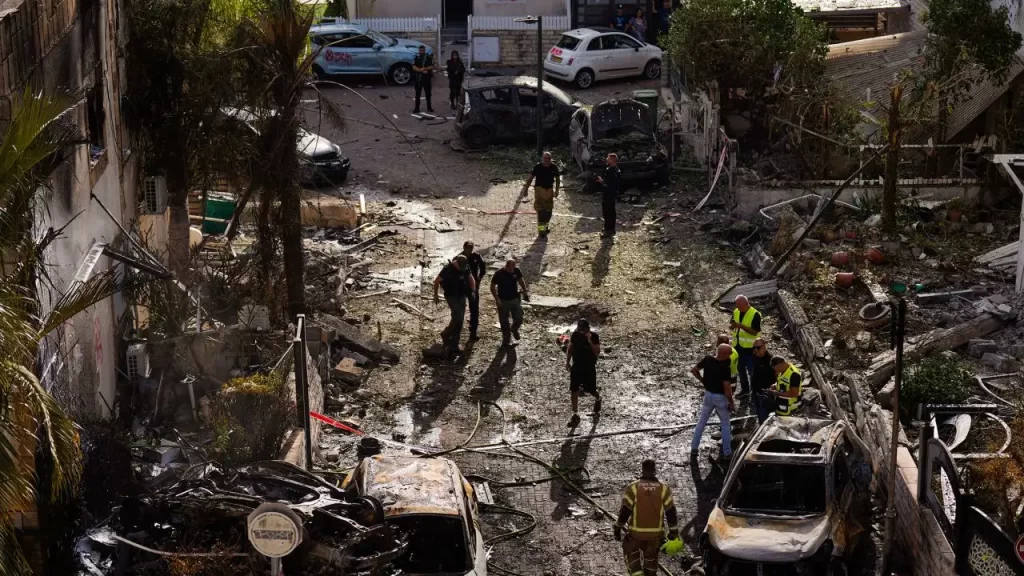
A dramatic escalation in the Middle East unfolded on Sunday when the Israel Defense Forces carried out an airstrike in the southern Beirut suburb of Haret Hreik, killing the top military commander of Hezbollah, Haytham Ali Tabatabai. The high-profile assassination occurs against the backdrop of a fragile U.S.-brokered truce in Gaza, with Hamas warning that ongoing Israeli attacks are threatening to collapse the ceasefire. These twin developments raise the spectre of a region-wide escalation, jeopardising the relative calm achieved in recent weeks.
Key Event and Its Significance
Israeli military officials confirmed that Tabatabai—Hezbollah’s acting chief of staff and one of its most senior operational leaders—was “eliminated” in a targeted strike. Lebanon’s health ministry reported five people were killed and around 25 to 28 wounded in the attack on the Beirut apartment complex.
Tabatabai had drawn a U.S. $5 million bounty for his capture and was regarded by Israel as key to Hezbollah’s recovery and readiness for renewed conflict. Hezbollah labelled the strike a “red line” crossed by Israel and stated that its leadership was “weighing a response.” This marks one of the most significant blows to Hezbollah’s military infrastructure since the 2024 ceasefire that followed the 2023–24 Israel-Hezbollah war.
Wider Regional Fallout and Risk of Escalation
The strike comes amid heightened Israeli air activity in southern Lebanon and an increasingly tense truce in Gaza. By targeting the heart of Beirut’s Hezbollah stronghold, Israel signals a renewed willingness to strike deep, raising concerns of a broader Lebanon-Israel front reigniting.
At the same time, in Gaza, Hamas has accused Israel of “continued violations” of the ceasefire agreed on October 10, warning that the truce may not hold. Recent Israeli strikes killed at least 24 Palestinians, and Palestinian authorities reported hundreds of alleged violations of the ceasefire.
A senior Hamas delegation meeting with Egypt’s intelligence chief stressed that without a proper mechanism for monitoring the ceasefire, the deal risks collapse. The convergence of these two flashpoints—in Lebanon and Gaza—suggests an increased risk of simultaneous escalation along both Israel’s northern and southern fronts, complicating diplomatic efforts and raising the prospect of a multi-front conflict.

