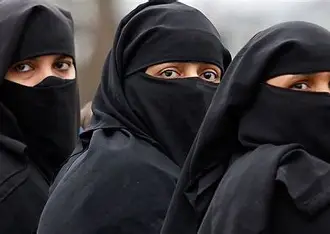
The Government of Kazakhstan has officially implemented a nationwide ban on the wearing of the niqab and other full-face coverings in public places. The announcement was made by Minister of Culture and Information Aida Balayeva, who stated that the decision aims to enhance public security and preserve the country’s cultural identity.
According to the new regulation, individuals will no longer be permitted to wear garments that obscure the face — including the niqab — in public settings. Authorities explained that the restriction is not directed at any specific religion but is intended to ensure better identification of individuals in public and prevent the spread of ideologies considered incompatible with Kazakhstan’s secular values.
“The inability to identify individuals in public poses a serious challenge for law enforcement and public safety,” Minister Balayeva said during a press conference. She added that while freedom of religion remains protected under Kazakhstan’s constitution, public policy must also ensure national cohesion and security.
This move is seen as part of Kazakhstan’s broader effort to curb the influence of foreign religious ideologies and to promote traditional Kazakh customs. Officials emphasized that local Islamic practices would continue to be respected, but foreign-imported practices perceived as radical would not be permitted.
The ban has drawn mixed reactions. Some human rights organizations have expressed concern over potential infringements on personal freedoms. A spokesperson for Human Rights Watch’s Central Asia division stated, “Such restrictions risk alienating women who wear the niqab as an expression of their faith.” However, certain Muslim community leaders in Kazakhstan have voiced support for the policy, citing it as a measure to prevent extremism and promote social integration.
Kazakhstan joins a number of other countries — including France, Denmark, and Belgium — that have enacted similar bans on face coverings in public. While the justification varies by nation, the common themes include national security, gender equality, and the promotion of secularism.
The new law comes into effect immediately, with public awareness campaigns expected to be rolled out in the coming weeks to educate citizens about the regulation. Law enforcement agencies have been instructed to enforce the law sensitively, ensuring it does not lead to undue harassment or discrimination.
The ban is expected to have significant social and legal implications in Kazakhstan, as the government continues to define the boundaries between religious expression and secular public policy.