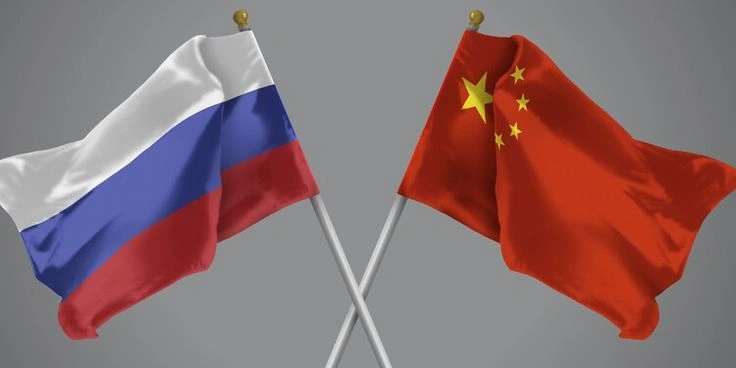
Russian Foreign Minister Sergei Lavrov touched down in Beijing on April 14, 2026, ready for crucial discussions with his Chinese counterpart, Wang Yi. This meeting coincided with escalating tensions in West Asia. Slated for April 14th and 15th, the visit comes at a precarious moment: the United States has established a naval blockade in the Strait of Hormuz, effectively choking off a vital artery for global oil transport.
Washington has characterized this move as a response to Iranian provocations, and it has driven energy prices through the roof and markets into a frenzy. Russia and China, two big players in the energy market with a lot at stake in the area, are now promising to work together diplomatically to calm the situation. What does this mean for the world, and especially for countries that need a lot of energy, like India?
The timing couldn’t be worse. About 20% of the world’s oil trade goes through the Strait of Hormuz. Any problems there affect a lot more than just the Middle East. Oil prices have already gone up 15% in the last week, reaching levels not seen since the Ukraine crisis in 2022. This is not an abstract problem for countries that depend on imports, like India, which gets more than 80% of its crude oil from the Gulf.
The Spark: The US Blockade and What Happened Right After
Let’s go back a little bit. Last month, tensions got out of hand when Iranian-backed militias used drones to attack Saudi oil facilities. The US responded quickly and strongly. By the beginning of April, American warships were imposing a blockade that stopped tankers from going through the strait. Critics say it’s economic warfare against Tehran, while the official reason is to stop arms smuggling to extremists.
The blockade’s consequences are clear and quick:
Oil Supply Squeeze: Daily flows via Hormuz fell from 21 million barrels to less than 5 million. This forced reroutes around Africa that cost millions and take weeks.
Price Rise: On April 13, Brent crude reached $120 a barrel, up from $95 a month earlier. The price of gas in the US went up 20 cents a gallon overnight.
Global Market Panic: Stock indexes around the world fell by 3% to 5%. Airlines and shipping companies were in a rush to find other options.
Of course, Iran isn’t just sitting around. Tehran has said it will mine the waterway and step up attacks on US assets. Hezbollah in Lebanon and the Houthis in Yemen have used the same language, which has made people worry that the fight will spread. Saudi Arabia and the UAE, who are stuck in the middle, have increased production from spare capacity, but they can’t make up for the loss completely.
This is really near to home for India. Tankers from Basra and Abu Dhabi provide oil to Mumbai’s refineries, which are now behind schedule. According to government data, domestic fuel stocks are at their lowest levels in two months, and inflation is rising. An official from the oil ministry said last week, “We’re watching every barrel.” How long can economies like ours hold out against this squeeze before rationing becomes a reality?
Are the Lavrov-Wang talks a diplomatic lifeline
Here come Lavrov and Wang. Their rendezvous at the Diaoyutai State Guesthouse in Beijing was not just normal diplomacy. A joint statement released late on April 14 said that both ministers promised to work together to “de-escalate tensions in West Asia.” Lavrov, who is known for being very critical of Western policy, called the blockade “illegal and provocative” and asked the UN Security Council to do something about it. Wang agreed, saying that “multilateral conversation” was more important than “unilateral moves.”
Russia and China have similar strategic goals in this area. Moscow, which is one of the biggest oil exporters, benefits from rising prices but could lose Middle Eastern consumers if things get too crazy. China is the world’s biggest importer, and it uses 11 million barrels a day, a lot of which comes via Hormuz. Beijing’s Belt and Road investments in Iran and Pakistan make stability a must.
The conversations’ details show that there was serious coordination:
Promises to support Iran’s right to “peaceful navigation” through the strait.
Plans for a combined proposal at the UN that calls for the end of the embargo and the fighting in Yemen.
Russia proposed to send more piped gas to China through Power of Siberia 2, and Beijing suggested LNG swaps with Gulf states.
These two have worked together on Middle East flashpoints before. Remember how they helped settle things between Saudi Arabia and Iran in 2023 or how they both vetoed resolutions against Syria? But the stakes in Hormuz seem bigger. Analysts say that Russia’s shift toward Asia after the Ukraine crisis increases this axis, with commerce reaching $240 billion last year.
A bigger powder keg in the Middle East
The problem in Hormuz isn’t happening in a vacuum. West Asia, which is also known as the Middle East, is full of wars that are all connected. Israel’s ongoing operations in Gaza have forced more than a million people to leave their homes, which has made many angry at the West. Turkey’s attacks on Syria are putting the country’s fragile stability at risk. The civil war in Yemen, where Houthis attack ships in the Red Sea, is another domino.
The US blockade makes everything worse. In a White House briefing, President Harris called it a “defensive necessity” and pointed to more than 50 attacks on US outposts since October. But friends like Europe are worried; Germany’s Scholz said to “exercise prudence” to avert a recession. Even Israel, a strong ally, is worried that Iran may retaliate and raise oil prices.
Russia and China are trying to make themselves look like options. Moscow has strengthened its ties with Tehran by selling them Su-35 jets and S-400 systems. Beijing acts as a mediator in trade, signing 25-year accords with Iran for $400 billion. Their conference in Beijing shows that they want to balance out US power. For example, BRICS has grown to include Saudi Arabia and the UAE.
What if this partnership works? Could it change energy partnerships and leave Washington out?
The Energy Crisis: Effects Around the World and in India
The energy angle is an important part of any talk on Hormuz. The strait isn’t just oil; it’s also LNG, chemicals, and half of Asia’s supply. Whether there is a blockade or not, long-term stress might cause outages and inflation around the world.
Key effects at a glance:
Japan, South Korea, and India are all at risk since their imports could go up by 30% to 50%.
Europe’s Pivot: They’re already getting less Russian gas and are now looking at US LNG at a higher price.
Response from OPEC+: The cartel meets on April 20, and Saudi Arabia hints at voluntary cutbacks to help prices.
India is different. As the third-largest importer of oil, it spent $220 billion on crude last year. PM Modi’s team has changed a lot; they now buy inexpensive Russian oil, which makes up 40% of their imports. But Hormuz is still the monarch. Reliance and ONGC are hiring VLCCs for lengthier trips, which cost an extra $10 million each time. Fertilizer facilities that depend on natural gas are shutting down, which hurts farmers.
People who buy things feel it too. Truckers are protesting since gas prices in Delhi went beyond ₹110/liter. Economists say that if the embargo goes on for too long, GDP could drop by 1–2%. “Variety is important, but Hormuz is irreplaceable in the short term,” says ORF analyst Vijay Gokhale.
Russia helps out. Lavrov is said to have offered India more Urals crude at a discount of $70 per barrel. China also shares information on other channels through its naval ports in Djibouti.
Strategic Moves: Power Moves Behind the Scenes
Take away the diplomacy, and geopolitics roars. The US wants to hurt Iran’s economy to force nuclear talks. Sanctions hurt, but a blockade makes things riskier—think of tanker crashes or inadvertent strikes.
Russia gets more power. High prices help pay for its conflict in Ukraine, while chaos in Hormuz makes it easier for Siberian exports to grow. China is hedging: inventories will run out in 90 days, but factories will slow down if oil stays above $110.
Iran is tough. Khamenei, the Supreme Leader, promised a “strong response,” and the Revolutionary Guards practiced defending the strait. Proxies are at work: last week, Houthi drones attacked a US destroyer.
It’s a tough situation for Gulf monarchies. They support the US in secret but are afraid of what would happen next. ADNOC in the UAE redirected 2 million barrels a day through Bab el-Mandeb, which put a lot of stress on that chokepoint as well.
India is keeping a close eye on everything. New Delhi’s balanced approach—QUAD with the US and BRICS with Russia and China—works. External Affairs Minister Jaishankar tweeted that he wanted “de-escalation,” which supports multilateralism.
Paths to De-escalation or Deadlock?
Lavrov’s trip to Beijing brings up a possible way out. Joint diplomacy might get votes from the Global South at the UN, leaving the US alone. Think of G20 sidebars or Shanghai Cooperation Organization summits.
But there are problems ahead. Washington calls it the “axis of autocrats.” Iran says the blockade must cease first. And things go wrong—one missile goes off course and it’s war.
Optimists point to past events, including how discussions in Oman ended the 2019 tanker issue. Pessimists see memories of 1979, when the revolution momentarily shut down Hormuz.
What do neutrals like India have to do? Maybe some quiet shuttle diplomacy, using SCO relationships.
Lavrov’s Beijing Trip Signals Russia-China Pushback Against US Strait of Hormuz Blockade