
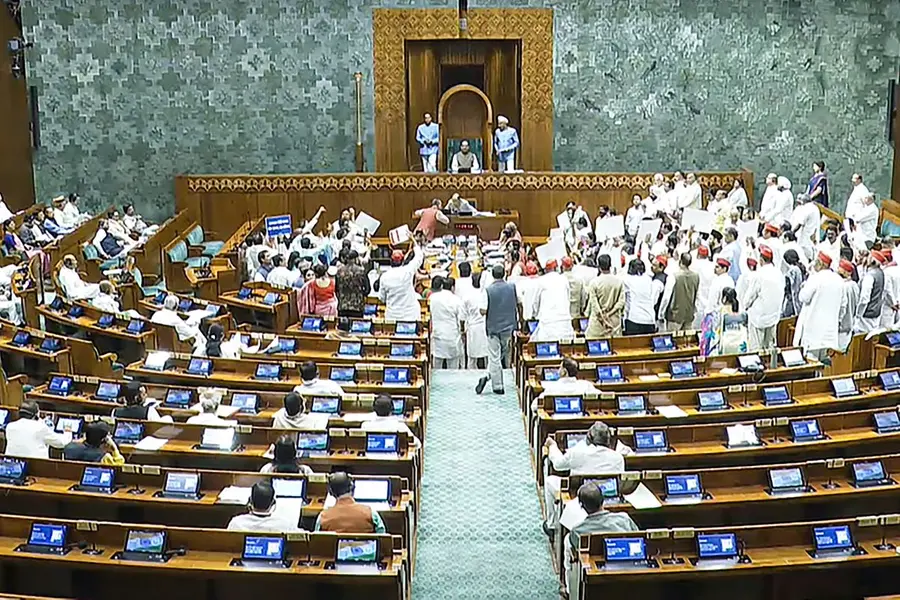
August 11,2025 – The Lok Sabha on Monday approved the Income-Tax (No. 2) Bill, 2025 and the Taxation Laws (Amendment) Bill, 2025 in a stormy session, with the Opposition staging protests and no discussion taking place before the vote. Both pieces of legislation, presented by Finance Minister Nirmala Sitharaman, are aimed at modernising India’s direct tax framework.
The Income-Tax (No. 2) Bill is a revised version of the proposal first introduced in February this year, which was withdrawn on August 8 following objections to certain clauses. The updated bill incorporates 285 suggestions from the Select Committee, including 32 notable changes related to language, drafting accuracy, and legal references.
Notable features of the bill include maintaining the ₹12 lakh annual income exemption, reducing the number of sections from 819 to 536, and reorganising the law into 23 chapters and 16 schedules. It also brings in faceless, fully digital assessment systems to reduce direct interaction between taxpayers and officials, aims to speed up refund processes, and tightens rules on anonymous donations to religious institutions without social welfare activities.
The Taxation Laws (Amendment) Bill, 2025 expands tax relief to participants in the Unified Pension Scheme (UPS), aligning their benefits with those under the New Pension Scheme (NPS). It also updates provisions on block assessments in search-related tax cases and grants certain tax concessions to Saudi Arabian public investment funds.
Parliamentary Affairs Minister Kiren Rijiju said the revised Income-Tax Bill keeps the original framework intact while reflecting the committee’s recommendations. The government plans to bring the new tax code into effect from April 1, 2026, replacing the six-decade-old Income-Tax Act of 1961.
The passage of the bills through a voice vote, without debate, has drawn criticism over the lack of parliamentary scrutiny, even as the government pushes forward with what it calls a major step toward a simpler, transparent, and technology-driven tax system.

