
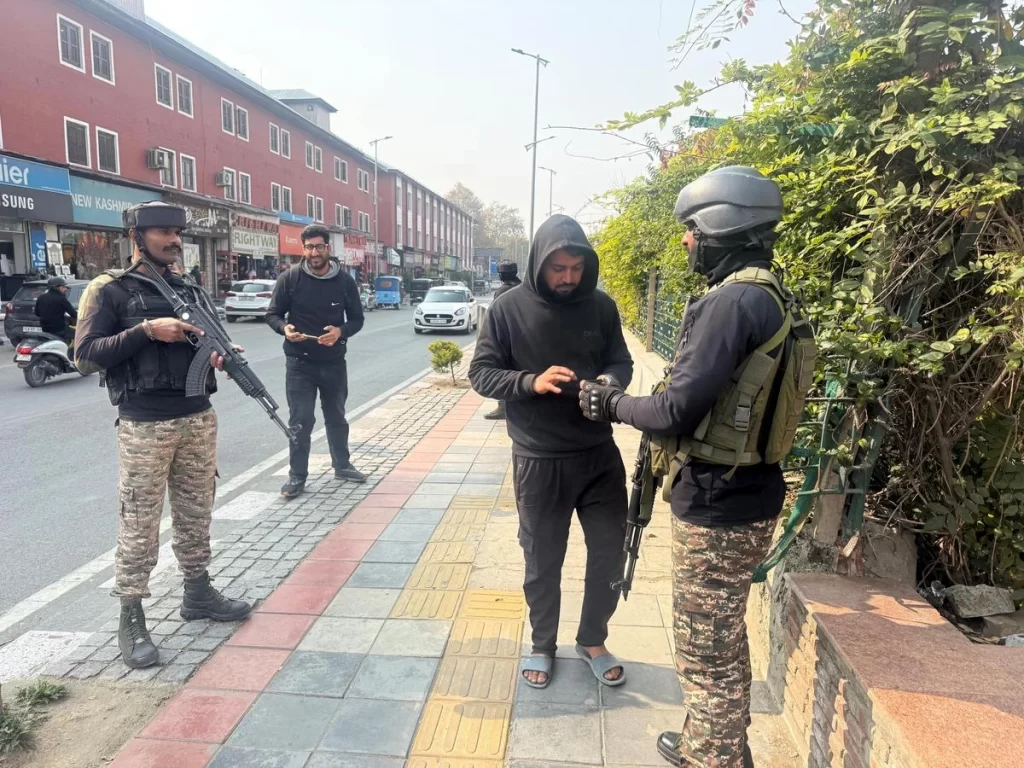
In a sweeping security operation across the Kashmir region, officials have confirmed that at least 600 individuals were detained as part of a large-scale anti-terror and anti-separatist crackdown, involving more than 500 search operations carried out over the past few days. The action forms part of ongoing efforts to dismantle the terror support network in the union territory, particularly in the wake of the recent car blast near Delhi’s Red Fort.
Authorities from the Jammu & Kashmir Police say the raids targeted associates of banned organisations, over-ground workers (OGWs), and individuals believed to be part of the separatist and terror ecosystem. The searches spanned multiple districts in the Kashmir Valley and were based on credible intelligence inputs linking local modules to cross-border militants.
According to reports, the detentions come amid investigations into the Red Fort car blast, which security agencies believe was facilitated by a network of professionals and logisticians operating in Kashmir and the surrounding region. One recent investigative report highlights a so-called “doctors’ module” in Kashmir that allegedly provided logistical support to the Delhi incident. The Kashmir operations are described as “non-kinetic measures” designed to neutralise infrastructure that facilitates terrorism rather than just respond to individual acts of violence.
In the Valley, hundreds of simultaneous raids were conducted in cities including Srinagar, Anantnag, Budgam, Kulgam, Shopian and Kupwara. Officials say these were aimed at residences of suspects and premises of groups allegedly linked to proscribed organisations such as the Jamaat-e-Islami (JeI). The modus operandi reportedly included digital device seizures, document scans, cordon-and-search operations, and the binding down of individuals suspected of aiding terror networks.
The operation marks a significant escalation in Delhi’s counter-terror strategy in Kashmir, shifting from reactive raids to pre-emptive, intelligence-driven suppression of the broader support ecosystem. In the words of a senior law-enforcement source: “We are not just tracking bombs anymore; we are tracking minds.” The emphasis is on cutting off logistics, finances, radicalisation conduits and recruiting platforms that feed violence in the region.
However, the crackdown also raises questions about civil-liberties, oversight and the potential for collateral impact on innocent civilians. Local residents and human-rights groups warn that broad dragnet operations risk alienating communities and undermining long-term stability.
The Kashmir region is at the centre of a renewed and intensified security push by Indian authorities. With more than 600 detentions and over 500 search operations, the intention is clear: dismantle the terror-support network, curb separatist agitation and pre-empt further violence like the Red Fort car blast. Yet, as the operation expands, striking the balance between robust security and safeguarding rights will remain a delicate challenge. The coming weeks will test how effectively these actions translate into sustained regional peace and normalcy.

