
New Delhi, May 28:
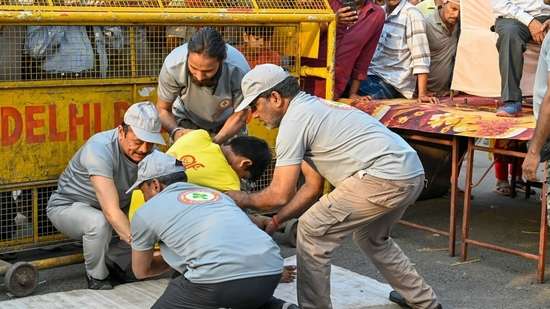
A comprehensive security exercise will be carried out on May 29 across four Indian states bordering Pakistan—Jammu and Kashmir, Punjab, Rajasthan, and Gujarat—according to senior government officials. The joint drill comes in the aftermath of Operation Sindoor, a recent counterterrorism mission, and is intended to assess India’s readiness in dealing with potential threats along the western frontier.
Multiple agencies, including the Border Security Force (BSF), Indian Army, state police departments, and central intelligence units will take part in the exercise. The drill will simulate coordinated responses to cross-border infiltration, drone activity, and other emerging security challenges.
A senior official from the Ministry of Home Affairs (MHA) said the exercise will help identify operational gaps and enhance coordination between forces. “This is part of a series of proactive steps aimed at strengthening surveillance and border defense,” the official said.
Operation Sindoor, which took place earlier this month in Jammu and Kashmir, led to the neutralization of multiple armed militants. Intelligence gathered during that operation suggested a renewed push by hostile elements to exploit weak spots along the India-Pakistan border. The upcoming mock drill aims to counter such possibilities by stress-testing current security protocols.
The drill will focus on sensitive regions with a history of infiltration and smuggling attempts. Forces will deploy advanced equipment, including unmanned aerial vehicles (UAVs), thermal sensors, and night-vision-enabled drones, to track and intercept simulated threats. Field communication systems and rapid response mechanisms will also be evaluated during the operation.
The National Security Council Secretariat (NSCS) is reportedly monitoring the entire process and will conduct a post-drill review to assess preparedness levels and recommend improvements where necessary.
Defence experts say the timing of the drill highlights India’s intent to stay ahead of evolving threats. “Given the current situation along the western border, such drills serve as a deterrent and reinforce our defensive posture,” said Lt Gen (Retd) D.S. Hooda, a former commander of Northern Command.
State governments have been directed to coordinate with security forces to ensure public awareness and minimize disruptions. Authorities emphasized that the exercise is pre-planned and does not signal any immediate threat to civilians.
This drill is expected to reinforce inter-agency coordination and increase the effectiveness of rapid response strategies during real-time incidents. As geopolitical tensions remain high, experts believe that such simulations are essential for maintaining operational efficiency and public safety.
Conclusion:
With regional security dynamics constantly shifting, India is taking visible and concrete steps to bolster border protection. The multi-agency drill across four key states demonstrates a clear focus on maintaining vigilance and preparedness, particularly in the wake of recent high-stakes operations like Operation Sindoor.

