
5 July, 2025-In a major development that has sent shockwaves across the country, authorities have uncovered what is being described as India’s biggest medical scam, involving crores in bribes, senior government officials, and the controversial spiritual leader Rawatpura Sarkar, also known as Ravishankar Maharaj. The case has raised serious concerns about corruption in the medical education sector and the extent of political and religious influence over regulatory mechanisms.
According to the FIR registered by the investigating agencies, several top officials from medical councils and administrative bodies are under the scanner for allegedly accepting massive sums of money to grant approvals, accreditations, and licenses to private medical colleges and universities that failed to meet even basic infrastructure and faculty standards. The bribe amounts reportedly run into hundreds of crores.
What makes this scam particularly explosive is the involvement of Rawatpura Sarkar, a widely known spiritual figure with considerable influence in both religious and political circles. His educational trust reportedly runs a network of private institutions, including medical colleges, some of which are at the center of the probe. Authorities allege that fraudulent practices, including forged documents, ghost faculty appointments, and illegal admissions, were used to secure Medical Council of India (MCI) approvals and expand operations.
Investigators have pointed to the use of intermediaries and middlemen to funnel money to regulatory officials. In return, these institutions allegedly received clearances that allowed them to continue operations despite glaring deficiencies. Several whistleblowers within the system have come forward, citing widespread malpractice and systemic collusion.
The timing of the revelations is significant, as India has been working to reform medical education and restore public trust in its institutions through the National Medical Commission (NMC). However, this scam has cast a shadow over the credibility of these efforts and exposed deep-rooted corruption.
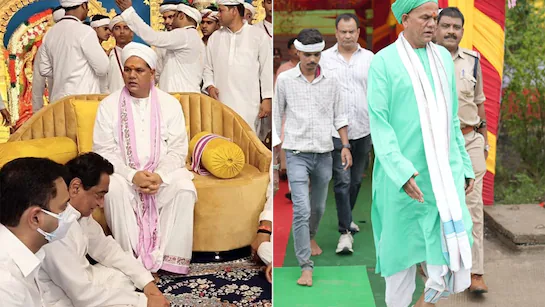
Adding to the controversy is Rawatpura Sarkar’s close association with political leaders across party lines. Images and records of past events show him sharing platforms with top political figures, prompting questions about the political patronage that may have shielded his institutions from scrutiny.
Legal experts suggest that if proven, the charges could lead to the cancellation of licenses, imprisonment of those involved, and disqualification of students admitted through irregular channels. Public health advocates have also raised concerns about the quality of education and training received by students from such institutions, which could have long-term implications for India’s healthcare system.
As investigations deepen, the Enforcement Directorate (ED) and Central Bureau of Investigation (CBI) are expected to widen the scope of the probe, possibly leading to more arrests and seizures. The Ministry of Health and Family Welfare has stated that it is “monitoring the situation closely” and will take strict action against any institution found guilty of malpractice.
This scandal is not just a case of corruption but a stark reminder of the need for transparency and accountability in one of the most crucial sectors — healthcare. With political, religious, and administrative power converging in this case, it has become a litmus test for India’s commitment to clean governance and public welfare.

