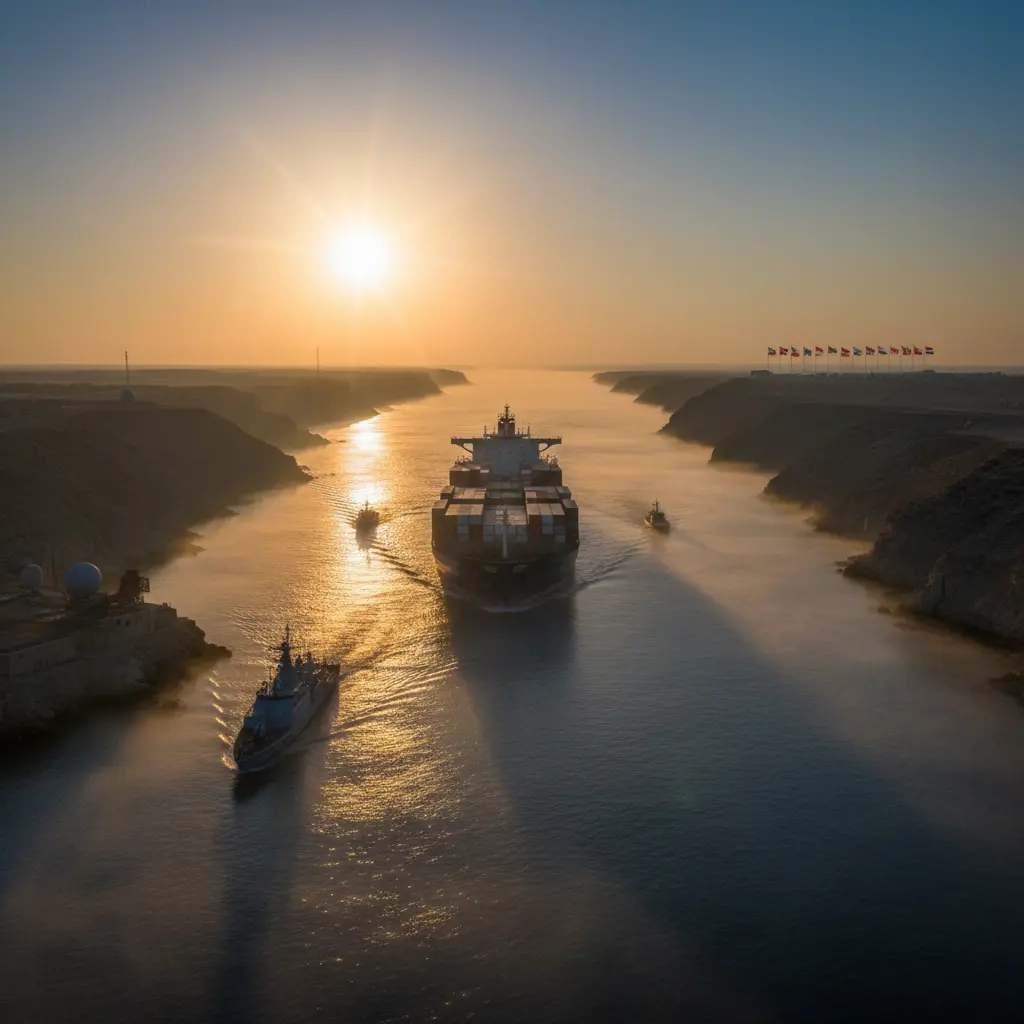
Still a Global Focus The waters of the Middle East are once again the focus of attention. From the Strait of Hormuz to the Red Sea and the Bab el-Mandeb Strait, governments, shipping companies, and energy traders are watching closely as the region’s maritime routes remain under strain. These narrow but vital waterways carry a huge share of the world’s oil, gas, and container traffic, and any disruption there sends ripples through global trade almost instantly. This is why Middle East news continues to dominate headlines focused on shipping security, global trade routes, the oil market, and maritime security more broadly.
Two Chokepoints, One Fragile System
For decades, the Strait of Hormuz has been described as the world’s most important oil artery, and for good reason. Roughly a fifth of the planet’s daily oil consumption, along with a comparable share of global liquefied natural gas, moves through this narrow passage between Iran and Oman. Meanwhile, the Red Sea and its southern gateway at Bab el-Mandeb form the other critical link connecting Asia to Europe via the Suez Canal.
What makes the current moment unusual is that both corridors have faced serious disruption at the same time. Tensions around Hormuz escalated sharply earlier this year, with commercial shipping traffic dropping dramatically as tankers avoided the area and insurers pulled back coverage. At the same time, attacks linked to Yemen’s Houthi movement have continued intermittently in the Red Sea, keeping many major carriers wary of returning to their traditional routes even as some limited traffic resumes.
Signs of Cautious Recovery
There is, however, some encouraging movement. Recent data suggests that transit numbers through the Strait of Hormuz have started climbing back up after months of near paralysis, even though monitoring groups still classify the threat level there as substantial rather than resolved. At the same time, shipowners appear to be gradually treating the Red Sea route as the comparatively safer option again, with vessel transits through Bab el-Mandeb and Suez Canal traffic both showing meaningful year-on-year increases in recent months.
Still, this recovery is far from a return to normal. Traffic through these corridors remains well below pre-crisis levels, and a portion of vessels are reportedly making “dark transits,” sailing with their tracking signals switched off to reduce visibility to potential attackers. That alone signals how far the industry still is from feeling secure in these waters.
Why Oil Markets Are Watching So Closely
Energy markets have every reason to stay alert. Any hint of renewed conflict or blockade around Hormuz can send oil and gas prices climbing within days, since so much of the world’s crude and LNG depends on safe passage through that single chokepoint. Countries heavily reliant on Middle Eastern energy imports, including Japan and South Korea, have already had to consider tapping into strategic reserves during periods of peak disruption this year. European economies, which depend on Qatari LNG shipped through the same waters, have felt similar pressure on gas supplies.
This dependency explains why some Gulf producers are now investing more seriously in overland pipeline alternatives that bypass Hormuz altogether. Analysts note that the recent volatility has made pipeline infrastructure investment newly attractive, since it offers exporters a way to keep crude flowing even if the strait becomes unusable again.
Diplomacy and Naval Presence
Diplomatic engagement remains central to easing tensions. The United States and Iran, among other regional Gulf countries, have been talking about de-escalating tensions and international maritime organisations have been working together to help mariners trapped in the region and to keep them safe as they pass through. The broader push to persuade shipping companies that the routes are safe to use again includes naval escorts and increased patrols, including by European countries.
This crisis also carries a huge human toll. During the worst periods of disruption, thousands of seafarers have been stranded on ships that are unable to safely depart the Gulf region, and this has led to coordinated evacuation efforts led by international maritime authorities working with regional governments.
Implications for the world trade For companies whose business relies on predictable shipping routes, the present environment means that planning for uncertainty will have to continue, rather than a quick return to pre-crisis conditions. Freight rates are still high by historical standards, several routes are experiencing longer transit times as ships divert from higher risk corridors, and schedule reliability remains below the levels that shippers had become accustomed to prior to 2023. Companies with exposure to Gulf trade are having to build in extra buffer time, alternative routing plans, and higher insurance costs as part of standard operating procedure now, rather than as an emergency measure.
Looking Ahead
The situation across Middle East waterways remains delicate. While recent weeks have brought modest signs of stabilization in both the Strait of Hormuz and the Red Sea, the underlying tensions driving the disruption have not been fully resolved. Until lasting diplomatic solutions take hold, global trade routes through this region will likely continue operating under a persistent risk premium, one that touches everything from the price at the gas pump to the cost of goods shipped halfway around the world. For now, maritime security in the Middle East remains one of the most closely watched stories in global commerce, and it is likely to stay that way for some time to come.
Middle East Shipping Security.