
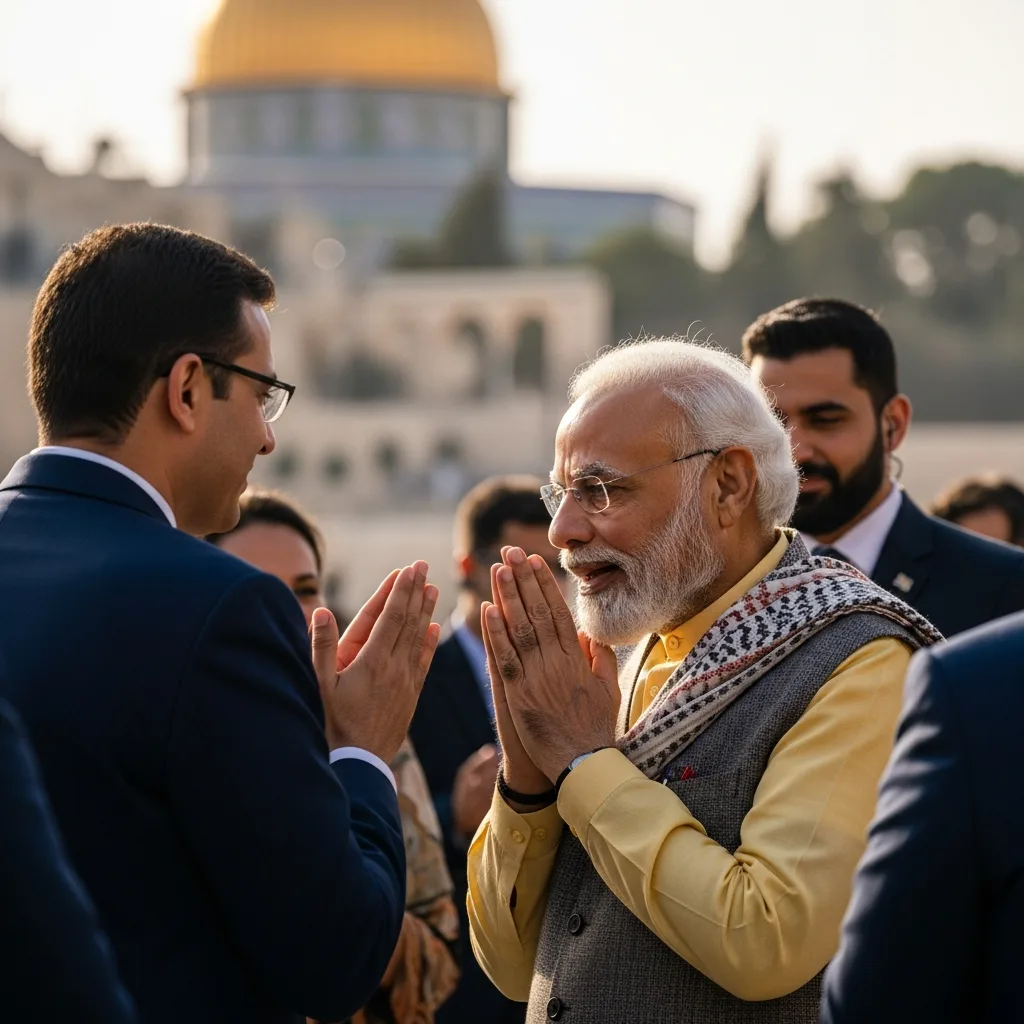
Modi’s trip to Jerusalem: a historic event that split the countryThere are times in diplomacy when more than just handshakes and photo ops happen. One of these is Prime Minister Narendra Modi’s visit to Israel. When he landed in Jerusalem and became the first Indian Prime Minister to speak to the Knesset, Israel’s Parliament, the mood back home in India was anything but the same. For some, it was a proud moment. For some, it made them think about timing, morality, and the unspoken messages a country sends when its leader chooses where to stand.Let’s break it all down. A First in History—And Why It Matters
It has always been hard to define the relationship between India and Israel. In 1992, the two countries officially established diplomatic relations, but the relationship has grown much warmer over the past ten years. The relationship between the two countries has quietly grown in areas that are very important to India’s national interest, such as defense cooperation, sharing counter-terrorism intelligence, agricultural technology, and cybersecurity.
PM Modi’s trip to Jerusalem strengthens that bond even more. Speaking to the Knesset is not just a formality. It is a strong show of support for a democratic friend. India is one of only a few world leaders to have received this honor. Modi’s speech to the Israeli Parliament is expected to mark the beginning of a new chapter in India-Israel relations.
There are a lot of things to do. There are talks about defense deals, technology transfer, water management, and new ideas for farming. India has long benefited from Israeli knowledge in crop technology and drip irrigation. These are still important areas for a country that is still dealing with the problems of farmers in distress and a lack of water.
The Controversy That No One Wants to Ignore But This Is Where It Gets Tough
There is more to Modi’s visit than just that. It comes at a time when the world is having very heated arguments about the situation in the Middle East. Several leaders of the opposition in India have been very critical of the visit, calling the timing of it “moral cowardice.” This phrase has since gone viral on social media and sparked a lot of debate in political circles.
Their point is that now is not the right time for such a high-profile, symbolic visit to Israel because the world is watching events in the region with growing concern and India has always been a strong supporter of Palestinian rights at international forums while also maintaining a position of strategic independence.
Congress and some regional parties have asked if the government has thought enough about what this means for India’s 200 million Muslims, its traditional partners in the Arab world, and its commitment to a rules-based international order that puts humanitarian concerns first.
These are not small issues. They show a real conflict in India’s foreign policy identity: on the one hand, there is a growing strategic partnership with Israel, and on the other hand, there are India’s long-standing moral commitments to things like Palestinian self-determination.
What the Government Says
The ruling party, on the other hand, is not sorry. People close to the Prime Minister’s Office have called the visit “long-overdue recognition of a critical strategic partnership.” They say that India’s foreign policy should be based on what is best for the country, not on what looks good to the rest of the world or what will get votes at home.
There is a case to be made. India’s “neighborhood first” and “act east” policies show that the country is becoming more practical in its foreign policy and is less willing to be limited by alliances from the Cold War. India’s goal of becoming a Vishwaguru, or global leader that makes its own way, is in line with its deep involvement with Israel, which is one of the most advanced countries in the world in defense technology, cybersecurity, and agricultural science.
Supporters of the visit also point out that India has not stopped supporting a two-state solution to the Israel-Palestine conflict. Just because you talk to Israel diplomatically doesn’t mean you agree with every policy choice the Israeli government makes.
What Goes On in the Knesset
Modi’s speech to the Israeli Parliament is likely to be a historic event. In the past, India and Israel didn’t show their friendship in public, even though they were working together more and more behind the scenes. A Prime Minister’s speech to the Knesset breaks that pattern in a big way and in front of everyone.
People think that Modi will strike a tone that is friendly but also has some depth. Expect to hear about common democratic values, the common threat of cross-border terrorism, and a plan for more economic and technological cooperation. People will be paying close attention to whether he makes any mention, even if it’s indirect, of the bigger humanitarian situation in the area.
People all over the world will be listening.
What This Visit Really Shows
Modi’s trip to Jerusalem shows something important about India in 2024 and beyond, beyond the political optics and diplomatic points. This country is no longer happy to stay out of global politics. India is making choices that are clear and important about who it stands with, what it cares about, and where it sees its future.
That level of confidence needs to be looked into. The Opposition is right to ask tough questions. This is the kind of debate that a healthy democracy needs. At the same time, calling every bold foreign policy move “moral cowardice” could turn complicated geopolitical choices into simple slogans that people can tweet.
India needs a grown-up, honest national conversation about what strategic autonomy really means in a world that is falling apart. This visit makes us face that. It means working with allies even when it’s hard. It means finding a balance between interests and values. And it means being brave enough to stand up for those choices in public.
PM Modi’s historic trip to Israel is more than just a diplomatic milestone. It is a mirror that shows how India’s identity is changing in the world. Depending on where you stand, the reflection looks very different.

