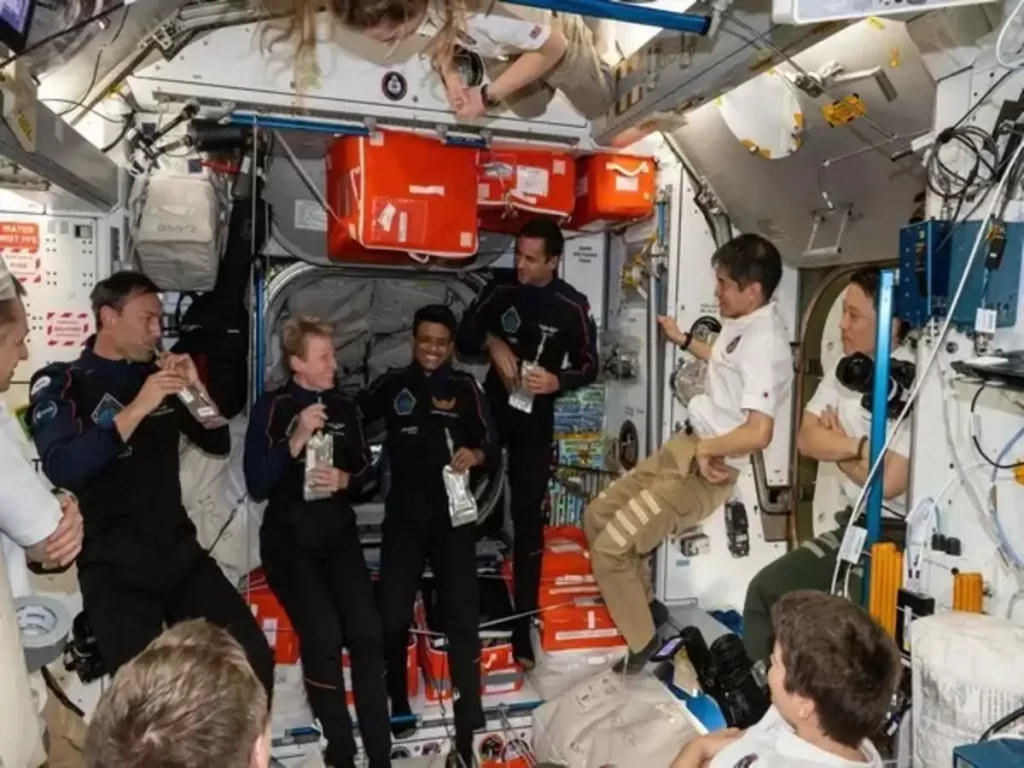
2 July, 2025-India has launched its first set of biology experiments in space, marking a major milestone in the country’s space research efforts. The mission, focused on the study of muscles, microbes, and microgravity, aims to answer critical questions related to human health, sustainability, and bio-manufacturing in extraterrestrial environments.
The Indian Space Research Organisation (ISRO), in collaboration with several top research institutions, has developed a special payload for these experiments, now operating aboard a low Earth orbit platform. The initiative is part of India’s expanding focus on space-based life sciences, especially with long-duration human missions in mind.
One of the experiments centers on how muscle cells respond in microgravity, a condition known to cause muscle loss and weakness in astronauts during extended stays in space. Researchers are studying how muscle tissues behave without the influence of gravity, with the goal of developing new strategies to counteract muscle atrophy in future space travelers. The findings may also have implications for treatments of muscle degeneration on Earth.
A second experiment involves microbial behavior in space. Scientists are observing how specific bacteria adapt, mutate, and potentially become more resistant in microgravity. The study includes both harmful and beneficial strains. This research is expected to provide vital data on microbial resistance, infection risks, and hygiene management in space, contributing to safer human missions beyond Earth.
The third experiment focuses on bio-manufacturing in space, exploring whether biological products such as proteins, enzymes, and biofuels can be more efficiently produced in a gravity-free environment. If successful, this research could pave the way for self-sustaining space habitats, where essential materials and compounds are manufactured in orbit instead of being transported from Earth.
According to ISRO officials, this biology mission represents a strategic step in building the foundation for long-term human presence in space. With future missions to the Moon and Mars in planning stages, the ability to understand and manage biological systems in space will be crucial for both survival and productivity.
Experts believe the results of these experiments could lead to advancements in space medicine, regenerative health technologies, and sustainable resource management. The project also reflects India’s growing commitment to becoming a key player in global space exploration, not only in engineering and satellite technology but also in space-based life sciences.
As data from these experiments begins to arrive, scientists anticipate valuable insights that could benefit both space missions and Earth-based industries. The mission is being closely monitored by the global research community, with hopes that India’s efforts will contribute significantly to our understanding of biology in space.