
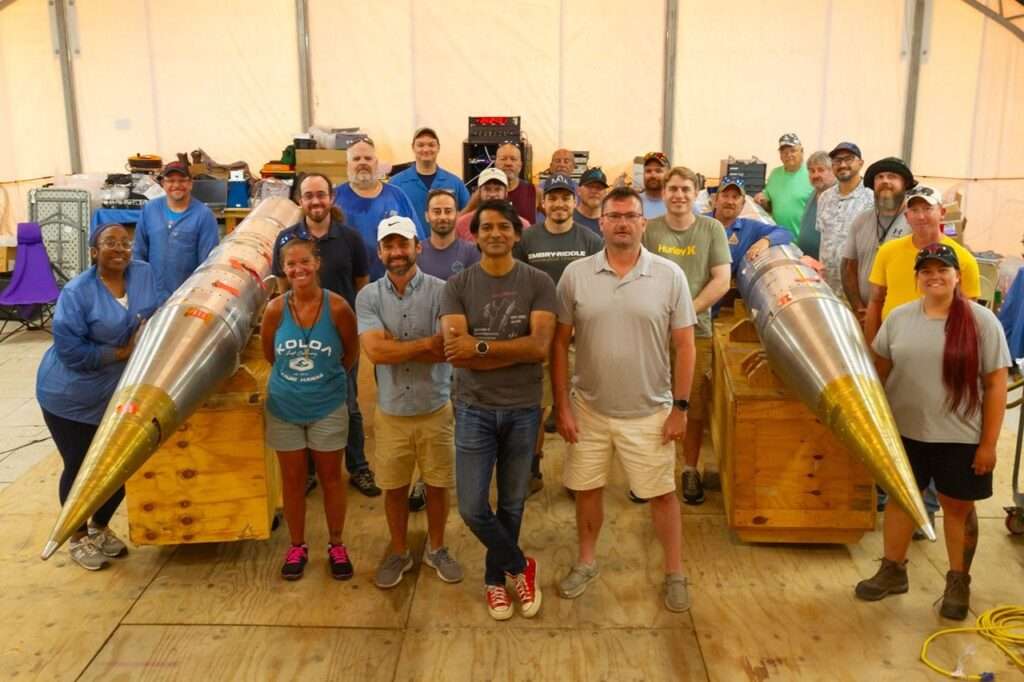
Kwajalein Atoll, June 13:
NASA has initiated the SEED (Sporadic-E ElectroDynamics) mission with a series of rocket launches from the Kwajalein Atoll in the Marshall Islands. The mission is focused on studying Sporadic-E layers—dense, cloud-like patches of charged particles in the ionosphere that can significantly disrupt radio and GPS communications.
The launch window officially opened on June 13, marking the start of this critical scientific endeavor. NASA aims to better understand the formation, behavior, and impact of these high-altitude ionospheric structures, which typically form at around 100 kilometers above the Earth’s surface. Despite their known interference with communication signals, much about their origin and movement remains unclear.
Through the SEED mission, NASA will use sounding rockets equipped with specialized instruments to gather real-time data as they pass through or near these ionospheric layers. These instruments will measure electric fields, ion densities, and atmospheric winds, helping scientists analyze the physical processes responsible for the creation and variability of Sporadic-E events.
“The SEED mission is a key step toward decoding the ionospheric conditions that affect our modern communication and navigation systems,” said Dr. Jeffrey Klenzing, project scientist at NASA’s Goddard Space Flight Center. “By collecting in-situ data, we hope to improve forecasting models and make critical infrastructure more resilient to space weather disturbances.”
Kwajalein Atoll was strategically chosen for the mission due to its favorable environmental conditions and frequent Sporadic-E activity, making it an ideal location for high-accuracy observations. The sounding rockets used in the mission are capable of short, high-altitude flights, enabling them to briefly pass through the ionospheric layers and transmit vital scientific data back to researchers.
The importance of this mission is underscored by the increasing reliance on satellite-based systems for navigation, aviation, military operations, and emergency services. Disruptions caused by ionospheric irregularities like Sporadic-E layers can lead to significant challenges in these sectors. With the SEED mission, NASA aims to provide the scientific foundation needed to develop better predictive tools and mitigation strategies.
As launches continue over the coming days, the SEED mission is expected to deliver unprecedented insights into one of the ionosphere’s most elusive phenomena, ultimately contributing to more stable and secure global communication networks.

