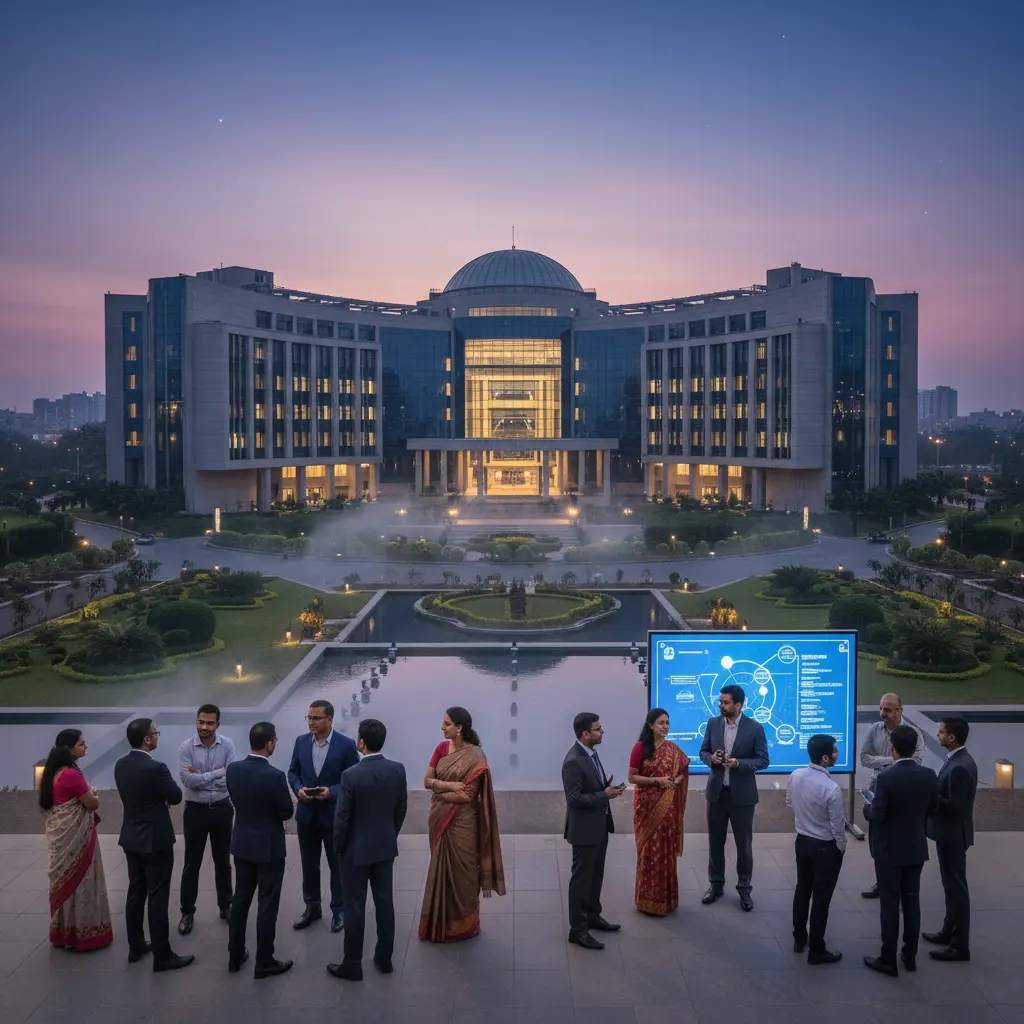
Pune is back in the limelight as a centre for scientific discourse. The National Scientists Round Table Conference, popularly known as NSRTC 2026, is all set to be held at MIT World Peace University (MIT WPU) from July 17 to 19. Some of the sharpest scientific minds in the country will be under one roof. For a city already known for its universities, research labs and IT parks, this event adds one more reason to see Pune as a genuine science and innovation destination.
The conference isn’t just another academic gathering with long lectures and polite applause. It’s designed as a working platform where scientists, researchers, educators, and students can actually sit down and talk to each other. That mix of generations and disciplines is really the heart of NSRTC 2026 — senior scientists sharing decades of experience, young researchers bringing fresh questions, and students getting a rare front-row seat to how real scientific conversations happen.
MIT WPU has hosted this event before, and each edition has grown in scale and ambition. What started as an idea to create a common table for India’s scientific community has turned into one of the more closely watched research conferences on the national calendar. The Pune science conference circuit has seen its share of seminars and symposiums over the years, but NSRTC has carved out its own identity by focusing on something a little different: not just presenting research, but actually building bridges between people who rarely get to talk shop together — academic scientists, industry experts, policymakers, and students.
Held on the sprawling Kothrud campus, the conference typically features sessions spanning physical sciences, life sciences, and engineering and technology. Past editions have drawn heavyweight names from India’s scientific establishment, including former directors of national research bodies and Padma award recipients, alongside government representatives connected to science and technology policy. The idea is simple but powerful: when people who work on fundamental research sit in the same room as those working on applied, industry-facing problems, something useful tends to come out of it.
For Pune, hosting an event like this matters beyond the three days it runs. The city already has a strong academic ecosystem, and a national-level science conference reinforces that reputation. Students from local colleges get exposure to real research conversations without having to travel to Delhi or Bengaluru. Local industry gets a chance to connect with researchers whose work could eventually shape new products, processes, or technologies. And the university hosting it, MIT WPU, gets to strengthen its position as an institution serious about research, not just degrees.
There’s also a broader national context here. India has been pushing hard on the idea of building a stronger research culture, one where fundamental science isn’t seen as separate from industrial growth or economic development. Conferences like this one are part of that larger push. Themes at NSRTC editions have often centered around long-term national goals for science and technology, and 2026 is expected to continue that conversation, tying discussions of scientific innovation and interdisciplinary research to where India wants to be a couple of decades from now.
What makes events like this genuinely useful, though, isn’t just the big names on stage. It’s the sideline conversations — a young PhD student getting five minutes with a senior scientist to ask about a stuck experiment, or a startup founder finding a potential research collaborator over a coffee break. Round table formats are built for exactly that kind of informal exchange, and that’s probably why organizers keep returning to this structure rather than a strict lecture-hall setup.
Of course, no single conference solves the deeper structural challenges facing science in India — funding gaps, the gap between research output and real-world application, or the slow pace of translating lab work into usable technology. But that’s not really the point of an event like NSRTC. Its value lies in creating space for people to talk, disagree, compare notes, and occasionally spark a collaboration that wouldn’t have happened otherwise.
For students and young researchers attending, the conference provides something that is hard to get from textbooks or journal papers: a sense of how the scientific community in India actually works – its debates, its priorities, its personalities. For educators and institutions, it’s a chance to benchmark where their own research culture stands. And for industry players, it’s an opportunity to scout ideas and people worth investing in.
As Pune gears up to host this year’s edition, the city adds another chapter to its growing reputation as a serious player in India’s science and research landscape. Whether or not every session leads to a breakthrough, the fact that scientists across disciplines and generations are willing to sit at the same table, quite literally, says something about the direction Indian science is trying to move in.
MIT WPU’s continued investment in hosting NSRTC also signals something about how Indian universities are repositioning themselves — not just as teaching institutions, but as active participants in shaping the country’s research agenda. If this year’s conference follows the pattern of previous editions, expect plenty of discussion on emerging technologies, cross-institutional collaboration, and where India’s scientific priorities should sit over the next few decades. For anyone tracking science conferences in India, NSRTC 2026 in Pune is worth keeping an eye on.
National Scientists Round Table Conference to be held in Pune.