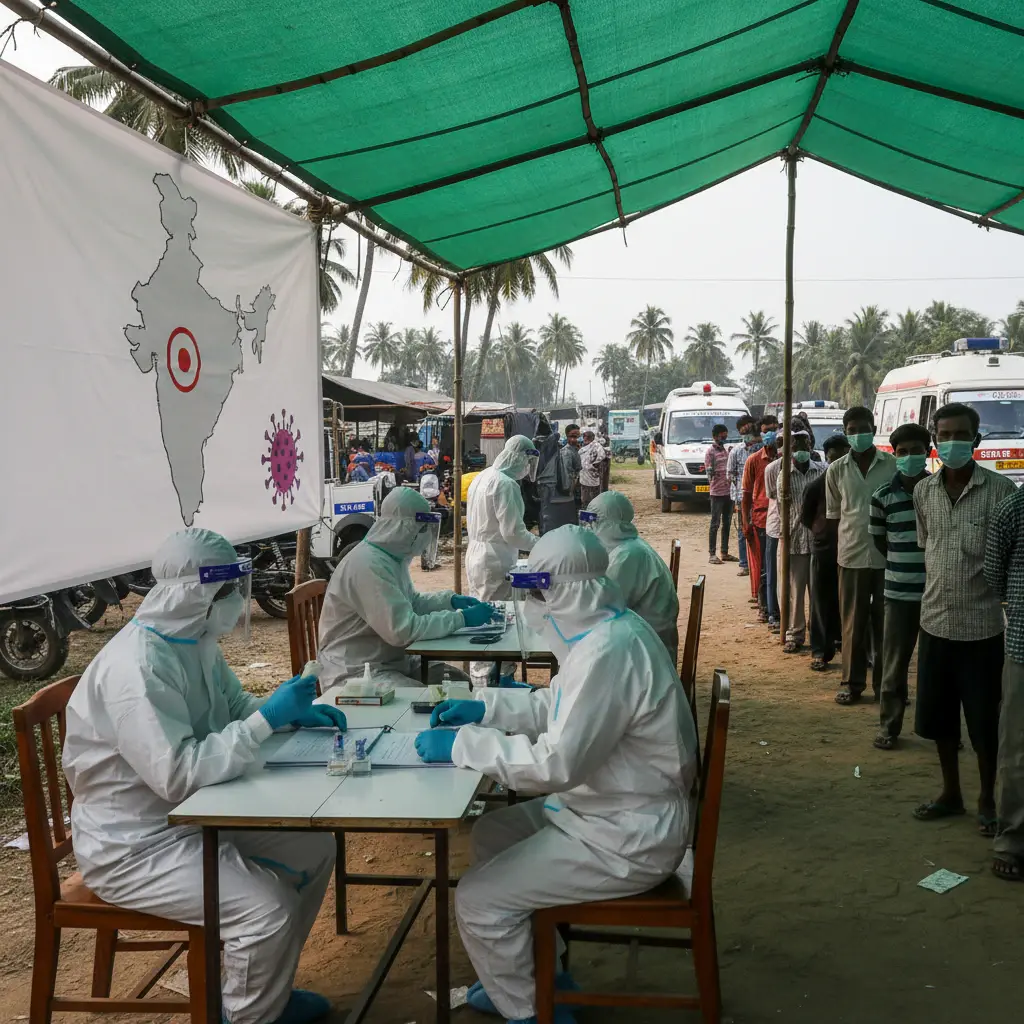
India’s health system is once again on alert after confirmed cases of Nipah virus surfaced in West Bengal earlier this year, part of a pattern that has also touched Kerala in recent months. While the immediate outbreak has been contained to small, healthcare-linked clusters, officials aren’t taking any chances — surveillance teams are still tracking contacts, testing suspected cases, and watching closely for any sign the virus is spreading beyond where it’s already been found.
The West Bengal cases were first flagged in Barasat, a town in the North 24 Parganas district, after two nurses working at the same private hospital fell ill in late December with symptoms that quickly progressed to neurological complications. Lab confirmation came from the National Institute of Virology in Pune in mid-January, and additional cases followed as investigators traced the chain of transmission within the hospital. Several of those infected were healthcare workers themselves, which pointed to hospital-based transmission rather than a fresh spillover from animals — a distinction that matters a lot for how authorities respond.
That’s because Nipah virus is, at its core, a zoonotic disease. It originates in fruit bats and can jump to humans either directly, through contact with an infected animal, through contaminated food like raw date palm sap, or — as appears to have happened in this case — through close contact with an already-infected person. West Bengal sits near bat reservoir zones along the India-Bangladesh border, which is part of why the state has seen sporadic Nipah activity going back to outbreaks in 2001 and 2007. Kerala, on the other side of the country, has dealt with its own recurring pattern of spillovers nearly every year since 2018, most recently with a confirmed case in June.
What makes Nipah such a serious concern, even in small numbers, is the sheer severity of the disease itself. Case-fatality rates run anywhere from 40% to 75%, among the highest of any known human pathogen, and there’s still no licensed vaccine or antiviral treatment available anywhere in the world. Infections typically start out looking like a bad flu — fever, headache, muscle aches — before some patients progress to viral encephalitis, a dangerous inflammation of the brain that can cause seizures, confusion and, in severe cases, coma. It’s this jump from “flu-like” to “critical” that makes early detection so important, and why India’s health ministry has leaned so heavily on aggressive contact tracing every time a case is confirmed.
So far, that approach appears to be working. Health officials say all traced contacts linked to the West Bengal cluster have tested negative, and there’s no evidence right now of sustained human-to-human transmission outside the original hospital setting. The World Health Organization has assessed the risk at the sub-national level in West Bengal as moderate, largely because of the ongoing presence of bat populations in the area, but has kept the broader national, regional and global risk rating at low. Simply put, this looks like a contained, closely watched cluster rather than the start of something bigger — though health authorities are clearly not treating that as a reason to relax.
The response on the ground has been substantial. India’s Ministry of Health and Family Welfare deployed a national outbreak response team to support West Bengal’s state health department, and confirmed patients were moved to a specialized infectious diseases facility in Kolkata for isolation and treatment. Nearly a hundred people connected to the hospital were placed under quarantine as a precaution while testing was carried out. Internationally, the ripple effects were felt too — several countries in Southeast Asia, along with Nepal, introduced temporary airport screening for travelers from the affected region, even though the WHO has stopped short of recommending any formal travel or trade restrictions.
For a country that has now dealt with Nipah outbreaks in two very different states, the pattern is starting to reveal something useful about how India manages this kind of threat. Research comparing West Bengal and Kerala has found that despite sharing the same bat reservoir, the two states have had very different outcomes — Kerala’s frequent spillovers have rarely spread beyond small clusters thanks to strong surveillance and a “One Health” approach linking animal, human and environmental monitoring, while West Bengal’s more limited history of outbreaks allowed this latest cluster to spread within a hospital before it was caught. That gap suggests the difference between a contained scare and a larger public health crisis often comes down to how fast health systems can spot and isolate cases.
With no vaccine or specific treatment on the horizon anytime soon, surveillance remains India’s strongest tool against Nipah virus. Health officials continue to stress that the overall risk to the public is low and that there’s no cause for panic, but the virus’s high fatality rate means every new case gets treated with real urgency. As monitoring continues in both West Bengal and Kerala, the message from public health authorities is consistent: stay alert, report symptoms early, and let the surveillance systems that have worked before do their job again.