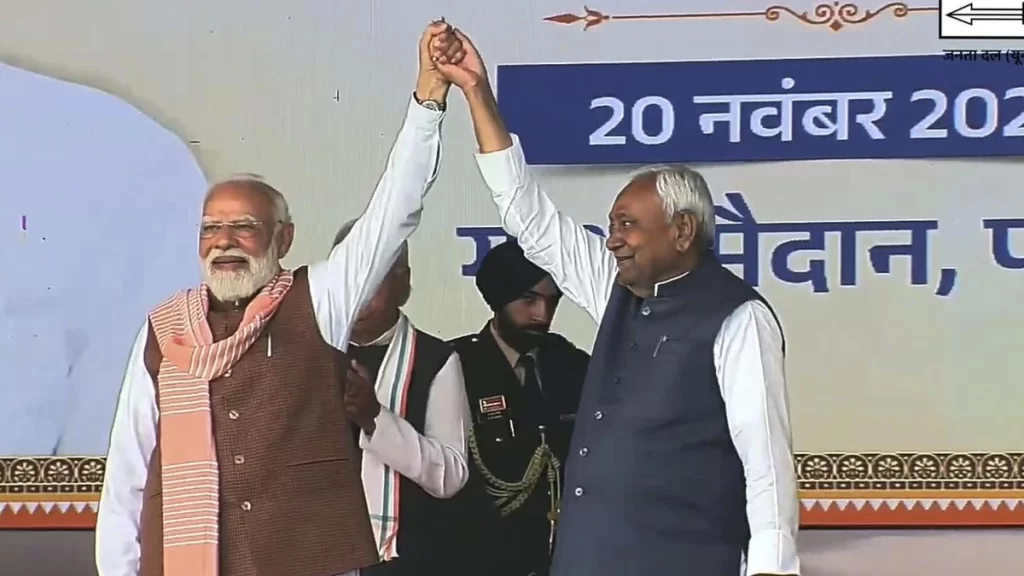
In a historic development in Bihar politics, Nitish Kumar was sworn in as Chief Minister today for a record-setting tenth time, marking the beginning of a new chapter in his long and influential political career. The oath-taking ceremony was held at Patna’s Gandhi Maidan and was attended by senior leaders from the National Democratic Alliance (NDA), including Prime Minister Narendra Modi, underlining the national significance of the transition.
Strong Mandate, Political Continuity
The swearing-in follows a commanding performance by the NDA in the recent Bihar assembly elections, which saw the alliance secure an overwhelming majority in the state legislature. Kumar’s tenth term reflects both his enduring appeal and the NDA’s consolidated strength in the region. The presence of top union leaders and prominent BJP figures at the ceremony signalled strong alignment between state and national leadership.
Cabinet Composition and Key Appointments
Simultaneously, 26 ministers were inducted into the new Bihar government, reflecting a carefully calibrated coalition arrangement. Notably, Samrat Choudhary and Vijay Kumar Sinha, both from the BJP, have been appointed as Deputy Chief Ministers — a powerful indication of the BJP’s influential role in the new government. The cabinet also includes several women ministers and a Muslim minister, conveying an element of symbolic inclusivity in the distribution of power.
Governance Challenges and Development Priorities
Despite consolidating power, Kumar faces a host of pressing challenges in his new term: persistent economic underdevelopment, youth migration to other states, infrastructure gaps, and social welfare demands. Critics argue that long-term systemic problems remain unaddressed even after decades of governance. In response, the administration has pledged to accelerate development, strengthen public services, and deliver on welfare promises, banking on Kumar’s long-running “good governance” brand to meet heightened expectations.
Strategic and Political Implications
Kumar’s tenth oath as Chief Minister carries profound implications beyond Bihar’s borders. For the NDA, maintaining a stable and dominant presence in its key ally state strengthens the coalition’s national position, particularly as India heads into future electoral cycles. Kumar himself reaffirms his reputation as a shrewd political operator — an alliance-builder adept at navigating shifting political currents. At the state level, stable central-state cooperation promises continuity in development initiatives and policy implementation.
Key Highlights
- Term: Nitish Kumar begins his 10th term as Chief Minister
- Venue: Oath ceremony held at Gandhi Maidan, Patna
- Cabinet Size: 26 ministers sworn in
- Deputy Chief Ministers: Samrat Choudhary, Vijay Kumar Sinha
Conclusion
Nitish Kumar’s record-setting return as Bihar Chief Minister underscores his political resilience and the enduring strength of the NDA alliance in the state. With a newly sworn-in cabinet and a clear electoral mandate, his government now faces the critical test of converting political capital into tangible development gains. The administration’s ability to deliver on infrastructure, employment, and social welfare promises will determine not only Bihar’s future trajectory but also the NDA’s broader political standing as coalition dynamics continue to shape Indian politics.