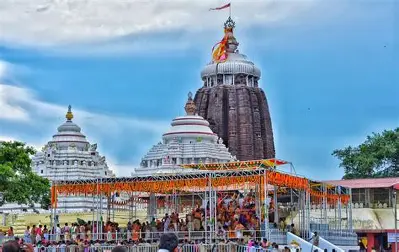
In a landmark move aimed at preserving the spiritual and cultural legacy of the Shree Jagannath Temple in Puri, the Odisha government has announced plans to copyright the temple’s age-old rituals. The initiative is intended to safeguard these sacred practices from distortion, unauthorized usage, and commercialization, particularly on digital and entertainment platforms.
Law Minister Prithviraj Harichandan confirmed that the state is taking legal steps to protect the temple’s rituals under the Copyright Act. “This is not just about legal protection. It is about preserving the sanctity of rituals that define Odisha’s cultural identity. We are witnessing increased instances where temple rituals are misrepresented or used without context. That must stop,” Harichandan said.
The rituals of the Jagannath Temple, including the world-famous Rath Yatra, Chhera Pahanra, Snana Yatra, and Nabakalebara, have been practiced for centuries. These traditions are seen not only as religious ceremonies but also as expressions of Odisha’s rich spiritual and cultural heritage.
Officials from the Shree Jagannath Temple Administration (SJTA) and legal experts are currently working to document and codify the rituals in a format that qualifies for copyright protection. Once completed, this documentation will allow the temple authorities to take legal action against unauthorized reproductions or depictions of these rituals, particularly in movies, web series, advertisements, and other commercial content.
“The rituals will be protected from misinterpretation and distortion. We aim to ensure that the essence of Jagannath culture is respected and preserved,” an SJTA official said.
Legal experts note that while copyright laws typically apply to artistic or literary works, religious rituals can be protected if they are recorded and presented in a fixed format. “If the temple authorities are able to present these rituals as structured, documented works, copyright can be applied,” said Sudipta Mohanty, an intellectual property lawyer.
The move has sparked mixed reactions. While many devotees and scholars have welcomed it as a much-needed step to prevent cultural exploitation, others have raised concerns about accessibility. Some fear the copyright could limit educational or devotional use.
Temple officials, however, clarified that the initiative is not intended to restrict legitimate religious or scholarly activities. “Devotional and academic usage will not be impacted. Our goal is only to stop commercial misuse,” the official added.
Odisha is among the first Indian states to take such a step, potentially setting a precedent for other religious institutions seeking to protect their traditions. As India grapples with the challenge of maintaining cultural authenticity in a fast-changing digital era, the state’s move is being viewed as both bold and necessary.