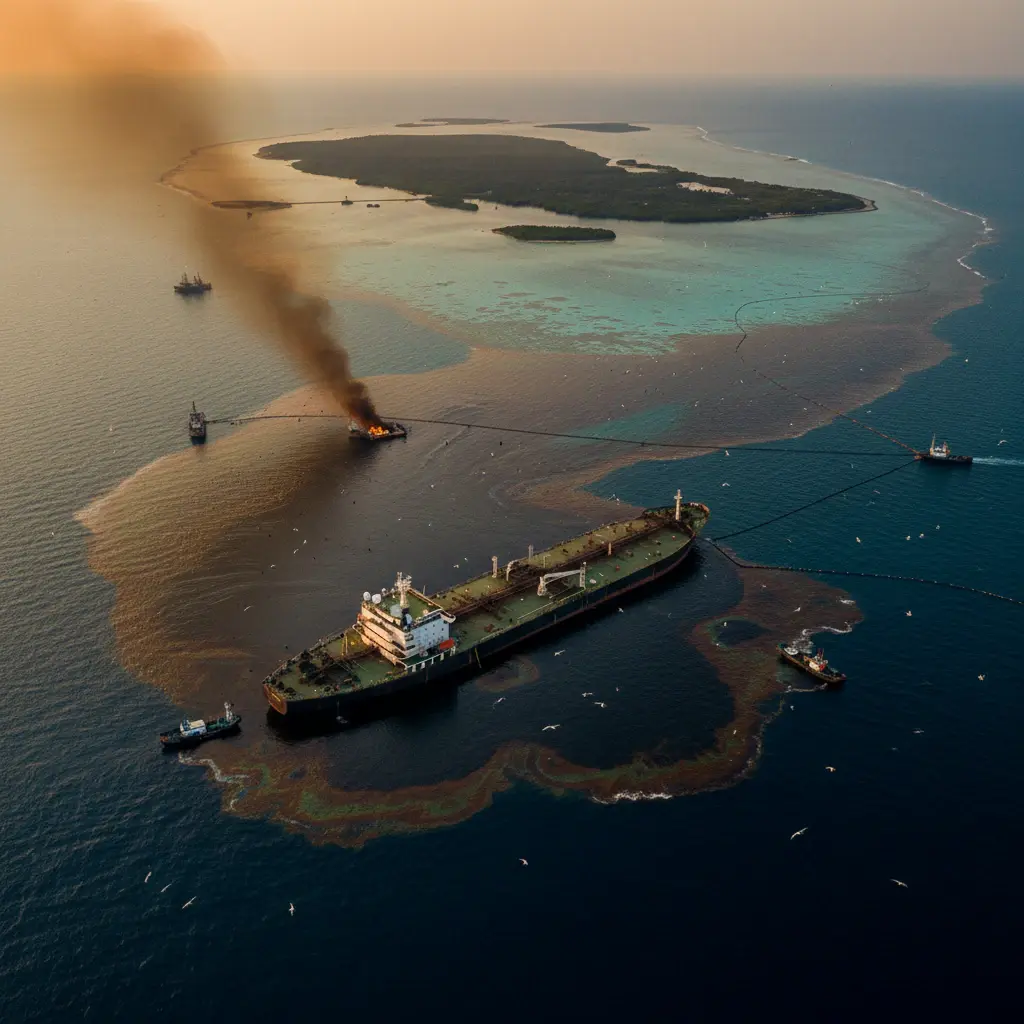
A stranded oil tanker off the coast of Oman has turned into one of the region’s most alarming environmental stories this year, with crude oil now spreading across hundreds of square kilometers of sea near a protected nature reserve. The vessel, known as the Caroline Bezengi, has been leaking oil for weeks, and the slick keeps growing every time satellite images are reviewed.
What Happened to the Tanker
The Caroline Bezengi is a Suezmax-class tanker that had loaded close to a million barrels of Russian crude at the Black Sea port of Novorossiysk back in April. After passing through the Suez Canal in late May, the ship ran into trouble while transiting waters near Yemen. Its crew reported an explosion on board on June 8, and although everyone was evacuated safely within days, the vessel itself was left badly damaged. It eventually drifted and grounded on rocks near Qibliyah Island, part of the Hallaniyat Islands off Oman’s southern Dhofar governorate, where it has now been stuck for more than two months.
Omani authorities have not yet identified the exact cause of the spill, and no group has come forward to claim responsibility for whatever triggered the blast. That uncertainty has only added to the unease surrounding the incident, especially given that it happened in waters already tense from the broader regional conflict.
Al Jazeera
The Slick Keeps Growing
Tracking the size of the spill has become something of a moving target. Oman’s Environment Authority reported this week that the oil slick covered almost 400 square kilometers, roughly 150 square miles, sitting about seven kilometers from shore. But independent monitoring groups have painted an even more worrying picture. Wim Zwijnenburg, an environmental expert with the Dutch organization PAX, which tracks environmental damage in conflict zones, estimated that by August 7 the spill had expanded to nearly 800 square kilometers.
Greenpeace Germany has been tracking the spread just as closely. According to the group’s disaster expert Nina Noelle, satellite analysis showed the spill covering about 45 square kilometers up until July 26, expanding to around 150 square kilometers by August 2, and then jumping to roughly 600 square kilometers by August 4. The pace of that growth suggests the tanker’s condition is deteriorating rapidly rather than stabilizing.
Arab News
Oman’s maritime authorities conducted an onboard inspection back on July 12 and found the ship noticeably worse off than it had been just a week earlier, sitting lower in the water with a more pronounced list and at real risk of breaking apart in rough weather. Complicating matters further, the tanker is grounded during the Khareef monsoon season, when the seas in that part of the Arabian Sea are typically at their roughest.
A Protected Reserve Under Threat
What makes this spill especially painful for conservationists is where it’s happening. The affected waters fall within the Arabian Sea reserve, a marine protected area that’s home to endangered wildlife, including rare petrels and the critically endangered Arabian Sea humpback whale. Local media have also referred to the area as Oman’s “turtle coast,” underscoring just how ecologically sensitive this stretch of coastline is.
Environmental groups have not held back in describing the stakes. Greenpeace Germany has warned that the situation carries a real risk of turning into an unprecedented disaster for the region’s coastlines and marine ecosystems if the tanker isn’t stabilized soon, and has urged Oman to request international help if that’s what it takes to contain the damage.
A Sanctioned Ship in a Sensitive Trade Route
The Caroline Bezengi isn’t just any tanker. It’s widely believed to be part of Russia’s so-called “shadow fleet,” a network of vessels Moscow uses to keep exporting oil despite Western sanctions, often by flying flags from various nations to disguise true ownership. The ship itself has been sanctioned by the European Union, Ukraine, the United Kingdom, Canada and Switzerland, and separately faces sanctions from the United States. Critics have long pointed out that shadow fleet vessels tend to be older ships with questionable maintenance, insurance and safety records, which only raises the odds of incidents like this one.
The broader context matters too. Shipping through the Red Sea and nearby waters has become increasingly risky since the regional conflict began disrupting normal trade routes, pushing more vessels, including aging and poorly maintained ones, into contested or less-monitored waters. This spill is a stark reminder of what can go wrong when that kind of pressure meets an already fragile vessel.
What Comes Next
Omani officials say they’re working to trace the sources of the leak, contain the spreading slick, and figure out how to safely offload the remaining crude before any salvage attempt begins. One survey reportedly identified a workable plan to move the tanker’s cargo, worth well over $100 million, using a pipeline stretching around a thousand yards to a nearby receiving point. But with the ship continuing to sink deeper and the monsoon season far from over, time may not be on anyone’s side.
For now, the Caroline Bezengi remains a slow-moving crisis: an aging, sanctioned tanker breaking apart in one of the Arabian Sea’s most protected corners, leaking oil into waters that were never built to absorb this kind of damage.
Oil Tanker Leak Off Oman Creates Massive Slick Near Protected Marine Reserve.